 By ando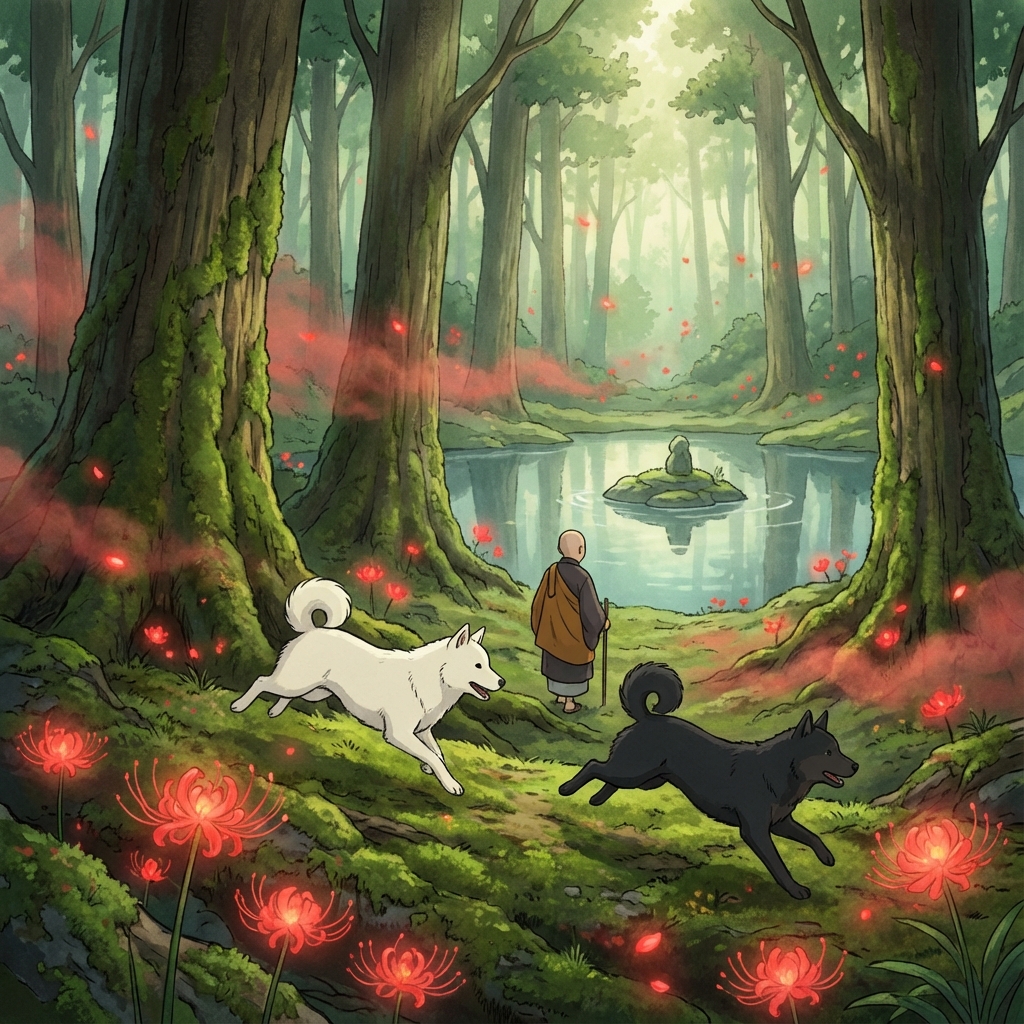
Niutsuhime jinja, located in the Amano basin at an altitude of 450 meters in Katsuragi-cho, Wakayama Prefecture, boasts over 1,700 years of history. As one of the constituent assets of the UNESCO World Cultural Heritage site “Sacred Sites and Pilgrimage Routes in the Kii Mountain Range,” this jinja is more than just a “power spot”; it is filled with deep history and mystery that cannot be simply dismissed.
This article will introduce legends holding the key to the founding of Koyasan, the mystery of “mercury” hidden in its name, and its surprising connection to anime.
Basic Information
Location: 230 Kamiamano, Katsuragi-cho, Ito-gun, Wakayama Prefecture
Main kami: Niutsuhime-no-Okami (Niutsuhime-no-Okami)
Divine Blessings: Ward off evil, purification, fulfillment of wishes, guidance
The Legend of the “White and Black Dogs” That Guided Kobo Daishi
Essential to any discussion of Niutsuhime jinja is its connection to Kobo Daishi Kukai, who founded Koyasan.
According to legend, while Kukai was searching the mountains for a place to build a dojo for Shingon Esoteric Buddhism, he encountered a hunter (Kariba Myojin) accompanied by two dogs, one white and one black. This hunter was none other than the mikogami (child kami) of Niutsuhime-no-Okami, and guided by the two dogs, Kukai is said to have reached the present-day Koyasan.
This legend of the “guiding dogs” is still cherished today. Within the jinja grounds, on the 16th of every month, two Kishu dogs, a white one named “Suzuhime-go” and a black one named “Daiki-go,” named after the legend, are sometimes displayed to the public. It is also this legend that inspires people at crossroads in life to visit the jinja seeking “guidance.”
The Mystery Hidden in the Name “Nyu”
The “Nyu” (丹) in the jinja’s name refers to cinnabar (shinsha), a red mineral that is the raw material for mercury, which was prized since ancient times as an amulet against evil and a medicine for eternal youth.
A prevalent theory suggests that Niutsuhime-no-Okami is a goddess worshipped by the Nyu clan, who were involved in mercury mining. This region was once a major producer of mercury, and its rare resources were the source of its immense power.
There is an anecdote that mercury from this area was used for the gilding (plating) that made the Great Buddha of Todai-ji Temple shine golden. The “red” of the jinja’s beautiful vermillion-lacquered romon (gatehouse) and torii (shrine gate), which are its symbols, is precisely the color of “Nyu” (cinnabar), symbolizing a powerful energy that wards off disaster.
The “Mysterious Island” Floating in Kagami-ike Pond and Yaobikuni
Kagami-ike Pond, spanned by the beautiful “Wabashi (Taiko-bashi)” drum bridge within the grounds, holds a mystery. Within the pond, there is a small island made of stones. However, official jinja maps and historical records often do not specify what this island enshrines.
One legend says it is where the legendary nun “Yaobikuni,” who gained immortality by eating mermaid flesh, lamented her unchanging appearance and threw her mirror into the pond. Even when asked, jinja priests state that “the exact details are unknown” about this island, making it a hidden spot that sparks the imagination of visitors.
Anime Pilgrimage Information: ‘Non Non Biyori’
“Katsuragi-cho,” where Niutsuhime jinja is located, is known as one of the settings (model locations) for the popular anime “Non Non Biyori.”
The scenery around Amano no Sato (Amano Village) served as a model for the peaceful rural landscapes in the work, making it an important spot for anime pilgrimages among fans (affectionately known as “refugees”). The path leading to the jinja and the surrounding basin scenery, in particular, exude a nostalgic atmosphere straight out of the anime’s world.
Tips for Your Visit
It is a long-standing custom to visit Niutsuhime jinja first before ascending Koyasan. This is known as a proper custom to avoid a “one-sided pilgrimage” (katamairi), meaning a pilgrimage to only one of two interconnected sacred sites. Through this, you can feel the deep spirituality of Shinbutsu-shugo (the syncretism of Shinto and Buddhism).
Why not cross the beautiful vermillion bridge and feel “guidance in life” for yourself in the tranquil Amano no Sato?
Related Links and References
1. Gosaishin (Enshrined Kami) | Niutsuhime jinja
2. Goddess, Mercury, and Jomon – Part 2 ~ Niutsuhime (Nyu-tsu-hime) | Archaic House
3. Niutsuhime jinja: Unspoken Inexplicable Mysteries – Searching for Mysterious and Moving Superb Views of Japan
4. Climbing the World Heritage Koyasan Pilgrimage Route with the Divine Dog Suzuhime-go | Niutsuhime jinja
5. Niutsuhime jinja – Wikipedia
6. Niutsuhime jinja Traditions | Niutsuhime jinja
7. Sacred Site Pentagram Pilgrimage ⑤ “Niutsuhime jinja” | Kuritama’s Blog
8. Go-yuisho (History and Origins) | Niutsuhime jinja
9. Why is Niutsuhime jinja so mysterious? Explaining its spiritual charm – Wakayama Ryman Blog
10. Goddess of Mercury ‘Niutsuhime’ Part 1 | Saito Takashi
11. The Mysterious Charm of Niutsuhime jinja and its Connection to Ryujin (Dragon Kami) and Seoritsuhime?
12. Niutsuhime jinja now has two divine dogs ⛩️ | Koyasan Hotokudo / Conveying the Charms of Kukai and Koyasan from a Unique Perspective.
13. Goshinken (Divine Dogs) | Niutsuhime jinja
14. Kin-Ani Anime Pilgrimage Report Part 1 ~AIR & Non Non Biyori Arc~ | Kinki University Anime Club