 By ando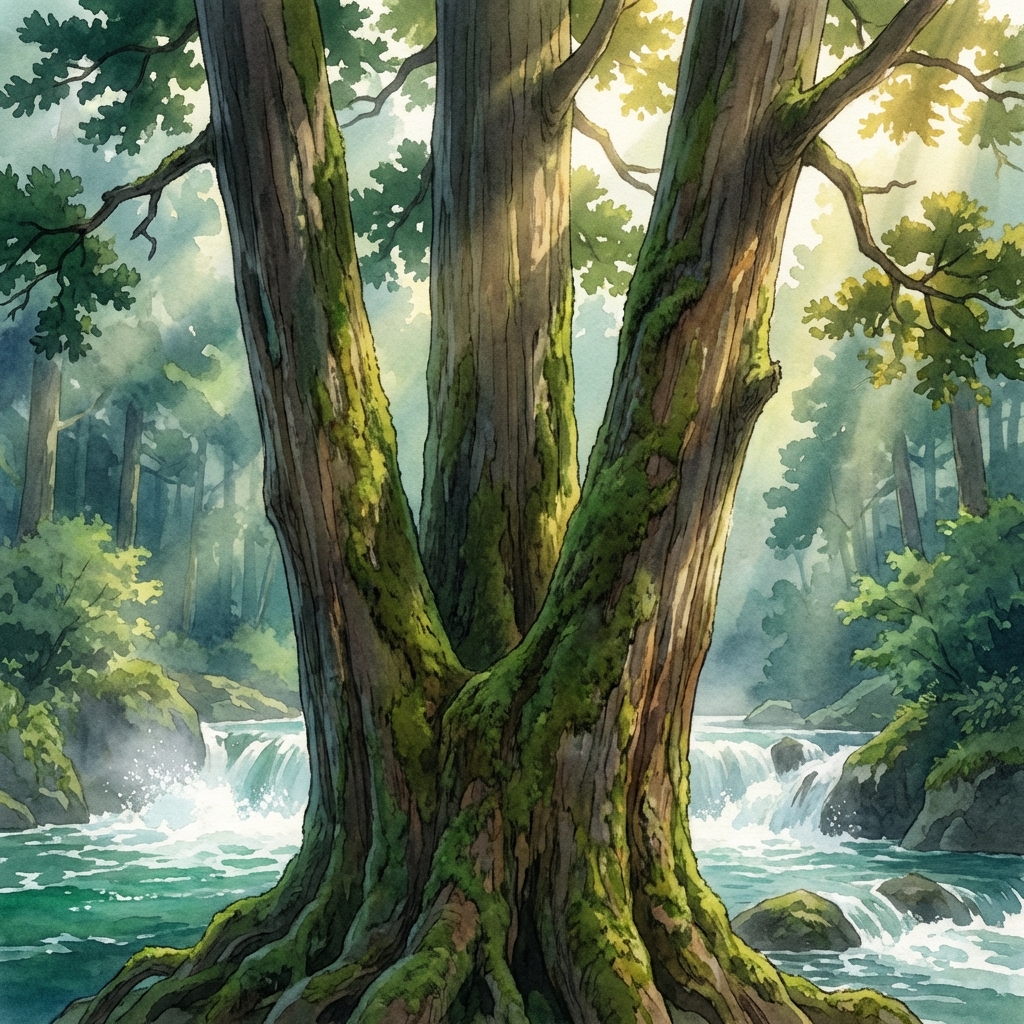
Okuhikawa Jinja, nestled in a scenic valley at the western edge of Tokyo where the Tama River and Hihara River converge. Despite its location just a short walk from Okutama Station, stepping onto the grounds reveals an atmosphere of profound tranquility, as if separated from the world below. This time, we delve into the mysteries and legends surrounding this ancient jinja, as well as its irresistible appeal as a sacred site for fans.
Basic Information
Location: 178 Hikawa, Okutama-machi, Nishitama-gun, Tokyo
Deities enshrined: Susanoo-no-mikoto, Kushinadahime-no-mikoto
Founding: Said to be during the reign of Emperor Keiko, the 12th emperor (legend).
The Mystery of the Hikawa Three Jinja: A Straight “Ley Line”
When discussing Okuhikawa Jinja, it’s essential to mention its connection to Omiya Hikawa Jinja (main jinja) in Saitama City, Saitama Prefecture, and Naka Hikawa Jinja (Nakayama Jinja). Did you know that if you connect these three jinja on a map, they form an astonishingly precise straight line?
The three jinja are Omiya Hikawa Jinja (Main Jinja, Otoko-tai-sha), Naka Hikawa Jinja (Nakayama Jinja, situated between Hikawa Onna-tai Jinja), and Okuhikawa Jinja (Oku-sha / Inner Jinja).
This alignment has gathered unified devotion as the “Hikawa Three Jinja” since ancient times. Why they are arranged with such precision, and what intentions ancient people had when building the jinja in these locations, remains a mystery that continues to fascinate many history buffs and mystery lovers today.
The Legendary Giant Tree “Sanbon Sugi”: Does Minamoto no Yoritomo’s Wish Reside Here?
Dominating the grounds is the “Sanbon Sugi” (Three-Trunk Cedar), also designated a Tokyo Metropolitan Natural Monument. This cedar, which splits into three trunks from its base, reaches a height of approximately 50 meters and is known as one of the largest giant trees in Tokyo.
A legend concerning Minamoto no Yoritomo, a hero from the Kamakura period, is associated with this cedar. One theory states that Yoritomo himself planted it to pray for peace throughout the land, while another tells of him being astonished by its majestic appearance during a visit and showing profound reverence. The sight of the three trunks extending skyward as if embracing is also said to symbolize family bonds and cooperation. As a power spot, many worshippers place their hands on its trunks.
The Footsteps of Yamato Takeru no Mikoto
The founding of Okuhikawa Jinja is said to be deeply connected to Yamato Takeru no Mikoto, a hero from Japanese mythology. It is believed to have begun when, during his eastern expedition, he worshipped Susanoo-no-mikoto while traversing the rugged mountains of this area, praying for victory and safe travels. The deliberate establishment of a jinja in Okutama’s harsh natural environment might also be related to this area being a crucial military and transportation hub.
Anime Pilgrimage: The Setting of “Demon Slayer: Kimetsu no Yaiba”, Gateway to Mount Kumotori
The Okutama area, where Okuhikawa Jinja is located, is also gaining attention as a sacred site for the popular anime “Demon Slayer: Kimetsu no Yaiba,” which has become a social phenomenon.
Mount Kumotori, set as the birthplace of the protagonist Tanjiro Kamado, is the highest peak in Tokyo, located in Okutama-machi. Okuhikawa Jinja also acts as a “guardian kami of the trailhead,” where hikers heading to Mount Kumotori stop to pray for safety.
The snow-covered mountain landscapes depicted in the first episode of the anime, and the atmosphere of the harsh nature in which Tanjiro lived with his family, are precisely those of the Okutama mountains themselves. Many fans can be seen visiting this jinja as the starting point for their journey to retrace Tanjiro’s footsteps.
Points for Worship: A Confluence of “Ki” Where Two Rivers Meet
Okuhikawa Jinja is located very close to the confluence of the Tama River and Hihara River. In Feng Shui, river confluences are considered “places where ki (energy) gathers” and are said to possess very strong energy.
The vitality of the Sanbon Sugi, the mystery revealed by the straight line of the Hikawa Three Jinja, and the legends of heroes. Embraced by Okutama’s rich nature, this jinja is the perfect place to forget the hustle and bustle of daily life and refresh your mind and body. When you visit Okutama, be sure to experience the tranquility of this “oku-no-in” (inner sanctuary).
Related Links / References
No sources available.