 By ando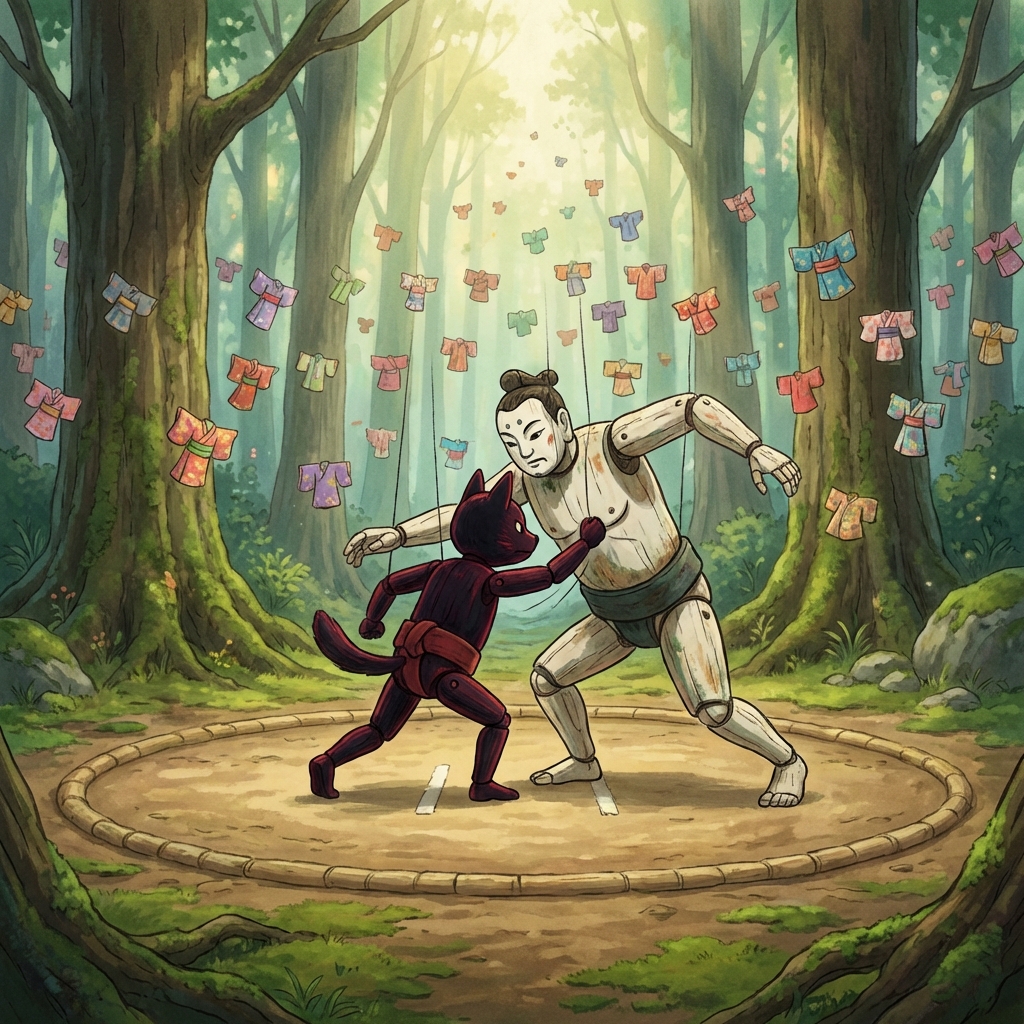
Basic Information
Location: 353-1 Koinumaru, Yoshitomi-machi, Chikujo-gun, Fukuoka Prefecture
Enshrined kami: Okinagatarashihime-no-mikoto (Empress Jingu), Sokotsuhime-no-mikoto (Empress Jingu’s younger sister)
Founded: 545 (6th year of Emperor Kinmei’s reign)
Hachiman Kohyo Jinja, located near the mouth of the Yamakuni River on the border of Fukuoka and Oita Prefectures, is far more than just an ancient shrine. It is an extremely mysterious sacred site that preserves the tradition of “kugutsu” (puppetry), said to be the origin of Japanese performing arts.
■ The Hayato Rebellion and Kugutsu as a “Tactic”
Essential to understanding this jinja is the Hayato Rebellion, which occurred in 720 (4th year of the Yoro era) during the Nara period. When the Hayato tribe of southern Kyushu rebelled against the imperial court, the court’s army set out, accompanied by the divine army of Usa Hachiman.
Legend has it that at this time, “kugutsu” (marionettes) were used to deceive the enemy. The troops danced the puppets to distract the Hayato, then seized the opportunity to attack and conquer them.
After the rebellion ended, the imperial court, regretting the bloodshed, began the Hojoe ritual to appease the spirits of the Hayato. The kugutsu dance, passed down at Hachiman Kohyo Jinja, has been preserved for 1300 years as a special Shinto ritual performed during this Hojoe.
■ The Enigmatic “Black Sumiyoshi Okami”
The shrine’s treasure house stores 47 kugutsu puppets, designated as National Important Tangible Folk Cultural Properties. During the Kuwashio-no-mai and Kami-sumo, held once every four years, these puppets are manipulated by divine hands to wrestle sumo on a dohyo (sumo ring).
The greatest mystery here is the puppet of Sumiyoshi Okami, who appears as the general of the west.
While other kami have white faces, Sumiyoshi Okami is notably smaller and has a dark copper (black) complexion. And this small black kami throws down kami larger than himself one after another, ultimately defeating all of them.
Why is Sumiyoshi Okami the only one with a black complexion? One theory suggests this puppet represents the subjugated Hayato, or perhaps symbolizes a southern seafaring people. The true meaning behind the outcome of the matches remains shrouded in the mists of history.
■ The Oirokashi Festival where a Thousand Kimono Flutter
The Oirokashi Festival, held annually on August 6th and 7th, is another unique sight at this shrine.
This is an event where thousands of small costumes worn by the kugutsu are spread out in the shrine hall for airing and insect prevention. The sight of colorful kimono, donated by successive feudal lords of the Nakatsu Domain and ordinary people praying for their children’s healthy growth, filling the shrine hall is simply breathtaking.
This event, also called “the kami’s wardrobe change,” illustrates that the puppets are not mere tools but are treated as living kami themselves.
■ Pride as the “Original Shrine” of Usa Jingu
The shrine’s name, Kohyo, signifies “old omote (front)” or an important base where the omikoshi (portable shrine) would arrive during Usa Jingu’s Hojoe.
In the past, a grand Shinko-gyoji (procession of kami) took place, with the kugutsu crossing the Yamakuni River by boat to reach Usa Jingu (Oita Prefecture) on the opposite bank. Even today, it maintains a sister-like relationship with Koyou Jinja, located across the river, and together they preserve the kugutsu culture.
Hachiman Kohyo Jinja holds memories of ancient Kyushu’s turmoil and appeasement, not found in history textbooks. Through the eyes of its wooden puppets, it seems to speak to us even now. Why not ponder the 1300-year-old mystery at this place, also known as a kami of victory?