 By ando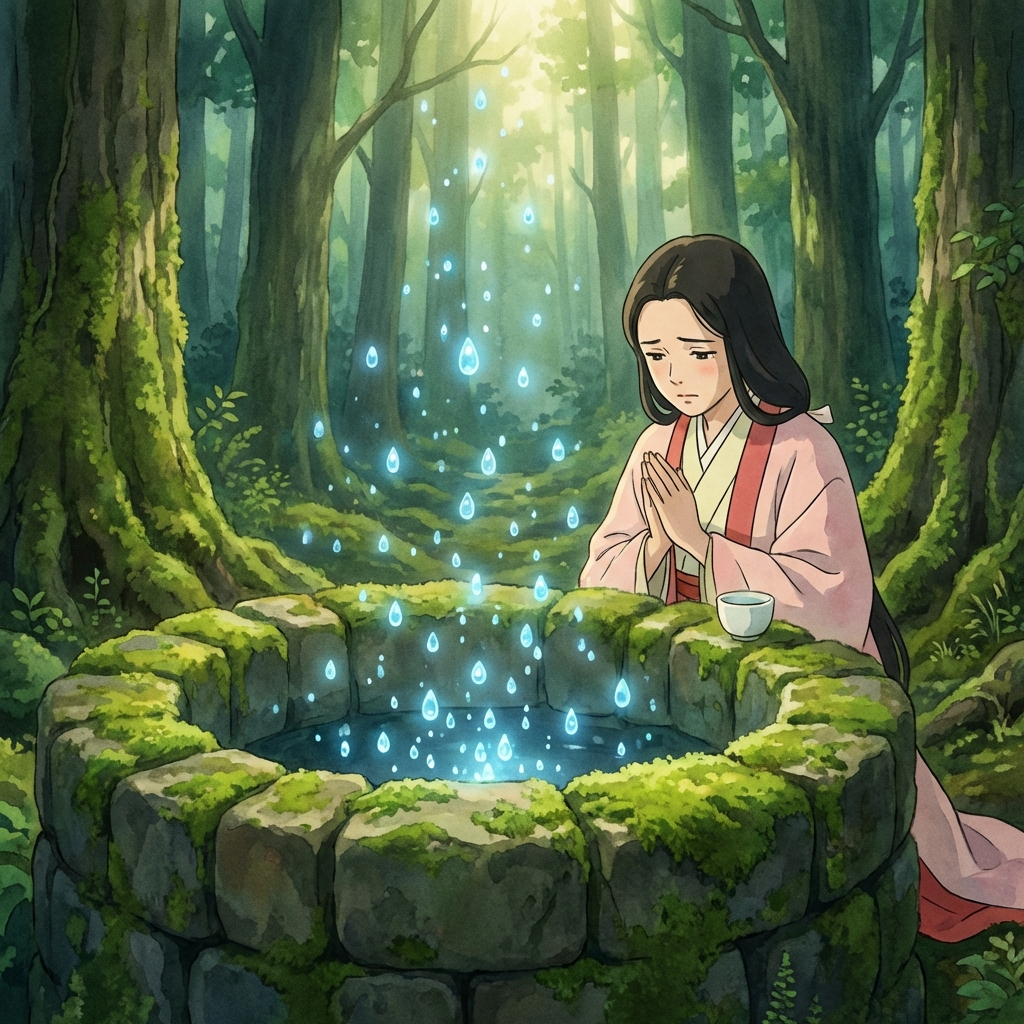
Basic Information
Name: Uneotsutamoto-jinja (畝尾都多本神社)
Alternative Names: Nakisawa no Mori (哭沢の神社), Nakisawa Jinja (泣沢神社)
Location: 114 Kinomotocho, Kashihara City, Nara Prefecture
Enshrined kami: Nakisawame-no-kami (哭沢女神)
Access: Approx. 20-minute walk from Miminashi Station on the Kintetsu Osaka Line or Kaguyama Station on the JR Sakurai Line
Is the kami the “Tears of Izanagi”? A mysterious jinja without a main hall (honden)
Uneotsutamoto-jinja is quietly located at the northwestern foot of Mount Amanokagu, one of the three great mountains of Yamato. This jinja does not have a “honden” (main hall), which is usually found in common jinja. It takes a very rare form where the “empty well” itself, surrounded by a sacred fence (tamagaki) behind the worship hall (haiden), is enshrined as the divine object (goshintai).
The enshrined kami, Nakisawame-no-kami, is a goddess with a very dramatic birth in Japanese mythology. She is said to have been born from the “tears” shed by the father-kami Izanagi, who grieved for his beloved wife Izanami, who died giving birth to the fire-kami Kagutsuchi. In other words, this is a place that enshrines the “tears of a kami.”
The “Lament Against a Kami” and a Legend of Pleading for Life Etched in the Man’yoshu
This jinja has long been revered as a “kami for pleading for life.” However, a poignant episode remains.
In the Asuka period, when Prince Takechi, a son of Emperor Tenmu, passed away, a poem composed by Princess Hinokuma, who is believed to have been his consort, was recorded in the Man’yoshu.
“At Nakisawa no Mori, I offer sacred sake and pray earnestly, but my great lord has ascended to the heavens…”
This is interpreted as a lament that prayers were not answered, or even a “grudge” against the goddess. In ancient times, tears were believed to be a medium connecting the souls of the living and the dead, making this place a sacred site for fervent prayers wishing for “the revival of the deceased.”
Behind the Story: The Connection to “Nakime,” Professional Mourners
There is a theory that the enshrined kami, Nakisawame-no-kami, is a deification of “nakime” (crying women), who played the role of crying aloud at ancient funerals. The ritual of “tamafuri,” where one attempts to console the soul of the deceased or revive their life force by crying, might be at the root of this jinja.
Anime Pilgrimage: As a Setting for “Beyond the Boundary”
Uneotsutamoto-jinja, with its mysterious atmosphere, is also known as a sacred site for the popular anime “Beyond the Boundary,” produced by Kyoto Animation.
In the work, it is depicted as a location related to the “Nase family,” an important setting in the story, and as a model for impressive scenes. In particular, the quiet and somewhat melancholic ambiance of “Nakisawa no Mori” that surrounds the jinja perfectly links with the world view of the work. For fans, it has become a cherished place where they can feel the air lived by the heroine Mirai Kuriyama and Akihito Kanbara.
It also appears in the novel and manga series “Kamisama no Goyonin” (God’s Handy Man), filled with a mysterious charm that continues to attract modern creators.
Highlights for Your Visit
Although the jinja grounds are located within a residential area, once you step inside, you are enveloped in a cool atmosphere, as if integrated with the nature of Mount Amanokagu. Why not pay homage to the divine well and reflect on the “memory of tears” that has continued since the Man’yo era?
Related Links / References
[1] 畝尾都多本神社
[2] 畝尾都多本神社/橿原市公式ホームページ
[3] *神名* 啼澤女命 (哭沢女神)(改訂) | かむなからのみち ~天地悠久~
[4] たのしい万葉集: 哭沢神社(なきさわじんじゃ)
[5] 万葉歌碑を訪ねて(その1787)―橿原市木之本町 畝尾都多本神社―万葉集巻二 二〇二 – 万葉集の歌碑めぐり
[6] やまとの神さま│奈良まほろばソムリエの会
[7] 珍しい神、哭澤女神「畝尾都多本神社」健土安比売命「畝尾坐健土安神社」知ってます?【橿原シリーズ】|やんまあ
[8] 畝尾都多本神社 | 日本国創成のとき〜飛鳥を翔た女性たち〜 | 飛鳥女史紀行
[9] 畝尾都多本神社|観光スポット|橿原市観光情報サイト
[10] 畝尾都多本神社 (改訂) | かむなからのみち ~天地悠久~
[11] 【橿原市】畝尾都多本神社 | 奈良の地域密着型・総合情報サイト Narakko!(奈良っこ)
[12] 畝尾都多本神社
[13] 畝尾都多本神社 – Wikipedia
[14] 畝尾都多本神社:語家~katariga~ 15 – 偲フ花