 By ando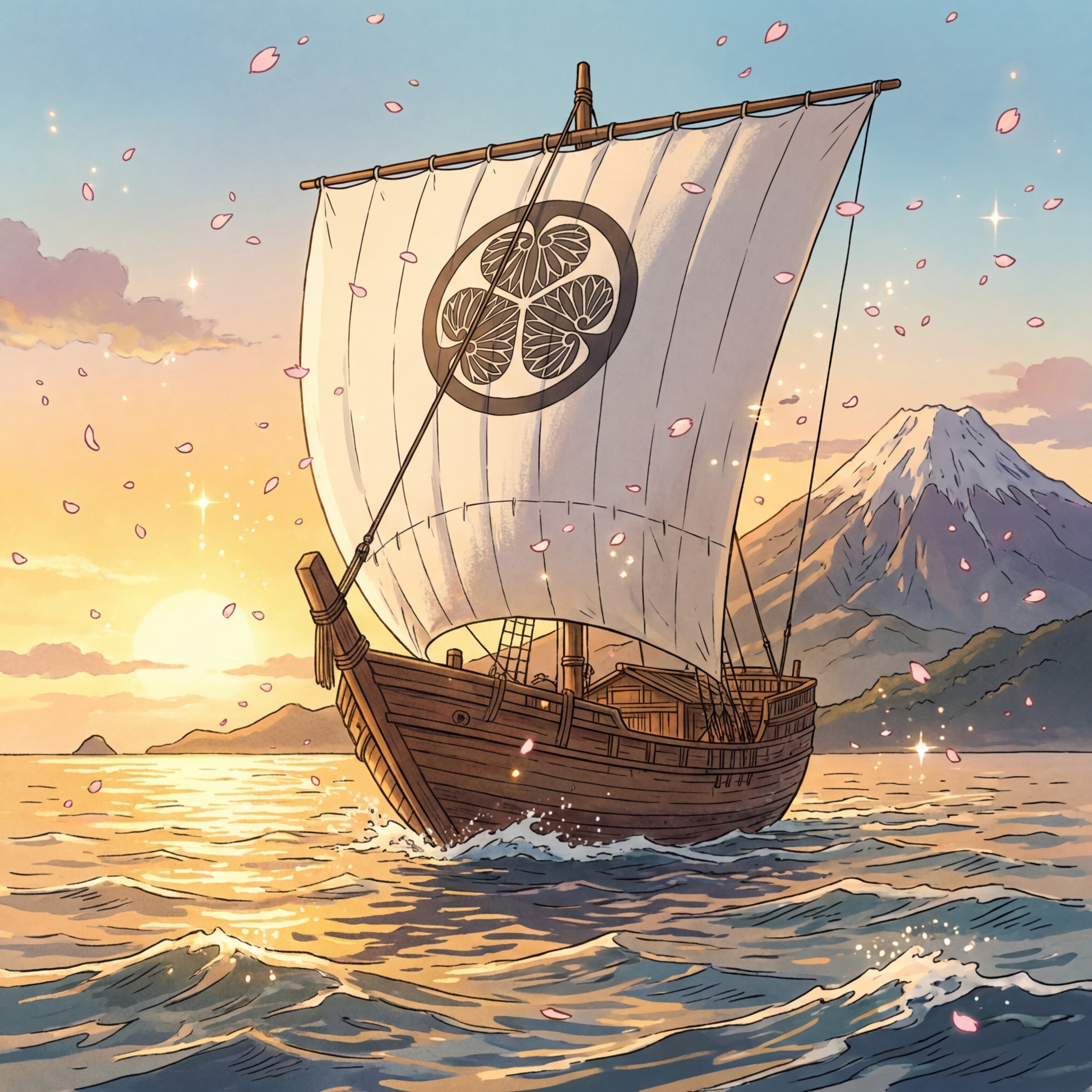
Basic Information
Location: Nawa 556, Daisen Town, Saihaku District, Tottori Prefecture
Enshrined Kami: Lord Nawa Nagatoshi and 42 members of his clan and retainers
Main Divine Blessings: Prosperity in various industries, academic success, achieving victory in contests (especially comeback victories)
Access: Approximately a 10-minute walk from Nawa Station on the JR Sanin Main Line; approximately a 5-minute drive from Nawa IC on the Sanin Expressway.
The Stage of a “Comeback Drama” that Saved Emperor Go-Daigo
Nawa Jinja is a shrine that enshrines Lord Nawa Nagatoshi, a samurai commander who was active from the late Kamakura period to the Nanboku-cho period. When Emperor Go-Daigo, who had been exiled to Oki Island, attempted to escape, Nagatoshi quickly accepted him, welcomed the emperor to the steep “Senjo-zan (Mount Senjo),” and confronted the bakufu (shogunate) forces.
This major victory triggered uprisings by anti-bakufu forces across various regions. This place became a significant turning point in history, leading to the downfall of the Kamakura Shogunate. It can truly be called a power spot that symbolizes “comeback victories from rock bottom.”
The Mystery of “Burnt Rice” Still Found Behind the Shrine Building
Nawa Jinja has a mysterious story that continues to surprise history enthusiasts. The shrine grounds are believed to be the former site of Nawa Nagatoshi’s rice granary, and it is said that during a battle with the bakufu forces, he set it on fire himself to prevent the enemy from obtaining provisions.
Amazingly, even today, if you dig in the soil behind the main shrine building (shaden) and other areas, “burnt rice” (carbonized rice) believed to be from that period can sometimes be found. It is a rare mystery spot in Japan where the memory of a fierce battle from over 600 years ago still lies beneath your feet as physical evidence.
Ruler of the Seas? The Hidden Story Behind the Family Crest “Hokakebune”
The shrine emblem of Nawa Jinja and the family crest of the Nawa clan is the “Hokakebune” (sailboat). This is said to have been bestowed by Emperor Go-Daigo, but one theory suggests that the Nawa clan was a powerful “shipping magnate (or naval force)” active on the Japan Sea.
Nawa Nagatoshi at that time was not merely a local samurai, but also a maritime merchant prince with immense wealth and an extensive intelligence network. That is why he was able to successfully carry out the top-secret mission of the emperor’s escape from Oki.
Appearing on Rainy Days? The Legend of the “Matoishi” Target Stone
Near the jinja, there remains a “Matoishi” (target stone) said to have been used by Nagatoshi for archery practice. Nagatoshi is said to have been a master archer who could draw a five-man-power bow, and it is told that when the surface of this massive stone gets wet after a rain, a pattern resembling an archery target emerges. It is a mysterious relic that evokes his aspect as a kami of martial arts.
A Must-Visit Holy Site for Fans of the Anime “The Elusive Samurai”
Currently serialized in Weekly Shonen Jump and also adapted into an anime, “The Elusive Samurai” (by Yusei Matsui) is set precisely in the Nanboku-cho period, when Nawa Nagatoshi lived.
Nawa Nagatoshi played an extremely important role in history as one of the “Sanki Issou” (Three Trees and One Grass) who supported Emperor Go-Daigo, rather than being on the side of Ashikaga Takauji, the main antagonist of the protagonist Hojo Tokiyuki. For fans who wish to experience the atmosphere of the turbulent era depicted in the anime and manga, this jinja, where Nagatoshi and his clan rest, is truly worthy of being called a “holy site.”
One of Sanin’s Foremost “Cherry Blossom Tunnels”
Beyond its historical significance, the jinja is also famous in spring for its “cherry blossom tunnel,” where approximately 400 Somei Yoshino cherry trees bloom magnificently. The row of cherry trees leading from the sando (approach path) to the honden (main shrine building) is breathtaking, and they are lit up at night. The sight of beautiful petals now adorning the path once traversed by loyal and passionate samurai is sure to soothe the hearts of visitors.
Related Links and References
Historical Sites Related to Lord Nawa
Nawa Jinja | Tottori Prefecture Jinja Association (Official Website)
Holy Site of The Elusive Samurai, Suwa Grand Shrine Upper Shrine Maemiya – Lineo Blog – Lineo Solutions
History of Nawa Jinja – Nawa Jinja
Nawa Jinja, Enshrining Nawa Nagatoshi | Official Blog of History Shinto Researcher and Female Shinto Priest, Hidae Yamashita
Nawa Jinja (Daisen Town)
The Lineage of Lord Nawa Nagatoshi – Nawa Jinja
Nawa Jinja (Nawa Jinja) | Tottori Daisen Tourist Guide
Nawa Jinja (Saihaku District, Daisen Town, Tottori Prefecture) Tottori Prefecture Jinja Illustrated Guide
Tottori Trip [Official] Tottori Prefecture Tourism Information Site
Wandering Western Tottori (2) Nawa Jinja, Emperor Go-Daigo’s Sitting Rock, Mikuriya Fish Center | Sanin Daily Blog
Pilgrimage – Nawa Jinja