
 By ando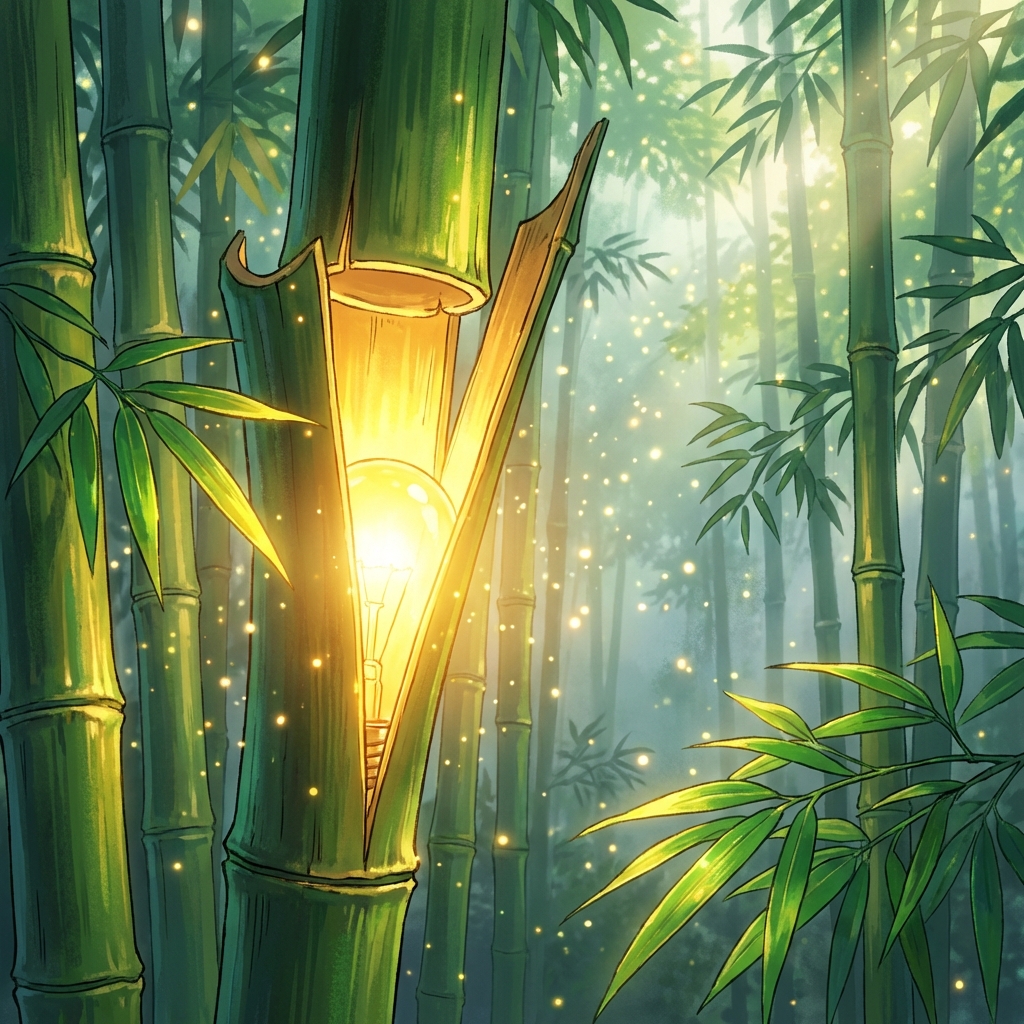
Basic Information
Name: Iwashimizu Hachimangu jinja (Iwashimizu Hachimangu)
Location: 30 Yawata Takabo, Yawata City, Kyoto Prefecture
Enshrined Kami: Hachiman Okami (Emperor Ojin, Hime Okami, Empress Jingu)
History: Its origins trace back to the early Heian period. In Jogan 1 (859), Gyokyo, a monk from Daian-ji Temple in Nanto (Nara), received an oracle at Usa Hachimangu and enshrined the kami on Otokoyama, which protects the ‘urakimon’ (northeast direction, considered unlucky) of Heian-kyo (ancient Kyoto). It has been revered as “the nation’s second grand ancestral shrine” after Ise Jingu and is also known as the tutelary kami of the Minamoto clan.
Access: From Iwashimizu-Hachimangu Station on the Keihan Main Line, take the Sando Cable Car to Hachimangu Sanjo Station, then walk approximately 5 minutes.
“Hachiman Bamboo” That Lit Up the World: An Unexpected Connection with Edison
Within the grounds of Iwashimizu Hachimangu stands a monument to the world-renowned inventor, Thomas Edison. The truth is, when Edison successfully commercialized the incandescent light bulb, the filament material he adopted was “madake” (Phyllostachys bambusoides), a species of bamboo that grows naturally around Otokoyama here.
After testing some 6,000 different materials, Edison finally settled on the bamboo from Yawata. Light bulbs made with this bamboo recorded an illumination time of approximately 1,000 hours, bringing light to the world. Even today, on Edison’s birthday and death anniversary, a “Hizen-sai” (ceremony in front of the monument) is held. “Edison Ema” (votive tablets) made from bamboo are popular among worshipers praying for inspiration or success in exams.
The “Golden Gutter” Donated by Oda Nobunaga
Beneath the eaves of the corridor surrounding the main hall (honden) is the “Ogon no Toi” (Golden Gutter), said to have been donated by Oda Nobunaga. This massive gilded bronze rain gutter, approximately 21 meters long and 3 centimeters thick, was dedicated by Nobunaga when he carried out repairs to the shrine building. This magnificent remnant, offered by a warlord of the Sengoku period to the kami, still shines today as part of the National Treasure designated shrine building.
Amulet of “Incompleteness”: The Mystery of Kimon Fūji
The main hall (honden) of Iwashimizu Hachimangu holds an architectural “mystery.” The stone wall at the northeast corner (kido or kimon, the unlucky direction) of the shrine building is deliberately cut diagonally, as if a section has been removed. This is a technique called “Kimon Fūji” (demon gate sealing), based on the belief that “a building begins to decay the moment it is completed.” By intentionally leaving one spot unfinished, it was hoped to avert disaster and ensure eternal prosperity. This reflects a unique Japanese aesthetic and belief system that does not seek absolute perfection.
Secrets Hidden in the “Dove,” Messenger of the Kami
The divine messenger (shinshi) of Hachimangu is the “dove.” Dove motifs can be seen throughout the shrine grounds, but of particular note is the plaque displaying “Hachimangu” at the Ichino Torii (first torii gate). If you look closely at the character for “hachi” (eight) in “Hachimangu,” you’ll notice it’s designed with two doves facing each other. Furthermore, the shrine buildings are adorned with over 150 vibrant carvings, including the “Menuki no Saru” (aperture monkeys), which have a legend that “they would come to life at night and cause mischief, so their eyes were nailed with bamboo pegs.”
“Japan’s Most Famous Fiasco” Recorded in “Tsurezuregusa”
Section 52 of “Tsurezuregusa,” an essay collection by Kenko Hoshi, features a famous anecdote related to Iwashimizu Hachimangu. It tells the story of an elderly monk from Ninna-ji Temple who, when finally visiting Iwashimizu Hachimangu as he had long wished, mistakenly believed the Korajinja and other shrines at the foot of the mountain to be the main shrine and returned without ascending to the summit. This tale, concluding with the lesson “Sukoshi no koto ni mo, sendatsu wa aramahoshiki koto nari” (meaning “For even small matters, a guide is desirable” or “A guide is necessary for everything”), also serves as proof that many people have visited this place since ancient times.
Anime and Movie Pilgrimage Information
Iwashimizu Hachimangu and its surroundings are also beloved as settings for many anime and movies.
Anime “Tamako Market”: Fans often discuss how the landscape around Otokoyama and the atmosphere along the Keihan Line overlap with one of the models for “Usagiyama Shopping Street,” the setting of the story. Particularly, the depiction of the mountain and cable car in the show evokes the “Iwashimizu Hachimangu Sando Cable” that ascends Otokoyama.
Anime “Kyousougiga”: In this work, set in “Kyoto,” a city inspired by Kyoto, locations around Yawata City are scattered throughout, coloring its unique worldview.
Movie “Moeyo Ken” (Baragaki: Unbroken Samurai): In this film starring Junichi Okada, intense Shinsengumi battle scenes were filmed on the sando (approach path) lined with stone lanterns, extending from the Sanno Torii (third torii gate) to the Nansommon (South Main Gate). The sando, rich with historical significance, offers a truly powerful atmosphere befitting a historical drama location.
Related Links and References
[1] About Iwashimizu Hachimangu | Iwashimizu Hachimangu
[2] 501 Not Implemented
[3] A Thorough Explanation of Iwashimizu Hachimangu! A National Treasure of Brilliant Colors Like Ryugu-jo – KYOTO SIDE
[4] https://www.gov-online.go.jp/eng/publicity/book/hlj/html/202208/20220808jp.html
[5] STORY 02 Explanation | Yawata Koji (Yawata’s Old Stories)
[6] [Kyoto Insider] The Mysterious Connection Between Invention King Edison and Iwashimizu Hachimangu, One of Japan’s Three Great Hachimangu Shrines: “Edison Monument”
[7] National Treasure: Iwashimizu Hachimangu | Yawata City Hall
[8] Iwashimizu Hachimangu | So Da, Kyoto, Iko (Let’s Go to Kyoto.)
[9] Pray for Amulets and Good Fortune at Iwashimizu Hachimangu, a Power Spot in Kyoto Since the Heian Period | Co-Trip
[10] Edison Monument | Yawata City Hall
[11] Iwashimizu Hachimangu: History, Legends, and Mysteries –
[12] Kyoto Walking Mystery Encyclopedia (Iwashimizu Hachimangu)
[13] Location Hunting Stamp Rally and Design Introduction | Yawata City Tourism Association
[14] Edison Monument | Area Guide | Yawata City Tourism Association