 By ando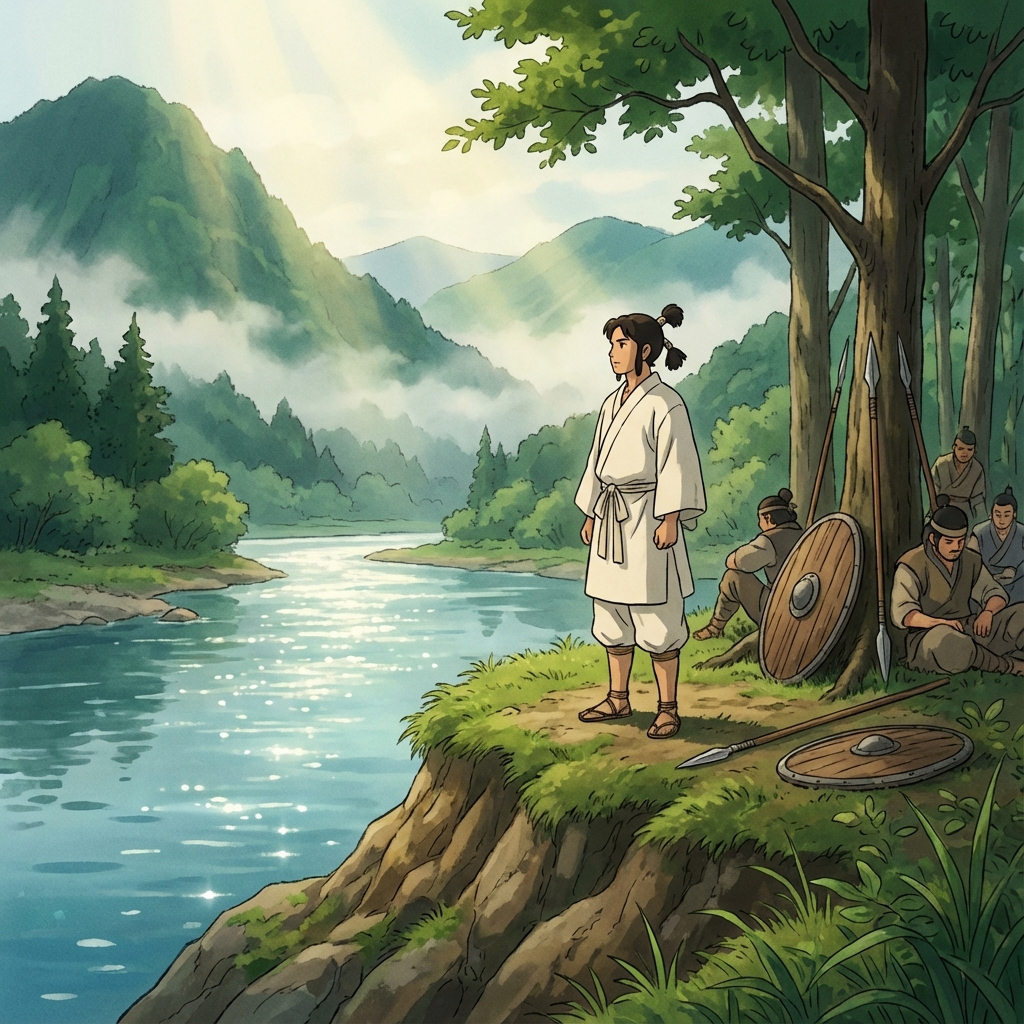
Basic Information
Name: Enomiya-jinja shrine (Enomiya Jinja)
Location: Yoshida-cho Yoshida, Akitakata City, Hiroshima Prefecture
Enshrined kami: Emperor Jimmu (Kamuyamato Iwarehiko no Mikoto)
Access: Approximately 15 minutes by car from Takada IC on the Chugoku Expressway. It is located at the foot of Koriyama Castle Ruins, the former base of the Mori clan.
A Legendary Stage from the Kojiki and Nihon Shoki: Did Emperor Jimmu Stay for 7 Years?
Enomiya-jinja shrine in Akitakata City, Hiroshima Prefecture, is known as a place associated with Emperor Jimmu’s Eastern Expedition, a crucial episode in Japanese mythology. According to the Kojiki and Nihon Shoki, Emperor Jimmu, who set out from Hyuga (Miyazaki Prefecture) aiming for Yamato (Nara Prefecture), stayed at “Enomiya (or Takerimiya) in Aki Province” during his journey.
What is surprising is the duration: a remarkable seven years.
It is unusual for a ruler to stay for such a long time in the middle of an expedition, indicating how important this area was as a base in ancient times. One theory suggests that he might have used this period to organize his forces or deepen his interactions with local powerful clans.
Sea or Mountain? The Mystery of Another Enomiya
In fact, there is another shrine in Hiroshima Prefecture that also bears the name “Enomiya”: Take-jinja shrine (Take Jinja) in Fuchu-cho, Aki District.
Take-jinja shrine in Fuchu-cho: Located near the coastline at the time, it was an “Enomiya of the Sea,” easily accessible to Emperor Jimmu as he advanced by sea.
Enomiya-jinja shrine in Akitakata City: Situated deep within the Chugoku Mountains, on the banks of the Gono River, it is an “Enomiya of the Mountains.”
Why did Emperor Jimmu come to inland Akitakata? This presents an intriguing mystery.
The Gono River, which flows through Akitakata, has long been a vital transportation route leading to Sanin (Izumo). There is a theory that Emperor Jimmu not only advanced along the Seto Inland Sea but also ascended this river to negotiate or conduct reconnaissance with the Izumo forces. If this is true, the founding myths of Japan might conceal a “power play between Izumo and Hyuga” that we are unaware of.
Koriyama Castle’s Guardian Kami, Revered by Warlord Mori Motonari
Enomiya-jinja shrine is located right next to Koriyama Castle, the stronghold of Mori Motonari, a hero of the Sengoku period.
Motonari and the Mori clan deeply cherished this shrine as the guardian kami of their castle. There are legends that Motonari offered prayers for victory before battles, and the shrine grounds still evoke the rugged yet devout atmosphere of the Sengoku period.
Visiting Enomiya-jinja shrine, along with Suga-jinja shrine (Suga Jinja), which the Mori clan revered as their ancestral kami, offers a valuable opportunity to experience the faith of the samurai of that era.
What is the Hidden Meaning of the Difficult-to-Read Kanji ‘埃’?
It is extremely rare for the kanji ‘埃’ (meaning ‘dust’ or ‘dirt’) to be used in a shrine’s name.
There are several theories, but one suggests it evolved from the sound of ‘e’ (江, meaning ‘inlet’ or ‘river’), or that it originates from the place name ‘E’ (可愛). The Enokawa River, which flows through Akitakata City, is also one of the candidate locations in the Nihon Shoki where Susanoo no Mikoto is said to have slain the Yamata no Orochi (eight-headed serpent).
A place where Emperor Jimmu’s Eastern Expedition legend and Susanoo’s mythology intersect. Enomiya-jinja shrine is not just an old shrine; it is like a time capsule that holds the memories of Japan’s dawn.
When you explore the Koriyama Castle Ruins, be sure to visit this shrine where ancient mysteries lie. As you walk through the tranquil grounds, you might feel the presence of Emperor Jimmu, who spent seven years in this very place.
Related Links and References
[1] https://jinmyocho.jpn.org/jinja/33hiroshimananbu/1712/1712.html
[2] https://akitakata-kankou.jp/main/motonari/
[3] https://nihonshinwa.com/archives/4375
[4] https://kodaishi-fantasy.hatenablog.com/entry/2016/11/06/211557_1
[5] https://sobanikutama.hatenablog.jp/entry/2023/02/26/211303
[6] https://houjougo.com/6663/
[7] https://newryobo.fromnara.com/palace/p001-3
[8] https://omouhana.com/2022/01/28/%E5%9F%83%E5%AE%AE%EF%BC%9A%E8%A6%AA%E9%AD%8F%E5%92%8C%E5%9B%BD%E3%83%8E%E5%A5%B3%E7%8E%8B%E3%80%80%E5%BA%8F/
[9] https://www.akitakata.jp/ja/shisei/section/kyouiku/shisekibunkazai/culturalasset/shisekishi/sugajinjya/
[10] https://www.takejinja.net/
[11] https://www.takejinja.net/about
[12] https://akitakata-kankou.jp/cms/wp-content/uploads/2022/07/sanbon-no-ya220701.pdf
[13] https://www.akitakata.jp/ja/shisei/section/kikaku/r456/x777/mouri/