
 By ando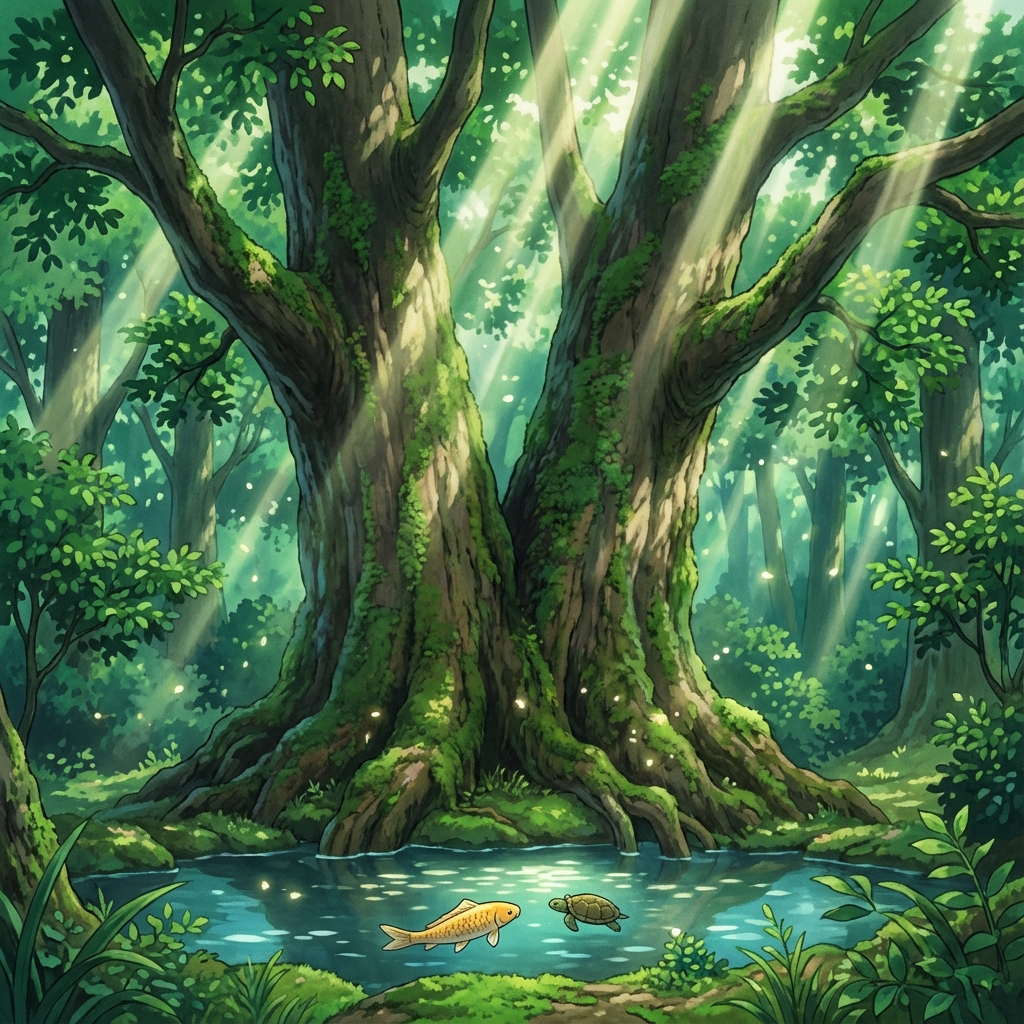
Basic Information
Izanagi Jingu, located in Taga, Awaji City, Hyogo Prefecture, is one of Japan’s oldest jinja shrines. It enshrines Izanagi-no-Mikoto (Izanagi) and Izanami-no-Mikoto (Izanami), the two kami who appear in the “Kuniumi myth” (myth of the creation of the Japanese islands), which opens the Kojiki and Nihon Shoki (collectively known as Kiki). It is affectionately known by locals as “Ikku-san” and has long received the highest reverence as the Ichinomiya (chief shrine) of Awaji Province.
Legend: Kakurinomiya, the Birthplace of Japan
The most significant feature of this jinja shrine lies in its origins. According to mythology, after completing the grand task of creating the land and the kami, Izanagi-no-Mikoto relinquished control of the nation to his child kami, Amaterasu Omikami. He chose the “Taga” area on Awaji Island, the first island he created, as the place for his final years. It is said that he built a “Kakurinomiya” (hidden palace or sacred retreat) here and spent the rest of his life. The sacred tomb (his grave) built on the site of this residence is considered the origin of the current Izanagi Jingu. In other words, this is a sacred site where a kami “retired” and continues to sleep to this day.
Mystery: The Astonishing Ley Line “Hi no Michishirube”
Izanagi Jingu features a mysterious alignment that modern science cannot fully explain, whether it’s due to ancient wisdom or divine will. A monument called “Hi no Michishirube” (Sun’s Guiding Post) stands within the jinja grounds, illustrating an astonishing solar alignment (ley line) centered around this shrine. For example, exactly to the east lies Ise Jingu (Naiku). To the west is Watatsumi Jinja (Tsushima). To the north is Izushi Jinja (Ichinomiya of Tajima). To the south is Yuzuruha Jinja (southern tip of Awaji Island). Furthermore, the summer solstice sunrise aligns with Suwa Taisha (Shinano), while the summer solstice sunset aligns with Izumo Taisha and Hinomisaki Jinja. The winter solstice sunrise corresponds to Kumano Nachi Taisha, and the winter solstice sunset to Takachiho Jinja (Miyazaki). These prominent sacred sites across Japan are positioned along the cardinal directions and the summer and winter solstice sun lines, as if precisely calculated with Izanagi Jingu at their center. Being located at this “Sun’s Path” intersection, some theories suggest that this spot is the spiritual center of the Japanese archipelago.
Power Spot: The 900-year-old Meoto Okusu
Within the jinja grounds, the “Meoto Okusu” (Married Couple Camphor Tree), designated a natural monument of Hyogo Prefecture, commands a particularly strong presence. It is approximately 900 years old and stands over 30 meters tall. This rare giant tree was originally two separate trees that grew together to form a single massive trunk. As a sacred tree believed to house Izanagi and Izanami, it attracts numerous worshippers from all over Japan seeking blessings for marital harmony, safe childbirth, fertility, and good matches.
Behind the Scenes: “Inochigoi” at Hojo-no-ike Pond
In front of the worship hall lies the “Hojo-no-ike” (Life-Releasing Pond), where ancient religious customs persist. In the past, the “Hojo Shinji” ritual was performed here, involving releasing birds and fish to pray for the continuation of life. Even today, the custom continues: carp are released as an “inochigoi” (prayer for life) for recovery from illness, and turtles are released as an expression of gratitude after a recovery. The turtle fountain by the pond’s edge also symbolizes this belief.
Pilgrimage Information: Connection to Touhou Project
For fans of anime and game culture, Izanagi Jingu is known as one of the “sacred sites” connected to the Touhou Project. This is because the title of the music CD “Izanagi Busshitsu ~ Neo-traditionalism of Japan.” and the keyword “Izanagi Busshitsu” (a character appearing in the work) are deeply linked to the enshrined kami and the mythological background of this jinja. While it is not directly depicted as a setting in the anime, many fans tracing the roots of Japanese mythology visit it as a “sacred site pilgrimage.”
When you visit Awaji Island, be sure to come to Izanagi Jingu to feel the essence of the age of myths and experience the mystery drawn by the sun firsthand.