
 By ando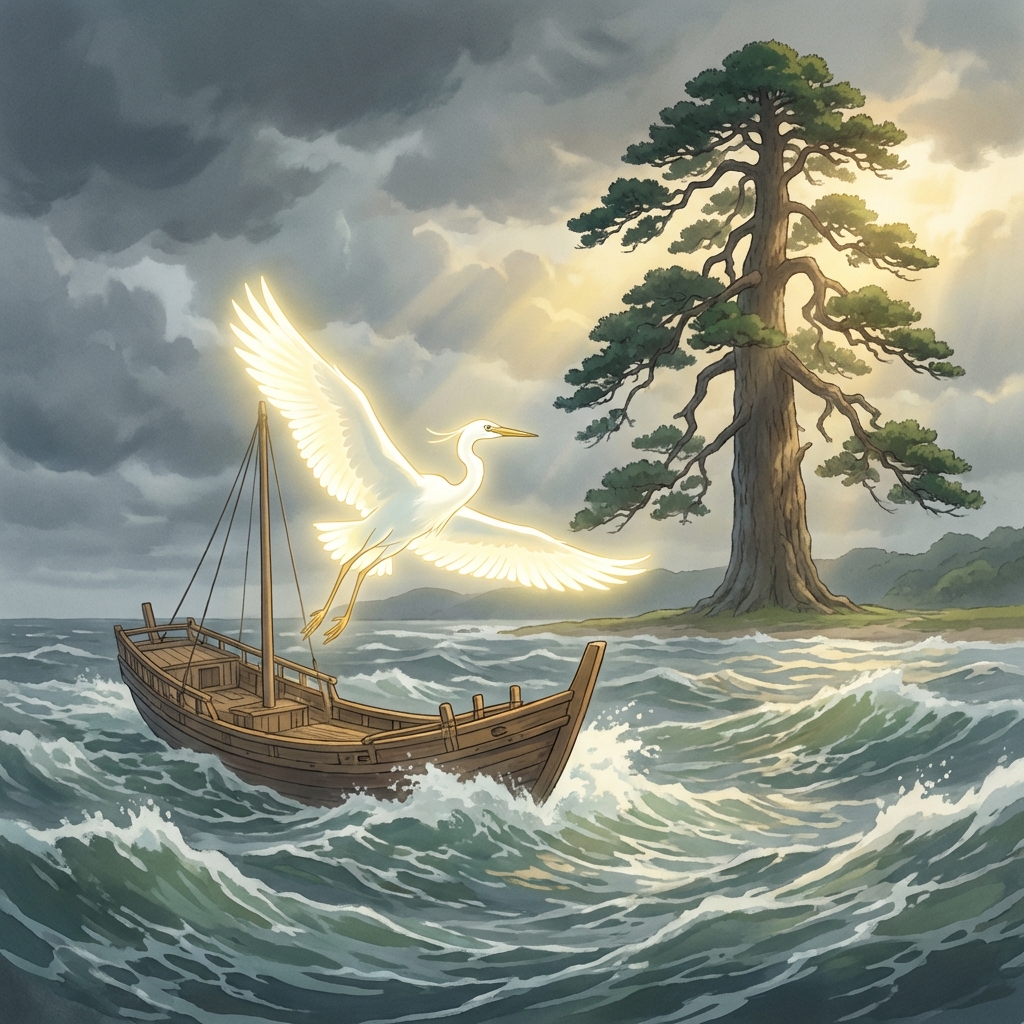
Furogu Jinja, nestled in Okawa City, Fukuoka Prefecture, is affectionately known by locals as ‘Ofuro-san’ and is an ancient shrine boasting one of the longest histories in the Chikugo region. This time, we will delve into the mystical legends associated with this shrine, its little-known mysteries, and its surprising connection to anime.
Basic Information
Location: 726-1 Sakemi, Okawa City, Fukuoka Prefecture
Enshrined Kami: Watatsumi no Mikoto, Tsukushi Jiro (Water Kami), Okinagatarashihime no Mikoto (Empress Jingu)
Cultural Properties: Honden (Main Hall), Stone Five-Story Pagoda (Nationally Designated Important Cultural Property)
Legend: The Guidance of the White Heron that Led Empress Jingu
The founding of Furogu Jinja is linked to a legend involving Empress Jingu, approximately 1800 years ago.
On her return journey from the Three Kingdoms expedition, as Empress Jingu approached the mouth of the Chikugo River, she encountered fierce winds and waves that obstructed her ship’s path. At that moment, she offered prayers to the sea kami. From out of nowhere, a white heron appeared and flew away as if guiding her ship.
The white heron landed on a large pine tree located on the current shrine grounds. Empress Jingu, realizing ‘this is a divine teaching,’ built a shrine there and enshrined the sea kami, marking the beginning of Furogu Jinja. In connection with this legend, white herons are still cherished today as messengers of the kami.
Mystery and Backstory: The 2000-year-old Furo-no-Matsu and the Mystery of the Upside-Down Tree
Within the shrine grounds stands the sacred Furo-no-Matsu (Furo Pine), which also appears in legend. Said to be around 2000 years old, its overwhelming presence makes it famous as a power spot.
This pine tree has a peculiar characteristic: its branches have a unique shape, drooping towards the ground, leading to its ancient nickname, ‘Sakasa Matsu’ (Upside-Down Pine). Mysterious rumors persist, with some suggesting that the kami’s power is so strong it defies gravity, or that the tree suppresses underground ley lines.
Also noteworthy is the Stone Five-Story Pagoda located behind the Honden (Main Hall). While believed to have been constructed during the Muromachi period, a legend says it appeared ‘overnight.’ Its intricate construction, unimaginable with the technology of that era, has led to whispers that something non-human was involved in its creation.
Must-See Architectural Beauty: The Prayer of Sengoku Warlord Kamachi Akimori
The current Honden was rebuilt in Eiroku 3 (1560) during the Sengoku period by Kamachi Akimori, the lord of Yanagawa Castle. It strongly retains the Sangensha Nagare-zukuri architectural style of the Muromachi period, with a cypress bark roof (hiwada-buki). Its elegant curves and powerful carvings are so valuable that the building has been designated a National Important Cultural Property. The earnest prayers for victory of the warlords who survived the turbulent Sengoku period are truly imbued within this building.
Pilgrimage Information: The Hometown of Nodame Cantabile
Okawa City, where Furogu Jinja is located, is set as the hometown of Megumi Noda (Nodame), the protagonist of the hugely popular music manga and anime, ‘Nodame Cantabile.’
Scenes of Okawa City are depicted throughout the series, making it known as a ‘sacred site’ or pilgrimage destination among fans. While Furogu Jinja itself may not repeatedly appear as a direct main setting, it serves as a symbolic landmark of Okawa City, becoming a must-visit spot for fans on pilgrimage. To truly experience the atmosphere of the Chikugo River where Nodame grew up, the grounds of Furogu Jinja are arguably the most suitable place.
In Conclusion
Every February, the Furogu Jinja Grand Festival (Ofuro-san Matsuri) is held, where the Hadakamairi (naked pilgrimage) and Shirasagi no Mai (white heron dance) are offered, enveloping the entire town in excitement. Furogu Jinja draws worshippers as a kami of victory and maritime safety. While reflecting on the legend of the white heron, why not pay a visit to experience the profound weight of its history?
Related Links / References
No sources available.