 By ando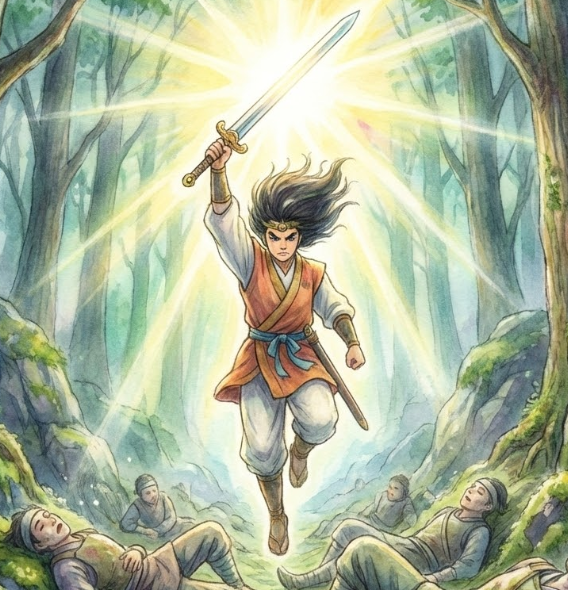
Hello everyone! This time, we’d like to introduce Kashima Jingu, one of Japan’s oldest jinja (Shinto shrines), located in Kashima City, Ibaraki Prefecture. It was incredibly founded in 660 BC! Continuing from the age of myths, it is truly a place that can be called “the land of all beginnings.”
What is Kashima Jingu?
Kashima Jingu is a jinja dedicated to Takemikazuchi no Okami, who is known as the kami (deity) of martial arts. This kami is a warrior deity who played an active role in Japanese mythology during the “Kuniyuzuri” (transfer of the land), and is also revered as the kami of thunder, swords, sumo, and earthquakes.
History and Legends of Kashima Jingu
The history of Kashima Jingu dates back to the era of Emperor Jimmu. According to myth, during his journey to unify Japan, Hikohodei (who would become the first emperor) was attacked by the poison of the local kami of Kumano, and his forces began to fall one after another. It was Takemikazuchi no Okami who saved them from this crisis. With the power of the divine sword “Futsunomitama no Tsurugi”, Hikohodei’s army recovered and achieved victory. Afterward, Hikohodei ascended the throne as Emperor Jimmu, and it is said that Kashima Jingu was established out of gratitude.
Mysteries and Hidden Stories of Kashima Jingu
1. The Mystery of the Kaname-ishi (Keystone)
Kashima Jingu has a “Kaname-ishi” (Keystone) that is said to have the power to suppress earthquakes. Only a small part of this stone is visible above ground, but it is believed to be buried deep underground. A legend states that even Mito Komon (Tokugawa Mitsukuni) had it dug for seven days and seven nights, yet its bottom could not be found. It is also said that this Kaname-ishi pins down the head of a giant catfish (onamazu) that causes earthquakes, and thus, major earthquakes are believed not to occur in the Kashima region.
2. The Seven Mysteries of Kashima
Kashima Jingu has “The Seven Mysteries of Kashima”, passed down through generations since ancient times.
Kaname-ishi: Famous as a stone that suppresses earthquakes, with a legend that Tokugawa Mitsukuni dug for its bottom but couldn’t find it.
Mitarashi-ike Pond: A pond where spring water constantly flows, and the water level never decreases even during droughts. It is said that both adults and children can only wade in up to their chests.
Suenashi-gawa River: A river located outside the jinja grounds that goes underground midway, with its end unknown.
O-fuji no Hana (Wisteria Flowers): A wisteria tree said to have been planted by Fujiwara no Kamatari, whose flower count was used to predict good or bad harvests. (It no longer exists today).
Neagari no Matsu (Raised-Root Pine): Pines growing on Mount Kashima are said to sprout from their stumps and not wither even when cut down. (Its current status is unknown).
Matsu no Hashi (Pine Chopsticks): Chopsticks made from pine trees within the jinja grounds are said not to exude resin. (They are no longer made today).
Umi no Oto (Sound of the Sea): Within the jinja grounds, it is said that if the sound of waves is heard from the north, it will be clear weather, and if heard from the south, it will rain.
3. The Togoku Sansha (Three Shrines of the Eastern Provinces) and Ley Lines
Kashima Jingu, along with Katori Jingu and Ikisu Jinja, is collectively known as the “Togoku Sansha”. These three shrines have had an important relationship since ancient times. There are theories that they form an isosceles triangle when connected on a map, and also that they are situated on the 35th parallel north. Whether these arrangements were intentionally made by ancient people or are merely coincidental stirs up mystery.
4. Kashima Jingu and Martial Arts
As a jinja dedicated to the kami of martial arts, Kashima Jingu has long attracted the faith of samurai warriors. It is said that the master swordsman Tsukahara Bokuden was born and raised among the Urabe clan, who served Kashima Jingu. Numerous hanging scrolls dedicated to Kashima Daimyojin are displayed in Kashima Jingu’s martial arts dojo. Furthermore, even today, it is revered as a sacred place for martial arts, with teams like J. League’s Kashima Antlers visiting for prayers for victory.
5. Secret of the Okunomiya (Inner Shrine)
Deep within Kashima Jingu is the “Okunomiya”, dedicated to the Aramitama (fierce spirit) of Takemikazuchi no Okami. Aramitama represents the wild and powerful aspect of a kami, and visitors are cautioned not to clap their hands when praying there. The branching of the trees behind the Okunomiya is wild, and the way the sun shines like an eye evokes the power of the kami.
Highlights of Kashima Jingu
Romone (Tower Gate): A magnificent gate designated as an Important Cultural Property, donated by Tokugawa Hidetada, the second Tokugawa Shogun.
Honden (Main Hall): A beautiful shrine building with a cypress bark roof and vibrant colors.
Okusando (Inner Approach): A forest corridor with beautiful sunlight filtering through the trees.
Mitarashi-ike Pond: A mysterious pond with clear, azure waters.
Deer Park: Where sacred deer are kept.
Kashima Obi Fortune-telling: You can tell your fortune using four red strings.
Access to Kashima Jingu
Train: Approximately 10 minutes on foot from JR Kashima-Jingu Station.
Car: Approximately 15 minutes from Itako IC on the Higashi-Kanto Expressway.
Summary
Kashima Jingu is a mystical power spot where myths and history come alive. Each visit offers new discoveries, giving it an allure that makes you want to return again and again. We encourage everyone to visit Kashima Jingu and experience its mystical atmosphere for yourselves.
Finally
We hope this article sparks a deeper interest in Kashima Jingu for everyone. Thank you for reading to the end!
References
[1] Kashima Jingu Seven Mysteries https://japanmystery.com/ibaraki/kasima.html#google_vignette
[2] Kashima Jingu: The Ultimate Power Spot! The Head Shrine among 600 nationwide. Full of blessings and highlights! https://total-stay.com/sightseeing/kashima-jingu/
[3] Kashima Jingu: The Ultimate Power Spot! Blessings for victory, matchmaking, and safe childbirth https://www.kih.jp/contents/sightseeing/kashima-jingu/
[4] Kashima Jingu, revered by samurai warriors, is an important power spot for modern people | A Journey to Japan’s Jinja and Kami (Part 6) https://jbpress.ismedia.jp/articles/-/67996
[6] The Mystery of Kashima Jingu’s Kaname-ishi (Keystone) http://www.rekishinosato.com/essayW_8.htm
[7] Travel Memories: Captivated by the Mysterious Spring at Kashima Jingu (Ibaraki Prefecture) https://ameblo.jp/hituzou/entry-12715224189.html
[8] The Kaname-ishi and Kashima Jingu https://www2.nict.go.jp/sts/stmg/K3-Book/Manuscript/6.1.6%20episode%20key%20stone%20v1.pdf
[9] Refresh Your Mind and Body in the Forest Corridor. Search for the ‘Seven Mysteries’ at Kashima Jingu https://www.tabirai.net/sightseeing/article/kashima-jingu/
[10] ‘Mu’ – The Seven Mysteries Passed Down in Kashima Since Ancient Times https://city.kashima.ibaraki.jp/site/karuta/16040.html
[11] The 35th Parallel Mystery Tours: A Look Back at the Togoku Sansha Edition https://www.amoto.co.jp/post/%E3%80%9035%E5%BA%A6%E7%B7%9A%EF%BE%90%EF%BD%BD%EF%BE%83%EF%BE%98%EF%BD%B0%EF%BE%82%EF%BD%B1%EF%BD%B0%EF%BD%BD%EF%BE%9E%E3%80%91%E6%9D%B1%E5%9B%BD%E4%B8%89%E7%A4%BE%E7%B7%A8%E3%81%AE%E6%8C%AF%E3%82%8A%E8%BF%94%E3%81%97
[12] Kashima Jingu, Katori Jingu, Ikisu Jinja: 3 Key Points! Goshuin You Can’t Get at the Shrine Office? https://www.shikiclub.co.jp/shikitabi/blog/archives/11645/
[13] Travelogue?: I Visited Kashima Jingu and Did a Little Sightseeing (May 21) https://blog.kashima-no-sora.org/archives/3029
[14] I Visited Kashima Jingu https://magome-reien.com/?p=3930