 By ando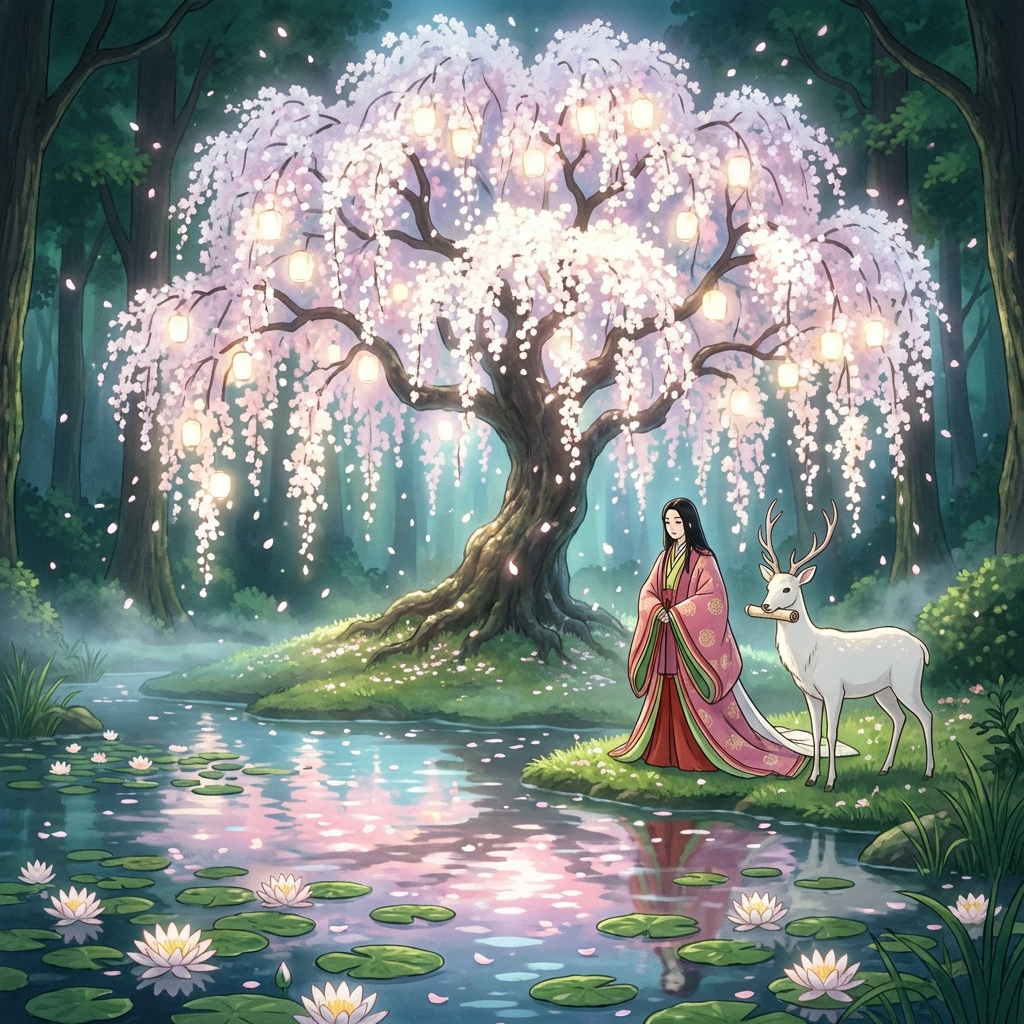
Basic Information
Name: Oharano Jinja
Location: 1152 Oharano Minamikasugacho, Nishikyo Ward, Kyoto City, Kyoto Prefecture
Enshrined Kami: Takemikazuchi no Mikoto, Iwai nushi no Mikoto, Amenokoyane no Mikoto, Hime Okami
Founded: Enryaku 3 (784 CE)
Divine Blessings: Good relationships, warding off evil, protection for politics and wisdom, women’s happiness (good fortune in marriage)
Oharano Jinja began when Emperor Kanmu transferred the capital to Nagaoka-kyo. It was established by inviting a divided spirit (kanjo, meaning enshrining a divided spirit) from Nara’s Kasuga Taisha, which is the tutelary kami (ujigami) of the Fujiwara clan. For this reason, it is also known as “Kyo Kasuga,” and like Kasuga Taisha, it cherishes deer as messengers of the kami.
A 3-Day Miracle! The “Phantom Cherry Blossom” and a Thousand Wishes
This jinja is home to the “Senganzakura,” known among cherry blossom enthusiasts as the “Phantom Cherry Blossom.” It is a single-petal weeping cherry tree, named for the way its flowers bloom in dense clusters on each branch, resembling “a thousand eyes.”
The most distinctive feature of this cherry blossom is its extremely short full-bloom period, lasting only about “three days.” There is a legend that if you are fortunate enough to witness it at its peak, “a thousand wishes will come true,” making it one of Kyoto’s most renowned power spots in spring.
Murasaki Shikibu’s Beloved “Ujigami” and the “Tama no Koshi” Legend
Murasaki Shikibu, who is gaining attention with the 2024 historical drama “Hikaru Kimi e,” deeply revered Oharano Jinja as her personal ujigami. In the “Miyuki” (Imperial Progress) chapter of her masterpiece, “The Tale of Genji,” a magnificent procession of Emperor Reizei’s pilgrimage to Oharano is depicted.
Furthermore, it was customary for women of the Fujiwara clan to pray at this jinja for their daughters to become empresses or imperial consorts. If their prayers were answered, they would arrange lavish processions for a thanksgiving visit. Due to this history, many female worshipers still visit today, seeking blessings for “good relationships” and “good fortune in marriage.”
Mysteries and Highlights within the Grounds
Komainu (Guardian Dogs) or “Komashika” (Guardian Deer): While jinja usually have komainu at their entrance, Oharano Jinja is home to male and female “Komashika.” These are extremely rare nationwide, and their endearing expressions make them a popular photo spot.
Kyoto’s Monet, “Koizawa-no-ike Pond”: The “Koizawa-no-ike Pond” within the grounds was modeled after Nara’s Sarusawa-ike Pond. In recent years, it has become a hot topic on social media for its striking resemblance to Claude Monet’s “Water Lilies.” In early summer, water lilies bloom in abundance, creating a fantastical, painting-like scene.
Sacred Deer Chozuya (Water Basin): At the chozuya, water flows from a scroll held by a deer. This scroll is considered a symbol of wisdom, and it is believed to impart wisdom to visitors.
Pilgrimage Spot Information: Setting of the Anime “The Eccentric Family 2”
Oharano Jinja is also known as a pilgrimage site for the popular anime “The Eccentric Family 2,” which is set in Kyoto.
In episodes such as Episode 10, “The False Emon’s Conclusion,” the scenery of Oharano and the jinja’s surroundings are depicted, appearing as the backdrop for the various shenanigans of the tanuki. In particular, the serene atmosphere of the jinja, surrounded by a tranquil forest, perfectly captures the anime’s worldview, making it an unmissable pilgrimage point for fans.
Oharano Jinja stands in Rakusai, far from the hustle and bustle of the city. Why not enjoy the view of Mt. Oshio, which Murasaki Shikibu might have gazed upon, and visit the phantom cherry blossoms and sacred deer?