 By ando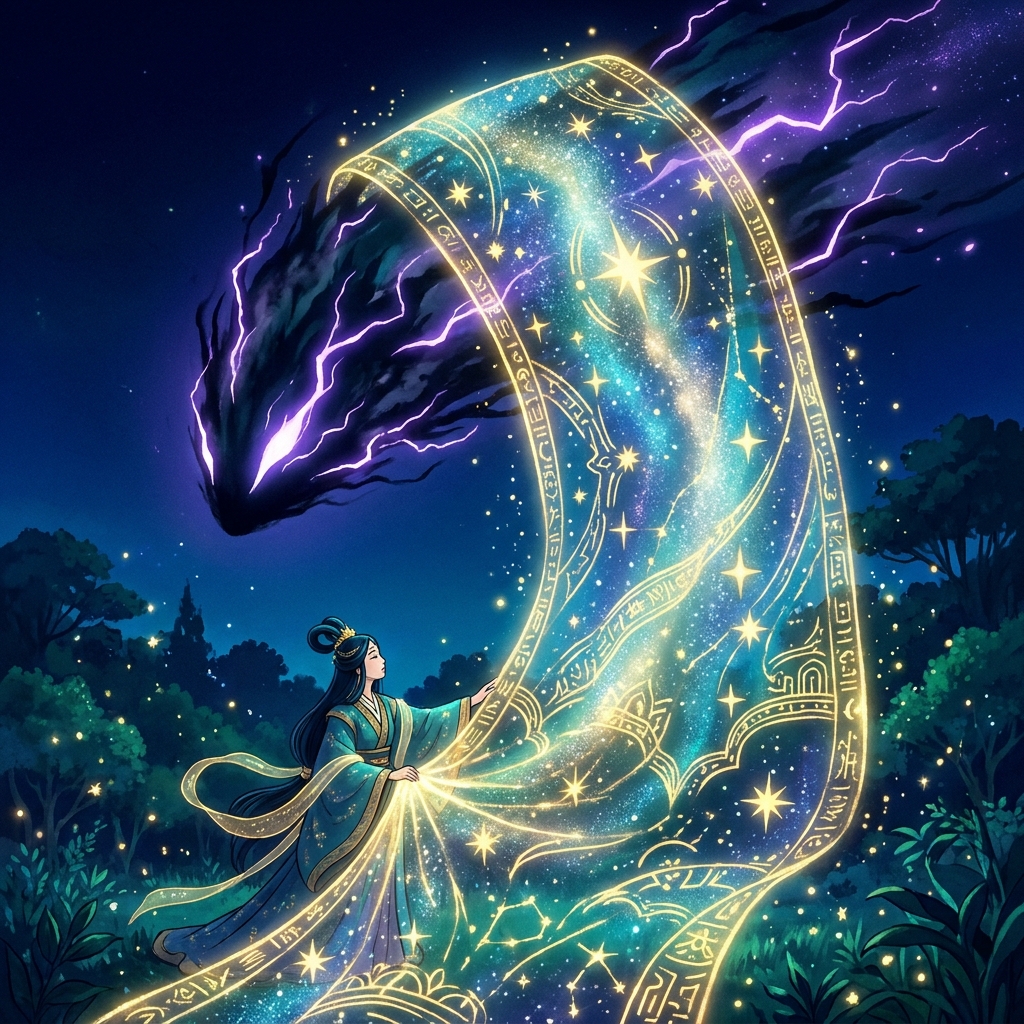
Do you know Shizu Jinja, located in Naka City, Ibaraki Prefecture? This jinja boasts the high status of “Hitachi no Kuni Ninomiya” (second-ranked shrine of Hitachi Province) and has long been affectionately known as “Oshizu-san.” However, contrary to its gentle nickname, this jinja holds a tremendous hidden legend: it is said to have repelled the “strongest evil kami,” whom even the most powerful warrior kami of Japanese mythology could not defeat, even when united.
This time, we will delve into the fascinating appeal of Shizu Jinja, covering its history, mysteries, and even pilgrimage information essential for anime fans.
Basic Information
Location: Shizu 2, Naka City, Ibaraki Prefecture
Enshrined Kami: Takehazuchi-no-Mikoto
Associated Kami: Tajikarao-no-Mikoto, Takamimusubi-no-Mikoto, Omoikane-no-Mikoto
Shrine Status: Hitachi no Kuni Ninomiya, Myojin Taisha
—
The Strongest Warrior Kami Defeated? The Only Being Who Pacified the “Kami of Stars”
The greatest highlight of Shizu Jinja is the untold story behind the “Kuniyuzuri myth” (transfer of the land myth), concerning its enshrined kami, Takehazuchi-no-Mikoto.
When Amaterasu Omikami sought to pacify the earthly realm, two of the most powerful warrior kami in Japanese mythology were dispatched: Takemikazuchi-no-Mikoto from Kashima Jingu and Futsunushi-no-Mikoto from Katori Jingu. They subdued almost all the kami, but the only one who continued to resist until the very end was the “kami of stars,” Amatsu-Mikaboshi (also known as Kakaseo).
It is said that Takehazuchi-no-Mikoto, the enshrined kami of Shizu Jinja, was the one who finally appeased, or even kicked and killed, this evil kami whom even the two strongest kami could not touch, bringing him to submission. This episode, where a kami of weaving possessed power surpassing even warrior kami, is passed down as Shizu Jinja’s hidden “legend of the strongest.”
The Origin of the Name “Shizu” and Lost Ancient Weaving
The jinja’s name, “Shizu,” comes from “Shizuori,” a type of weaving once practiced in this area. Takehazuchi-no-Mikoto is revered as the ancestral kami of weaving, and this land is said to be the birthplace of weaving in Hitachi Province.
It was once called “Shizuri no Sato” (Village of Shizuri Weaving), where beautiful twill fabrics were made from hemp and paper mulberry. While the details of this technique are now shrouded in mystery, the tranquil atmosphere of the jinja seems to echo the sounds of ancient looms even today.
Treasures Loved by Tokugawa Mitsukuni (Mito Komon)
Shizu Jinja is also known for the deep reverence it received from successive lords of the Mito domain. Tokugawa Mitsukuni, famously known as “Mito Komon,” particularly revered this jinja, undertaking renovations of its main hall and donating treasures.
The “Shizu Jingu-in (bronze seal),” currently designated as a National Important Cultural Property, is an extremely valuable item believed to date back to the late Nara period. While many ancient records were lost in a fire during the Tenpo era, the survival of this bronze seal is a testament to the profound history of the jinja.
The Legend of the “Four Foxes” and Bonds Protecting the Region
Shizu Jinja also preserves a heartwarming folk tale. Long ago, four fox brothers named Gentaro, Jinjiro, Monsaburo, and Shirosuke, who lived in the jinja’s forest, scattered to various places to “repay their gratitude to humans” and became guardian kami.
The eldest brother, Gentaro, remained at Shizu Jinja; the second went to Yonesaki Castle; the third to Kasama Castle; and the fourth to Nakaminato. Even today, Inari Jinja dedicated to them are dotted throughout the surrounding areas, illustrating how Shizu Jinja served as the center of a regional network.
—
Anime Pilgrimage Information: The Roots of a Hit Anime?
Shizu Jinja is also a must-see spot for anime fans.
1. Your Name. (Directed by Makoto Shinkai)
It is garnering attention among fans as one of the models for, or a root of the setting of, the “Miyamizu Jinja” that appears in the film. The heroine Mitsuha’s family has a long history in “weaving” as their family business, and the motif of the “comet (kami of stars)” is key to the story. These elements are strongly linked to Shizu Jinja’s myth, where Takehazuchi-no-Mikoto (kami of weaving) pacified Amatsu-Mikaboshi (kami of stars). While there has been no official announcement of it being a model, many fans visit it as a “hidden sacred site” to trace its mythological background.
2. Noragami
The character “Takehazuchi” in the work is, of course, modeled after the enshrined kami of Shizu Jinja. The number of visitors coming to see where the actual kami, whose exploits they’ve seen in anime and manga, is enshrined is increasing.
—
Shizu Jinja, at first glance, presents a quiet and serene appearance, but within its depths, “the power that pacified the stars” and “ancient technology” reside. When you visit Naka City, be sure to step into this mystical forest and feel the power of the strongest kami of weaving.
Related Links and References
[1] https://yoshiwara-kitsune.jimdofree.com/%E7%A5%9E%E8%88%9E/%E4%B8%AD%E5%9B%BD%E5%B9%B3%E5%AE%9A/
[2] https://www.sgk-p.co.jp/blog/15690/
[3] https://jinja-ibaraki.com/sisu/
[4] https://ameblo.jp/keith4862/entry-12918186811.html
[5] http://tabinosora1220.blog.fc2.com/?no=63
[6] https://www.naka-kanko.jp/page/page000279.html
[7] https://omouhana.com/2021/07/27/%E9%9D%99%E7%A5%9E%E7%A4%BE%EF%BC%9A%E5%85%AB%E9%9B%B2%E3%83%8B%E6%95%A3%E3%83%AB%E8%8A%B1%E3%80%80%E6%9D%B1%E3%83%8E%E5%9B%BD%E7%AF%87%E3%80%8009/
[8] https://sakamachi-hideyuki.github.io/meteors/chapter-of-ishi–section-18.html
[9] https://ja.wikipedia.org/wiki/%E5%A4%A9%E6%B4%A5%E7%94%95%E6%98%9F
[10] https://japanmystery.com/ibaraki/syukukon.html
[11] https://genbu.net/data/hitati/sizu_title.htm
[12] https://houkan-maria.com/2025/08/25/0825/
[13] https://newstsukuba.jp/?post_type=column&p=2986
[14] https://www.city.naka.lg.jp/data/doc/1744957147doc902_0.pdf
[15] https://www.bunkajoho.pref.ibaraki.jp/minwa/minwa/no-0800100012?f=1
[16] https://mametoku.community2.fmworld.net/tane/537175/