 By ando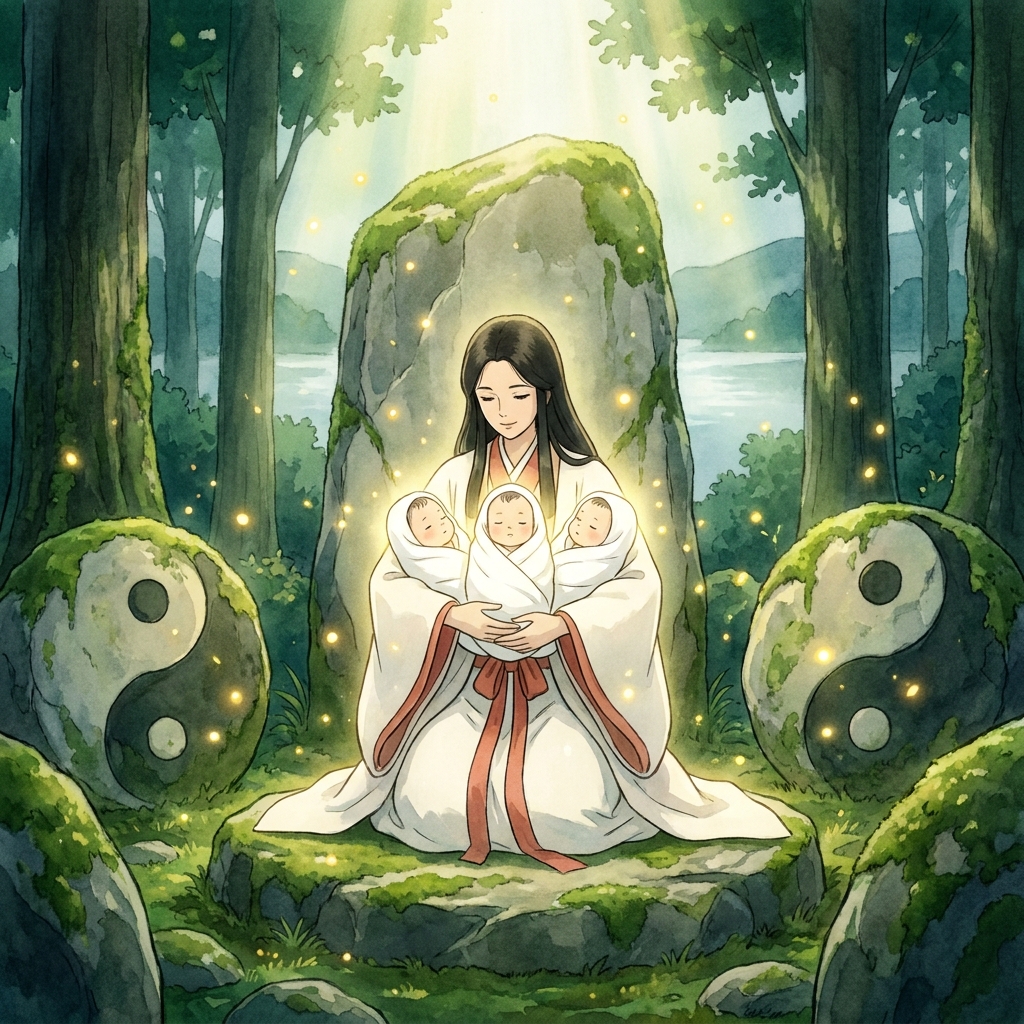
Mizuo Jinja, located on the west side of Lake Biwa in Takashima City, Shiga Prefecture, might appear at first glance to be a quiet village’s guardian shrine. However, it is an ancient jinja that harbors tremendous energy, deeply connected to the birth of the 26th Emperor of Japan, Emperor Keitai, who profoundly altered the course of Japanese history.
This time, we will introduce the mysteries and lesser-known stories of Mizuo Jinja, which are irresistible for ancient history enthusiasts and lovers of power spots.
The Haiden as a “Birthing Room”? The Mystery of Emperor Keitai’s Birth
The biggest highlight and the greatest mystery of this jinja is the “legend of Emperor Keitai’s birth.”
Furihime no Mikoto, one of the kami enshrined here, was the mother of Emperor Keitai. According to legend, Furihime gave birth to the future Emperor Keitai using the jinja’s haiden (hall of worship) as her birthing place.
Even more surprising is the “triplet theory” found in some traditions. A mysterious, lesser-known story, not recorded in the Kiki (Kojiki and Nihon Shoki), tells that Furihime gave birth to three imperial princes here, one of whom became the future Emperor Keitai (Ōdo no Ō). The strong devotion to her today as a kami of safe childbirth and fertility is rooted in this powerful birth legend.
Mizuo Garden, Home to a Giant “Inyo-seki” (Yin-Yang Stone)
Mizuo Garden, located on the left side of the jinja grounds, was developed during the Heisei era, but it contains a “hidden spot” that you shouldn’t miss.
It is the giant “Inyo-seki” (Yin-Yang Stone) placed within the garden. This stone, a combination of natural megaliths, symbolizes prosperity for descendants and the energy of life, making it a powerful “power spot” known to those in the know.
Furthermore, this area is also the ancestral home of the ancient powerful clan, the “Mio uji.” Although the jinja’s name is “Mizuo,” this entire area was once called “Mio” and was a scenic spot praised in the Manyoshu (an ancient collection of Japanese poetry). Including Mount Mio, which rises behind the jinja, the entire mountain is enveloped in a unique atmosphere, as if it were a sacred domain.
An Unexpected Connection with the Tokugawa Shogunate
It’s not just ancient romance. During the Edo period, Mizuo Jinja also received special reverence from the Tokugawa Shogunate.
Records show that the 8th Shogun, Tokugawa Yoshimune, donated a mikoshi (portable shrine), and the 9th Shogun, Tokugawa Ieshige, rebuilt the main hall. Why was a regional jinja so highly regarded by the top leaders of the Shogunate? It may be because this was recognized as a sacred place enshrining the “mother of an emperor,” an indispensable site for praying for the peace and security of the nation.
Connection with the Ancient Document “Hotstuma Tsutae”
Among history enthusiasts, the connection to the ancient historical document “Hotstuma Tsutae” is quietly discussed. In this text, the area around Mizuo Jinja is depicted as a very important base, and it is said to hold clues for exploring Japan’s roots from a different angle than the Kiki. Gazing at the scattered megaliths within the jinja grounds, one can’t help but imagine that “another Japanese history,” not found in textbooks, might have truly existed.
Basic Information
Name: Mizuo Jinja
Location: 716 Haito, Takashima City, Shiga Prefecture
Kami enshrined:
Iwatsukuwake no Mikoto: The 10th Imperial Prince of Emperor Suinin. Kami of success and good fortune.
Furihime no Mikoto: Mother of Emperor Keitai. Kami of safe childbirth and fertility.
Access: Approximately an 8-minute bus ride (Hata Line) from Omi-Takashima Station on the JR Kosei Line, then about a 3-minute walk from the “Shimohaito” bus stop.
Highlights: The main hall rebuilt by Tokugawa Ieshige, the Inyo-seki in Mizuo Garden, and the Haito Kofun Group (nearby).
If you wish to feel the breath of ancient times and the mystical power of life’s birth, please do visit. Within the tranquility, you are sure to hear the distinct “pulse of history.”
Related Links and References
Mio Myojin and the Mio Clan who produced Emperor Keitai, and their scattered historic sites in Takashima, Shiga – WisdomMingle.com
Mizuo Jinja (Haito, Takashima City, Shiga Prefecture) – The ancestral home of the Mio clan, where legends of Emperor Keitai’s triplet theory and “Hotstuma Tsutae” remain – Ancient History Exploration from Settsu Mishima
An ancient jinja preserving ancient romance, protected by local residents – Mizuo Jinja – Support Ring Takashima
Mizuo Jinja (Takashima City)
Mizuo Jinja | Shiga Prefecture Tourism Information [Official Tourism Site] Discover everything about Shiga and Lake Biwa!
Mizuo Jinja | Biwako Takashima Tourism Guide
Mizuo Jinja (Takashima City) | Jinja Power and Temple Heart
Monoshiri Hyakka (Encyclopedia of Knowledge)