 By ando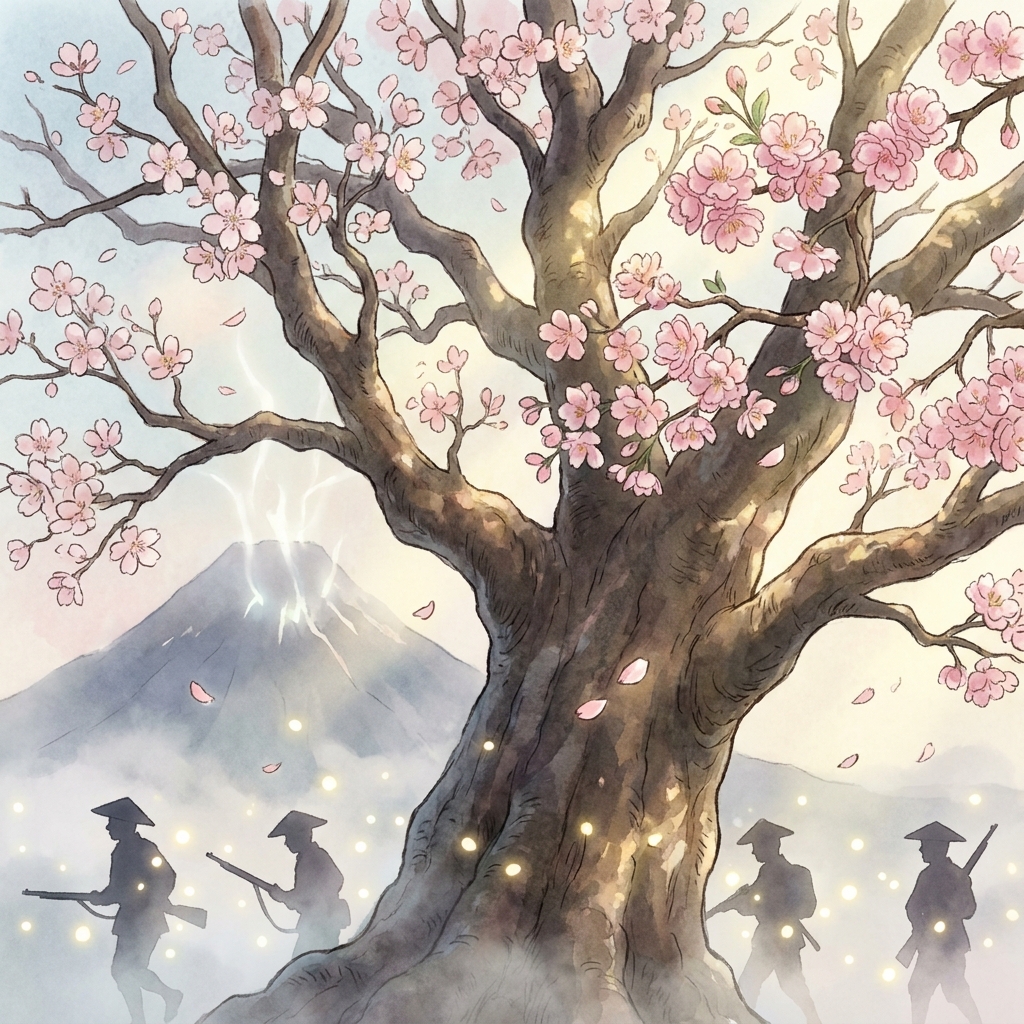
Basic Information
Name: Yamakuni-jinja (Yamakuni Shrine)
Location: 1 Miyanomae, Tōchō, Keihoku, Ukyo-ku, Kyoto-shi, Kyoto
Enshrined Kami: Ōyamakui-no-mikoto, Nakatsutsuo-no-mikoto, and others
Founded: Traditionally Heian period (Enryaku era)
Access: From JR Kyoto Station, take the West Japan JR Bus (Takao-Keihoku Line) to “Shuzan” stop. Transfer to the Keihoku Furusato Bus and get off at “Yamakuni Goryomae” stop. The jinja is immediately accessible from there.
The Truth about the “Yamakuni-tai” Leading the Jidai Matsuri
The Jidai Matsuri (Festival of Ages) adds vibrant colors to Kyoto’s autumn. Are you familiar with the “Ishin Kinno-tai” (Imperial Loyalist Corps), which splendidly leads the procession? In fact, the model for this corps was the “Yamakuni-tai,” a farmer-soldier unit formed by the ujiko (parishioners) of Yamakuni-jinja.
During the Bakumatsu period (late Edo period), farmers from Yamakuni in Kuwata County, Tanba Province, swore loyalty to the Emperor of the time. They equipped themselves with guns and supplies at their own expense and joined the Imperial Army. They fought their way north to Tohoku, achieving great deeds. However, after the war, they faced the unfortunate history of not receiving proper recognition simply because they were “farmers.” Within the grounds of Yamakuni-jinja, there is a bronze statue commemorating their brave deeds and the “Yamakuni-tai Military History Museum,” which exhibits historical materials from that era. Among history enthusiasts, it is known as a “hidden sacred site of the Meiji Restoration.”
The Mystery of the “Hidden Village” Loved by the Northern Court Emperor
The Keihoku region, where Yamakuni-jinja is located, has had deep ties with the Imperial Family since ancient times, serving as an imperial demesne (Kinri Goryochi). Particularly during the Northern and Southern Courts period, Emperor Kōgon, the first emperor of the Northern Court, sought refuge and lived in seclusion in this area to escape the strife of war.
Very close to the jinja is Jōshōkō-ji Temple, where Emperor Kōgon is said to have spent his later years and passed away. Yamakuni-jinja itself is also believed to have received extremely profound reverence from the Emperor. Why did such a deeply mountainous region become a “spiritual sanctuary” for the Imperial Family? One theory suggests it was an excellent geomantic power spot (ryuketsu), while another posits that it had supported the imperial court’s economic foundation as a continuous “source of timber” since ancient times.
Two Kinds of Flowers on One Branch? The Miraculous “Sakiwake Sakura”
Within the grounds of Yamakuni-jinja, there is a legendary and extremely rare cherry tree called “Sakiwake Sakura.” It has the mysterious characteristic of blooming with both “single-petal” (hitoe) and “double-petal” (yae) flowers mixed on a single branch.
A legend says that Emperor Kōgon planted this cherry tree when he left the area, regretting his departure. It is a hidden gem that evokes romantic imagination, suggesting that the Emperor’s complex state of mind (torn between the Northern and Southern Courts, or secular life and the path of Buddhism) might be reflected in the two different types of flowers blooming.
The Mystery of Mikami-yama, the Forbidden Mountain
Mikami-yama, rising behind the jinja, has been revered since ancient times as a shintaizan (a mountain where kami descend and reside). It was once subject to strict access restrictions, and even today, its mystical atmosphere remains undiminished.
Local legends persist that “tengu (long-nosed goblins) live on this mountain” and “mysterious lights are emitted from its summit every night.” It is also said that the Yamakuni-tai conducted their training at the foot of this mountain, and their resilient spirit may have been nurtured by the spiritual energy of this sacred mountain.
Behind the Scenes: The “Authenticity” of the Jidai Matsuri
Currently, the Imperial Loyalist Corps in the Jidai Matsuri is performed by citizens of the Heian Kosha. However, from the Meiji period to the early Showa period, the actual survivors of the Yamakuni-tai and their descendants would walk from Yamakuni-jinja all the way to the Kyoto Imperial Palace to participate.
Their pride in being “the true Imperial Loyalist Corps” was immense. There’s even an anecdote that any deviation from Yamakuni’s traditions, down to costumes and walking styles, would be met with strict guidance. Even today, during the “Kankosai (Yamakuni Matsuri)” held annually on the second Sunday of October, visitors can witness the authentic Yamakuni-tai procession, whose power conveys a “resonance of the soul” distinct from the Jidai Matsuri.
Related Links / References
No sources available.