 By ando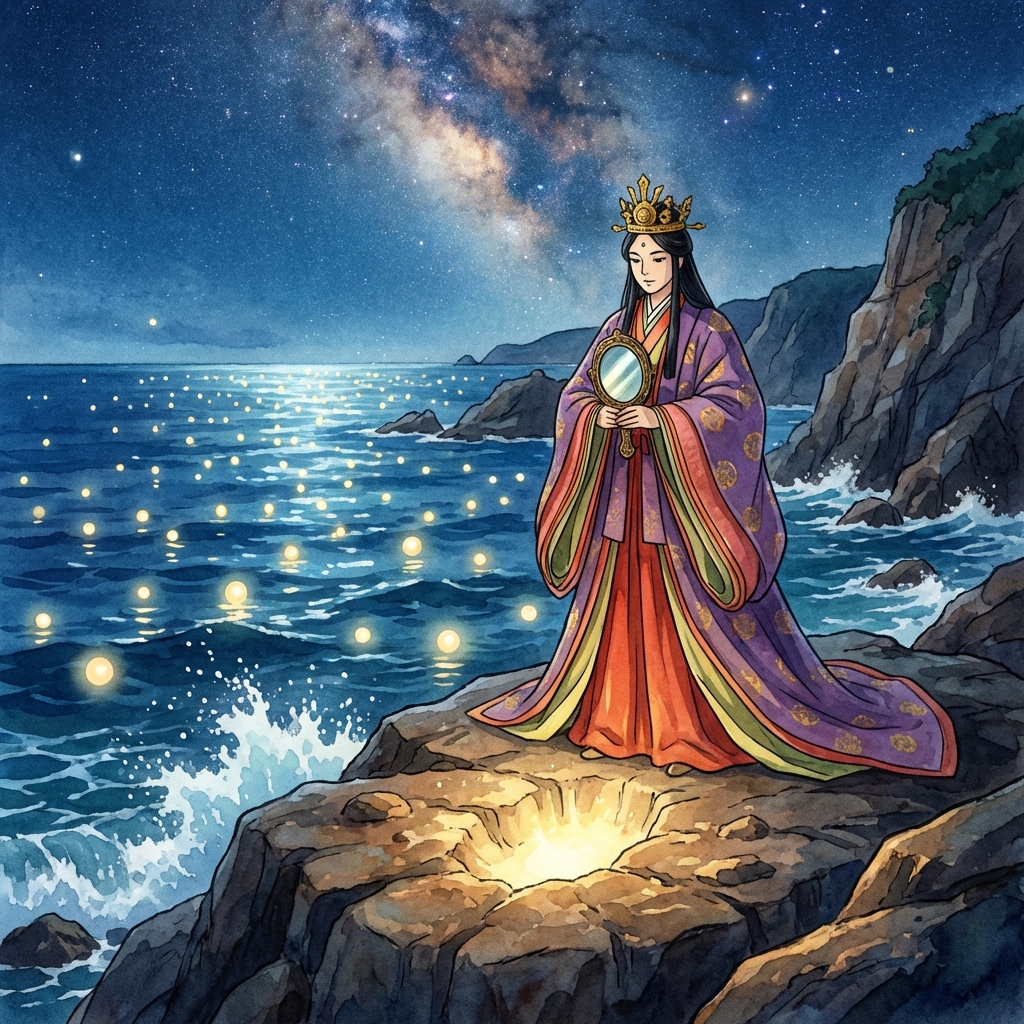
Shomogu jinja, located on a hill overlooking Katsumoto Port at the northernmost tip of Iki City in Nagasaki Prefecture, is affectionately known as “Shomogu” by locals. This jinja boasts the distinguished status of Iki Province’s Ninomiya (second-ranked shrine) and has a history spanning over 1300 years. However, beneath its beautiful scenery lie surprising episodes and mysteries where mythology and history intertwine.
Basic Information
Name: Shomogu jinja (Shomogu). Location: 554-2 Katsumotoura, Katsumotomachi, Iki City, Nagasaki Prefecture. Enshrined Kami: Empress Jingu (Okinagatarashihime no Mikoto), Emperor Chuai, Emperor Ojin, Sumiyoshi Okami. Founded: Yoro 1 (717 AD).
Origin of the Place Name “Katsumoto” and the Legend of Empress Jingu
Why is this area called “Katsumoto”? Its origin traces back to Empress Jingu’s Sankan (Three Korean Kingdoms) expedition, a tale involving one of the jinja’s enshrined kami.
When the Empress was heading to the Korean Peninsula, she waited for favorable winds here, leading to the area’s original name, “Kazamto” (Wind Origin). Later, upon her triumphant return after a successful victory, she stopped here again and renamed it “Katsumoto” (Victory Origin), as the “origin of victory.” Indeed, the roots of its role as a kami of victory lie here.
A Chilling Mystery: Do 100,000 Heads Sleep Here?
Shomogu jinja also holds a slightly chilling legend. It is said that upon her return from the Sankan expedition, Empress Jingu buried 101,500 enemy heads she had brought back on the beach here. An earthen mound (tsuiji) was then built over them overnight, and the shrine buildings were erected on top.
Furthermore, there is a legend of the “glowing sea.” When the Empress’s former temporary palace (angu) was left unattended, a mysterious light would rise from the sea every night, illuminating the building’s surroundings. It is also said that the local people, awed by this, enshrined a mirror and worshipped the Empress, marking the beginning of the jinja. One cannot help but feel a mystical power here.
Footprints of Sengoku Warriors: Donations from Kato Kiyomasa and Nabeshima Naoshige
During Toyotomi Hideyoshi’s invasions of Korea (Bunroku-Keicho War), Shomogu jinja became a focal point of worship for military commanders in Iki, which served as a forward base. The Main Gate (West Gate) was donated by Kato Kiyomasa, lord of the Higo domain. It is said that Kiyomasa’s family crest, the “Ja-no-me” (snake’s eye), was originally carved into the gate, but it was later replaced with the “Tsuta” (ivy) crest of the wealthy merchant Doihome, who rebuilt it as part of the whale hunting guild. The Rear Gate (South Gate) was donated by Nabeshima Naoshige, lord of the Hizen domain. Here, the Nabeshima family crest, “Daki-myoga” (intertwined ginger), still remains today.
There is also an anecdote that Kiyomasa had his bored soldiers build the stone walls within the jinja grounds to expend their energy, allowing visitors to feel the rugged atmosphere of the Sengoku period.
Highlights and Rare Treasures within the Grounds
Among the highlights are the Batei-seki (Horse Hoofprint Stone), a rock said to bear the hoofprints of Empress Jingu’s horse when she leapt from it, making it a popular spot for worshippers seeking good luck in competitions. Another unusual sight is the Giant Clam Shell Chozo-bachi (water basin), a huge giant clam shell donated by the Republic of Palau, used for ritual purification. This evokes a connection to the South Pacific and is a rare sight nationwide. The jinja also houses the Oldest Tea Caddy, the “Koku-yu Shibi-ko” (black-glazed four-eared pot), a prefectural designated cultural property known as the oldest example of Karatsu ware, bearing the inscription of Tensho 20 (1592).
Anime and Media Pilgrimage Information
Katsumotomachi in Iki City, where Shomogu jinja is located, is also a historical spot related to the anime “Angolmois: Genko Kassen-ki,” which centers on the Mongol invasions (Genko).
Immediately near the jinja grounds stands a stone monument marking the “Landing Site of the Mongol Army,” allowing visitors to experience firsthand the setting of the brutal battles depicted in the anime. Furthermore, the entire island of Iki served as the model for the “Iki Island Expansion” in the open-world period action game “Ghost of Tsushima.” The intricate port town of Katsumoto and the atmosphere of its jinja are becoming highly popular “sacred sites” for game fans.
If you wish to receive good fortune in contests and touch upon historical mysteries, by all means, visit Shomogu jinja in Iki.
Related Links and References
The Mystical Jinja Woven by Sea and History: The Charm of Iki’s Shomogu | Enjoying Things: Hobby Space whatever life.
Shomogu | Rear Gate and Stone Structures are Must-See Shrine Treasures / Iki | Tabirai.
Shomogu.
Shomogu – Wikipedia.
Shomogu | Iki City Katsumotoura Guide.
Shomogu | Spots & Experiences | Iki Tourist Guide (Official).
The 2026 Taiga Drama will be the Toyotomi Brothers! Worth a look. Katsumoto Castle Ruins are Amazing! | Features | Iki Tourist Guide (Official).
Every year from October 10th to 14th, Katsumoto Town’s Shomogu Grand Festival | Features | Iki Tourist Guide (Official).
Shomogu | Spots | Nagasaki Islands Travel (Official) – Tourist/Travel Info for Nagasaki Islands!.
How to Get to Shomogu jinja in Iki and Information on Goshuin | Iki Jinja.
Site Maintenance Notice.
Shomogu jinja | Scientific Exploration of Mythology (Ancient History Exploration).
Shomogu.
Iki’s Shomogu.