
 By ando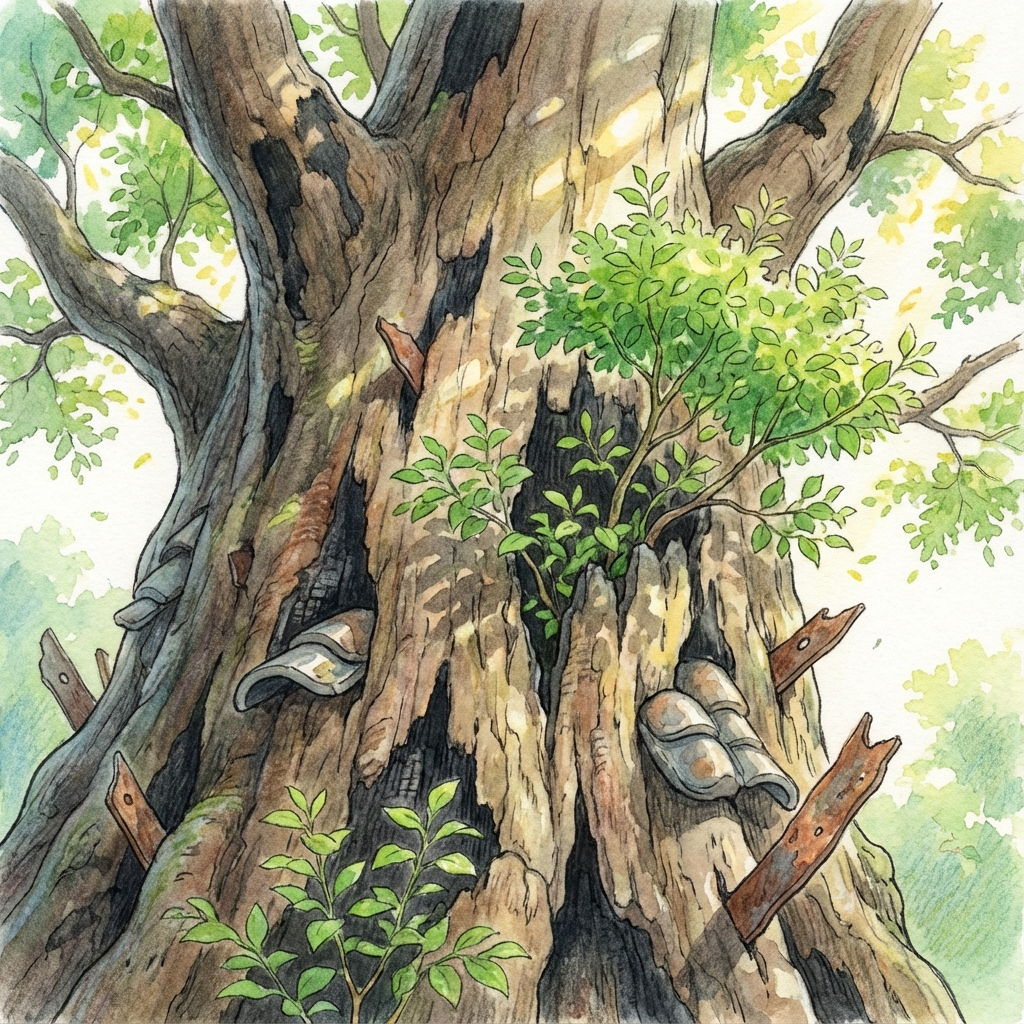
Basic Information
Name: Sanno Jinja (Sannou Jinja)
Location: 2-6-56 Sakamoto, Nagasaki City, Nagasaki Prefecture
Enshrined Kami: Oyamakui no kami (Ooyamagui no kami), Omononushi no kami (Oomono-nushi no kami), and others
Access: Approximately 6 minutes walk from the Daigaku Byoin (University Hospital) tram stop on the Nagasaki Electric Tramway (streetcar).
The Miraculous “One-Pillar Torii” That Withstood the Blast
What makes Sanno Jinja known worldwide is the “Ippon-bashira Torii” (One-Pillar Torii, the second torii gate) standing on its approach path. On August 9, 1945, this torii, exposed to the atomic bombing at a close distance of only about 800 meters from the hypocenter, had its left half blown away by the intense blast, leaving only the right-side pillar miraculously standing.
Why did it not fall? It is believed that a combination of physical coincidences allowed it to remain standing: the blast wind blew parallel to the torii, minimizing the surface area exposed to its force. Even today, the sight of the single remaining pillar continuing to stand in exquisite balance serves as a symbol of Nagasaki’s recovery and peace, conveying a silent message to visitors.
The “Atomic-Bombed Camphor Trees” Resurrected from the Brink of Death, and Masaharu Fukuyama’s Thoughts
Two giant camphor trees soaring at the shrine’s entrance are also known as atomic bomb remnants. Due to the heat rays and blast of the explosion, they temporarily lost all their leaves, becoming charred and seemingly dead trees. Just when everyone had given up hope, thinking they were dead, new shoots miraculously sprouted the following spring, and they recovered, growing lush green leaves once again.
Moved by this remarkable vitality was Masaharu Fukuyama, an artist hailing from Nagasaki City. He created the song “Kusunoki” (Camphor Tree) with these trees as his motif. Today, these camphor trees are designated as natural monuments of Nagasaki City and have been selected as one of the “100 Soundscapes of Japan” by the Ministry of the Environment. The rustling sound of their leaves whenever the wind blows is like the heartbeat of history whispered by the trees themselves.
Mystery and Untold Stories: “Memories of War” Sleeping Within the Trees
These camphor trees hold astonishing “hidden stories.” During treatment to restore their vigor, numerous fragments of stones and roof tiles from the time of the bombing, and even metal pieces blown by the blast, were discovered within their trunks. As the trees grew, they incorporated the debris scattered around them into their own bodies, growing larger as if embracing these remnants.
Even now, memories of that time are physically etched within the trees. Though not visible from the surface, these giant trees have literally “swallowed history” and continue to live on.
Pilgrimage Information: Connection to the Anime ‘Suzume’
In Makoto Shinkai’s animated film ‘Suzume’ (Suzume no Tojimari), Sanno Jinja’s One-Pillar Torii has drawn attention among fans as a location that evokes “collapsed torii” and “memories of earthquakes and disasters,” which are important motifs in the story.
While it has not been officially stated as a specific model, the overlap between the film’s themes of touring ruins and disaster remnants, and this One-Pillar Torii’s image of “surviving catastrophe,” means an endless stream of fans visit as part of their pilgrimage. Furthermore, the solemn atmosphere of the scene in the film where the “Ushirodo” (Back Door) is sealed shares a commonality with the tranquil ambiance of Sanno Jinja.
Points for Your Visit
Right beside the One-Pillar Torii, the blown-away left half of the pillar and its kasagi (lintel) are still preserved, lying on the ground. The pillar that stands, and the pillar that lies on the ground. Witnessing this contrast firsthand will allow you to profoundly feel the immense impact of that time. When you visit Nagasaki, be sure to stop by, not just as a tourist destination, but as a place to reaffirm the resilience of life.
Related Links / References
No sources available.