 By ando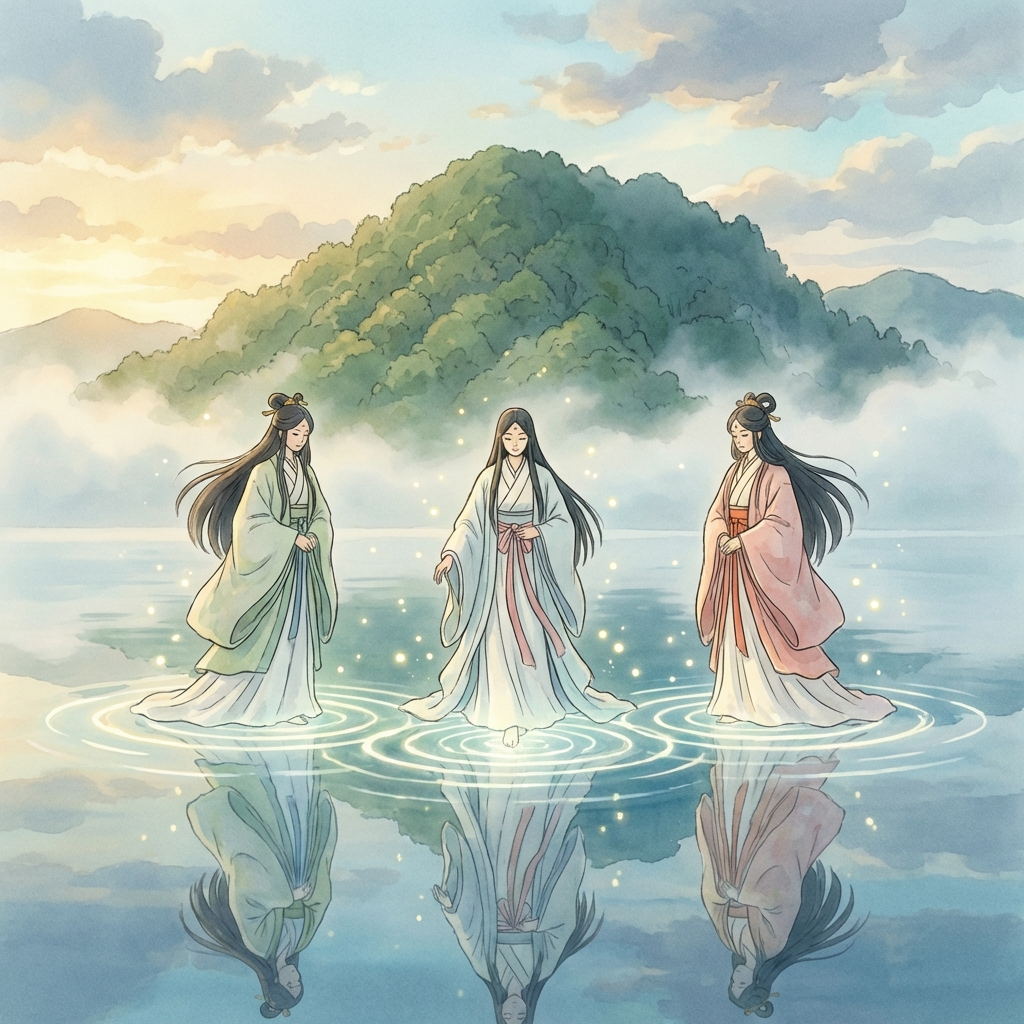
Itsukushima jinja (Itsukushima Shrine) is located on Miyajima island in Hatsukaichi City, Hiroshima Prefecture. Its bold architectural style, treating the sea as its grounds, and its appearance that changes with the tides, led to its registration as a UNESCO World Cultural Heritage site in 1996. This article will provide a detailed introduction to this mystical jinja, covering everything from its basic information to little-known anecdotes, mysteries, and even anime pilgrimage spots.
Basic Information on Itsukushima jinja
Location: 1-1 Miyajima-cho, Hatsukaichi City, Hiroshima Prefecture
Enshrined kami: Munakata Sanjojin (Three Goddesses of Munakata) – Ichikishimahime no Mikoto, Tagorihime no Mikoto, and Tagitsuhime no Mikoto.
Founded: 593 AD (First year of Empress Suiko’s reign)
History: In the late Heian period, when Taira no Kiyomori was appointed governor of Aki Province, he revered it as the tutelary kami of the Taira clan, leading to the construction of the magnificent offshore shrine complex we see today.
Why Was It Built on the Sea? The Belief That “The Island Itself Is a Kami”
The reason Itsukushima jinja was specifically built on the tidally-affected sea lies in the ancient belief in Miyajima (Itsukushima) island itself. Since ancient times, the entire island was worshipped as a goshintai (sacred body of a kami). It is said that out of reverence and fear of defiling the island by digging into its land or felling trees, the shrine buildings were constructed in the intertidal zone (on the sea).
The Mystery of the Great O-torii Gate: Is It “Just Placed There”?
The Great O-torii gate, a symbol of Itsukushima jinja, stands approximately 16 meters tall. Surprisingly, this massive torii is not deeply embedded in the seabed. Astonishingly, it stands upright solely by its own weight (approximately 60 tons).
Secret of the Weights: The box-like section at the top of the torii, called “shimagiki,” is filled with approximately 7 tons of fist-sized stones. This lowers its center of gravity, allowing it to withstand waves and wind.
The Truth of the 9th Generation: The current Great O-torii gate was rebuilt in Meiji 8 (1875). Although it was long believed to be the 8th generation, recent investigations have revealed it is actually the 9th.
The “Curse” and Wisdom of the Number “8” Hidden in the Architecture
If you observe the shrine buildings closely, you will notice a certain number appearing frequently: the number “8”.
The distance between pillars in the corridor is “8 shaku” (approximately 2.4 meters).
The number of floorboards between them is “8 boards”.
Furthermore, the main shrine building has “108 pillars”.
These numbers are said to relate to the number of worldly desires in Buddhism and to symbolize prosperity (due to the shape of the kanji for 8, “八,” widening at the bottom). However, one theory suggests it was a strong design obsession, or even a thoroughness close to a “curse.”
Additionally, there are slight gaps between the floorboards of the corridors. This is a wisdom of the ancestors, designed to release the upward pressure of seawater during high tides and typhoons, preventing the shrine buildings from lifting and being damaged.
Miyajima’s Taboos: No Graves on the Island
Miyajima, as an island of kami, still maintains unique customs.
1. No Graves: To avoid defiling the island, there are no cemeteries whatsoever. Deceased individuals are buried on the mainland across the water.
2. Childbirth and Ritual Impurity: In the past, childbirth and menstruation were also considered “blood defilement” (kegare), and pregnant women in their final month or those in mourning were required to cross to the mainland. As a remnant of this tradition, there are still no obstetric clinics or cemeteries on the island.
Mount Misen’s “Eternal Flame” and 1200 Years of History
On the sacred Mount Misen, towering behind the jinja, there is an “eternal flame” that has been burning for over 1200 years, originally lit by Kobo Daishi Kukai during his ascetic training. This fire is highly sacred, having also served as the source for the “Flame of Peace” at Hiroshima Peace Memorial Park.
Anime Pilgrimage Information
Due to its breathtaking scenery, Itsukushima jinja has served as the setting or model for many anime works.
Zatsutabi -That’s Journey-: In Episode 8, “Hiroshima’s ‘Spectacular Scenery’ Journey of Sea and History!”, the protagonist is depicted traveling to Miyajima by ferry and visiting Itsukushima jinja.
The Heike Story: This series depicts Taira no Kiyomori’s deep connection with Itsukushima jinja, animating the beauty of its shrine buildings from that period.
Kamisama Kiss: It is said to be one of the models for the shrine appearing in this work, making it a popular spot for fans to visit.
Itsukushima jinja, where you can experience the beauty of a Ryugu-jo (Dragon Palace) floating on the sea at high tide, and walk to the foot of the Great O-torii gate to feel its immense size at low tide. It is truly a mystery spot that Japan proudly presents to the world, offering new discoveries with every visit.
Related Links and References