 By ando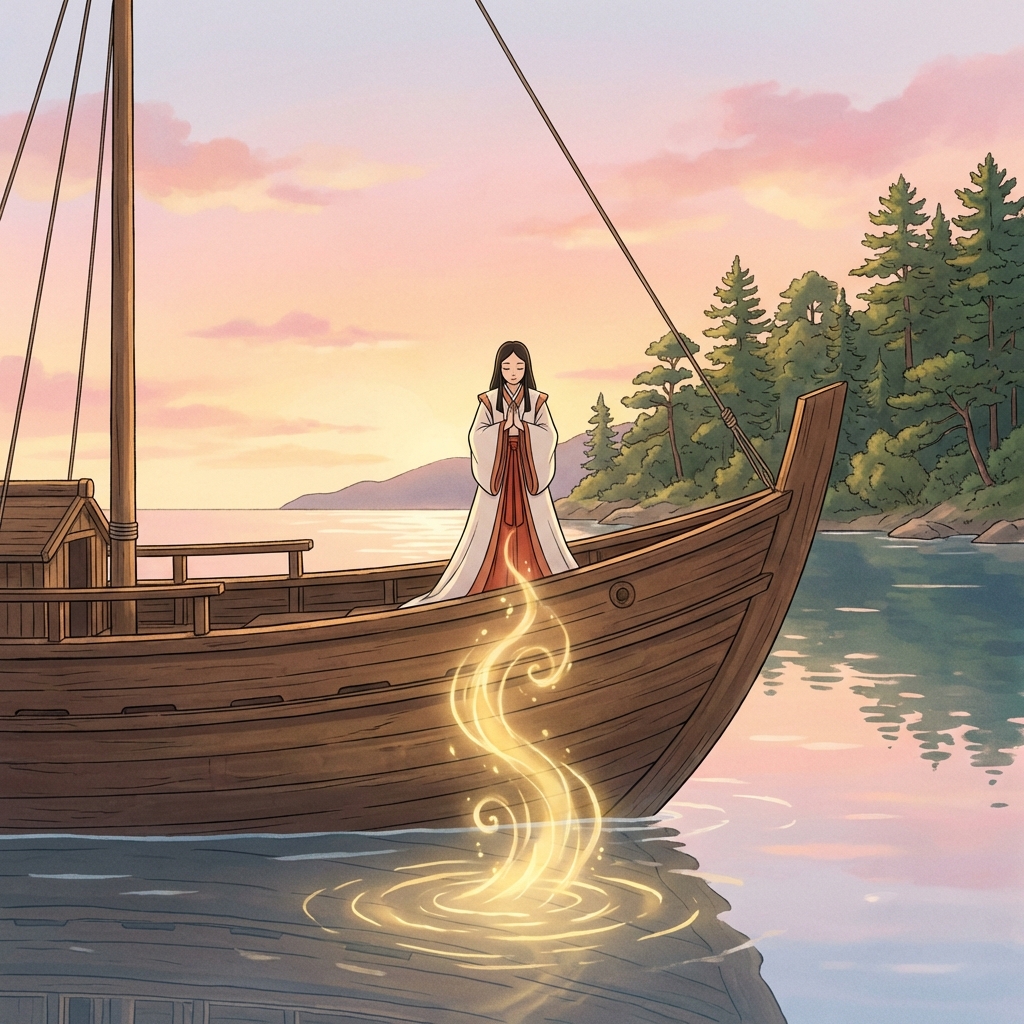
Basic Information
Name: Watatsumi Jinja (Watatsumi Shrine)
Location: 5-1 Miyamotocho, Tarumi Ward, Kobe City, Hyogo Prefecture
Enshrined Kami: Sokotsuwatasuminokami, Nakatsuwatasuminokami, Uwatsuwatasuminokami
Divine Blessings: Maritime safety, prosperous fishing, traffic safety, good fortune and warding off evil.
—
Did Empress Jingu’s ship stop? The Legend of the Immovable Ship
A dramatic legend about Empress Jingu, a heroic figure in Japanese mythology, is preserved regarding the founding of Watatsumi Jinja.
On her return journey from the Sankan expedition, the ship carrying Empress Jingu suddenly became immobile offshore Tarumi. Puzzled, the Empress enshrined the sea kami (the three Watatsumi kami) and offered prayers. Instantly, the sea calmed, and she was able to continue her voyage safely. This event is said to be the beginning of Watatsumi Jinja, which has long been revered as a crucial site for “maritime protection.”
Mystery of the Giant Torii: Was a Pine Tree Once the Landmark?
As you drive along National Route 2, a towering vermilion O-torii (grand torii gate), 12 meters high, catches your eye, rising towards the sea. This torii, however, is relatively new, built in 1957.
Before its construction, there’s a lesser-known story that a magnificent pine forest within the shrine grounds served as a “yamate” (a land-based marker) for sailors at sea. However, as time passed, the pine trees withered, and this giant torii was erected in their place. Even today, for ships navigating the Akashi Strait, this torii remains a spiritual pillar, like a lighthouse, watching over their safety.
A Connection to Ancient Rulers? The Relationship with Goshikizuka Kofun
Located very close to Watatsumi Jinja is the Goshikizuka Kofun, Hyogo Prefecture’s largest keyhole-shaped burial mound.
The person buried in this kofun (ancient burial mound) is believed to have been a powerful local clan leader who controlled the “ama” (sea people/divers) of this region in ancient times. Since the Watatsumi kami enshrined at Watatsumi Jinja are deities of the sea people, a historical mystery suggests that this powerful clan worshipped Watatsumi Jinja as their ujigami (clan’s tutelary kami) and held sway over the Akashi Strait. If you visit both the shrine and the kofun, you might gain insight into the dynamic power map of ancient Kobe.
Was it called ‘Hyuga’ in the Edo Period?
Until the Meiji era, this shrine was actually called “Hyuga Daimyojin.” While there are various theories as to why the name “Hyuga” (a region in Kyushu) was used in Kobe, one theory suggests that the enshrined kami were invited from Hyuga in Kyushu.
The current name, “Watatsumi Jinja,” was adopted in the Meiji era, based on the theories of Edo period scholar Motoori Norinaga. Even a single name holds an episode that reflects the passage of history.
Anime Pilgrimage Information: Scenes from Fate/stay night
The Tarumi and Maiko area, where Watatsumi Jinja is located, is known as one of the models for “Fuyuki City,” the setting of the popular anime series Fate/stay night.
In particular, Maiko Park and the coastline around the Akashi Kaikyo Bridge, located just west of Watatsumi Jinja, perfectly capture the atmosphere of “Fuyuki Seaside Park” from the series. The view of the Seto Inland Sea seen through Watatsumi Jinja’s symbolic O-torii truly evokes the world of the anime. Fans can gaze at the sea from the O-torii and feel the atmosphere of the “seaside town” where the characters spent their time.
Festival Excitement: The Futon Daiko
During the annual Autumn Grand Festival held every October, “Futon Daiko” parade through the streets of Tarumi.
The sight of bearers vigorously hoisting the magnificent drum platforms, each weighing nearly 2 tons, is truly spectacular. This festival, where the kami of Watatsumi Jinja take their annual journey to an otabisho (temporary shrine) to gaze at the sea, is a moment when the local people’s “gratitude to the sea” overflows. While the quiet shrine grounds are beautiful, visiting during this vibrant period is also highly recommended.