 By ando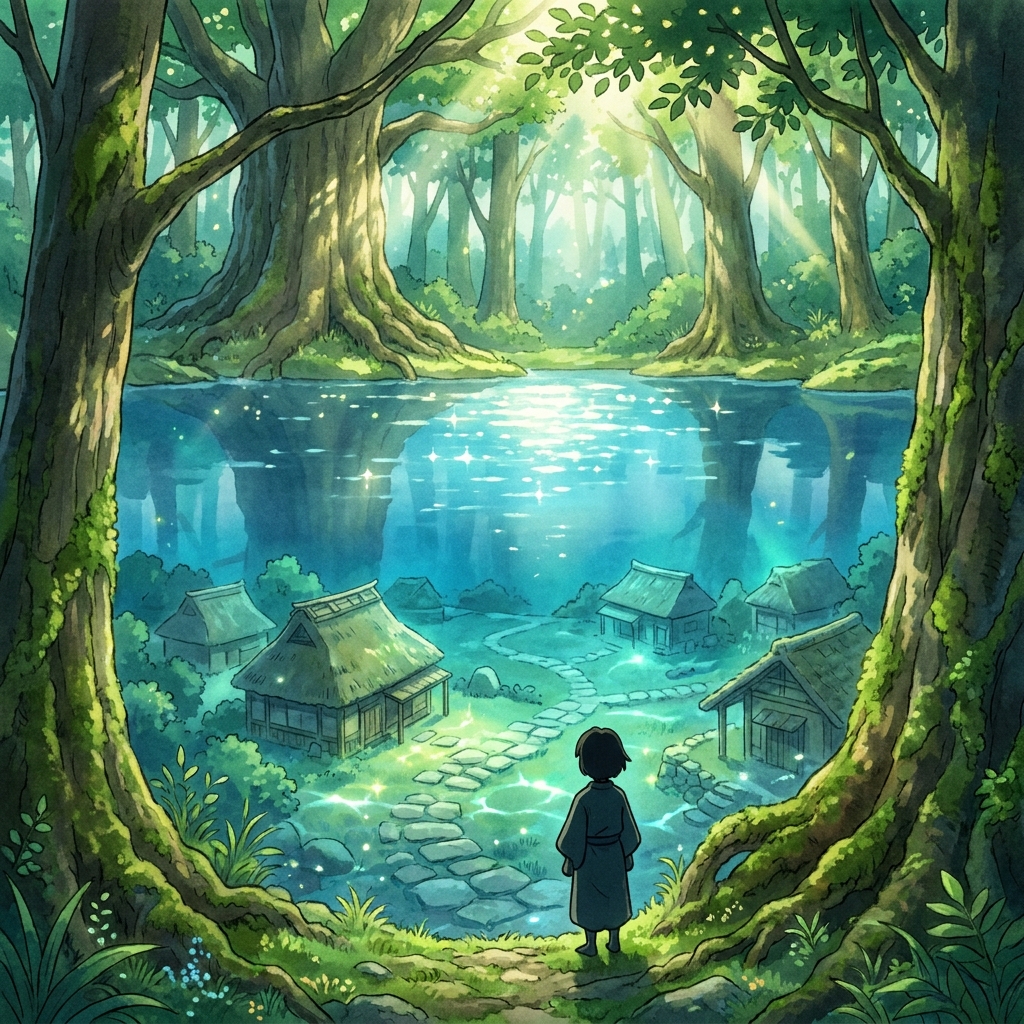
Nakahikawa Jinja, a Shinto shrine, is quietly nestled in the lush Sayama Hills of Tokorozawa City, Saitama Prefecture. At first glance, it appears to be a tranquil local guardian kami. However, did you know that it holds secrets of significant historical events that influenced Japan’s destiny, and grand mysteries hidden on maps?
This time, we will introduce the profound charm and fascinating hidden stories of Nakahikawa Jinja, a place that shrine and temple enthusiasts will surely want to visit at least once.
1. Did it Shape Japan’s Destiny? The ‘Mysterious Reitaisai’ Inspected by GHQ
Nakahikawa Jinja holds an exceptionally rare episode that no other shrine possesses. It was on November 25, 1945, right after the end of World War II. High-ranking officials from the General Headquarters of the Allied Powers (GHQ) specifically chose Nakahikawa Jinja from among countless shrines across the country to visit and inspect a special Reitaisai (annual festival).
At the time, the GHQ believed that ‘State Shinto’ had become a hotbed for militarism and was even considering dismantling shrines. Amidst this tense situation, the GHQ delegation witnessed the ‘Urayasu no Mai’ dance performed at Nakahikawa Jinja and a musical performance by the Imperial Household Agency’s Gagaku (court music) department. They were reportedly deeply impressed by the peaceful and cultural aspects of Japanese rituals. There is even a theory that this inspection influenced the content of the ‘Shinto Directive,’ which would determine the fate of the Shinto world thereafter. Thus, it truly became a ‘historical turning point’ that safeguarded Japan’s spiritual culture.
2. The Grand Ley Line of ‘Musashi San-Hikawa’ Aligned in a Straight Line
The name ‘Nakahikawa’ itself holds a geographical mystery.
In Musashi Province (present-day Saitama and Tokyo Prefectures), a network of Hikawa Jinja exists, but the three most important ones are as follows:
1. Omiya Hikawa Jinja (Saitama City: Ichinomiya of Musashi Province)
2. Nakahikawa Jinja (Tokorozawa City: The shrine we are introducing)
3. Oku-Hikawa Jinja (Okutama Town: Upstream of the Tama River)
Remarkably, these three shrines are aligned almost perfectly in a straight line from east to west on a map. This straight line has long been referred to as a ‘sacred path where the spirits of the kami traverse’ (ley line). It is believed that there might have been a grand plan for arranging these sacred sites, with Omiya as ‘Omiya (Hikawa),’ Okutama as ‘Okumiya (Oku-Hikawa),’ and the shrine in Tokorozawa, situated in between, as ‘Chugu (Nakahikawa).’
3. The Village Submerged Beneath the Lake and the Memory of ‘Toraijin’
Within the precincts of Nakahikawa Jinja, the Shichisha Jinja of the ‘former Shorakuji Village,’ which was submerged when the Yamaguchi Reservoir (Sayama Lake) was constructed in 1929 (Showa 4), is enshrined together.
Shorakuji Village is said to have once been home to people from Baekje and Goguryeo who migrated from the Korean Peninsula, conveying glimpses of ancient Japan’s international exchange to this day. The fact that the guardian kami of a village resting at the bottom of a dam are now enshrined together here at Nakahikawa Jinja evokes a somewhat poignant and mystical tale.
4. Sacred Pilgrimage! Its Role as an Anime Setting
The Yamaguchi area of Tokorozawa City, where Nakahikawa Jinja is located, is also a must-visit ‘sacred site’ for anime fans.
My Neighbor Totoro
The Sayama Hills spreading behind the shrine served as the model for the setting (Totoro’s Forest) in Studio Ghibli’s masterpiece, “My Neighbor Totoro.” As you walk along the shrine’s approach, you’ll encounter nostalgic Musashino scenery, as if Mei and Satsuki might come running through.
Sword Art Online (SAO)
The Kawagoe-Tokorozawa area is set as the residence of the protagonist, Kirito (Kazuto Kirigaya). Scenes around Tokorozawa Station also appear in the work, and Nakahikawa Jinja, as an ancient shrine within this ‘living sphere,’ has become a popular spot for fans to visit.
The Rolling Girls
Tokorozawa is depicted as an important base (Tokorozawa Country) in the story, and the entire region is enveloped in the atmosphere of the work.
5. Basic Information
Name: Nakahikawa Jinja (nakahikawa jinja)
Location: 1849 Yamaguchi, Tokorozawa City, Saitama Prefecture
Enshrined Kami: Susanoo-no-Mikoto, Kushinadahime-no-Mikoto, Onamuchi-no-Mikoto
Access: Approximately 15 minutes walk from Shimo-Yamaguchi Station on the Seibu Sayama Line
Highlights: The Honden (main hall) built in the rare ‘Taisha-zukuri (Izumo style)’ for the Kanto region. It is an authentic structure featuring a ‘Shin-no-mihashira’ (central pillar of the heart).
Note: While there is another Nakahikawa Jinja with the same name in Mikajima within Tokorozawa City, the one known for the GHQ inspection and the ley line legend is this shrine located in Yamaguchi.
Having weathered the turbulent tides of history, Nakahikawa Jinja continues to quietly watch over the Sayama Forest.
How about taking a stroll through Totoro’s Forest and then visiting this ‘place of prayer’ that may have altered Japan’s destiny?
Related Links and References
1. Nakahikawa Jinja (Mikajima) – Tokorozawa City, Saitama Prefecture – Pilgrimage to Yaoyorozu no Kami no Yashiro (https://higana.jp/11/tokorozawa/nakahikawajinjyam/nakahikawajinjyam.shtml)
2. Nakahikawa Jinja – Kunitama no Kai (http://kunitama.jp/kameisya/s236_nakahikawa)
3. Nakahikawa Jinja (Mikajima, Tokorozawa City) – Shrine-heritager (https://shrineheritager.com/nakahikawa-shrine-2/)
4. https://www.youtube.com/watch?v=8Z3oK6XE_wY
5. Nakahikawa Jinja, Saitama Prefecture – Shrines and Temples in Kawagoe, Tokorozawa, Hanno Area [Tabiiro] (https://tabiiro.jp/leisure/s/216590-tokorozawa-nakahikawajinja/)
6. Shrine Walk #10-1 (Hikawa Sansha Pilgrimage 1) | Ashihara Meshio (https://note.com/ashihara_meshio/n/naa8cbb806102)
7. 0333 Hikawa Jinja in Saitama Prefecture, exceptional in history and status, aligned on a ley line | Iyasaka (https://note.com/powerspot_168/n/n4f48323ba6b4)
8. http://www.tokorozawa-stm.ed.jp/center/kiz_tokorozawa/tiiki/t-kamiyama/nakahikawa-1.htm
9. About Nakahikawa Jinja | Nakahikawa Jinja in Tokorozawa City, Saitama Prefecture | Protection from Evil, Traffic Safety Prayers, Groundbreaking Ceremonies, Prayers for Safe Childbirth, Protection from Unlucky Directions, Shichi-Go-San (https://www.nakahikawa.or.jp/about/)
10. History | Nakahikawa Jinja in Tokorozawa City, Saitama Prefecture | Protection from Evil, Traffic Safety Prayers, Groundbreaking Ceremonies, Prayers for Safe Childbirth, Protection from Unlucky Directions, Shichi-Go-San (https://www.nakahikawa.or.jp/yui-syo/)
11. Tracing the Ley Line of Nyotai Jinja, Nakayama Jinja, and Omiya Hikawa Jinja Part 2 – Anzu’s Blog (https://kosamebitaki733.hatenablog.com/entry/10846340)
12. Saitama Prefecture, Tokorozawa City: Nakahikawa Jinja (Yamaguchi) ~A lush Shikinaisha shrine in the Sayama Hills | Beyond the Torii Gate (https://ameblo.jp/08780873/entry-12605809707.html)
13. Is Tokorozawa really an anime pilgrimage site? Visit the places that were the settings for popular works! | Saitama Database (https://arakawa-park.jp/archives/190)
14. Summary of 10 shrines and temples in Tokorozawa City for good fortune in competition | Hotokami (https://hotokami.jp/categories/fortune/fight/city/110001/112089/)
15. Nakahikawa Jinja | Shrines in Saitama Prefecture (https://www.saitama-jinjacho.or.jp/shrine/9105/)
16. Nakahikawa Jinja / Home Mate (https://www.homemate-research-religious-building.com/dtl/75000000000000201249/)
17. Nakahikawa Jinja – Guidoor (https://www.guidoor.jp/places/1923)
18. Hikawa Sansha summarized [Came by bike] | Weekly Jingikan ~ Jingihaku’s Shrine Wandering Diary ~ (https://ameblo.jp/shirakawahakke/entry-12435949023.html)