 By ando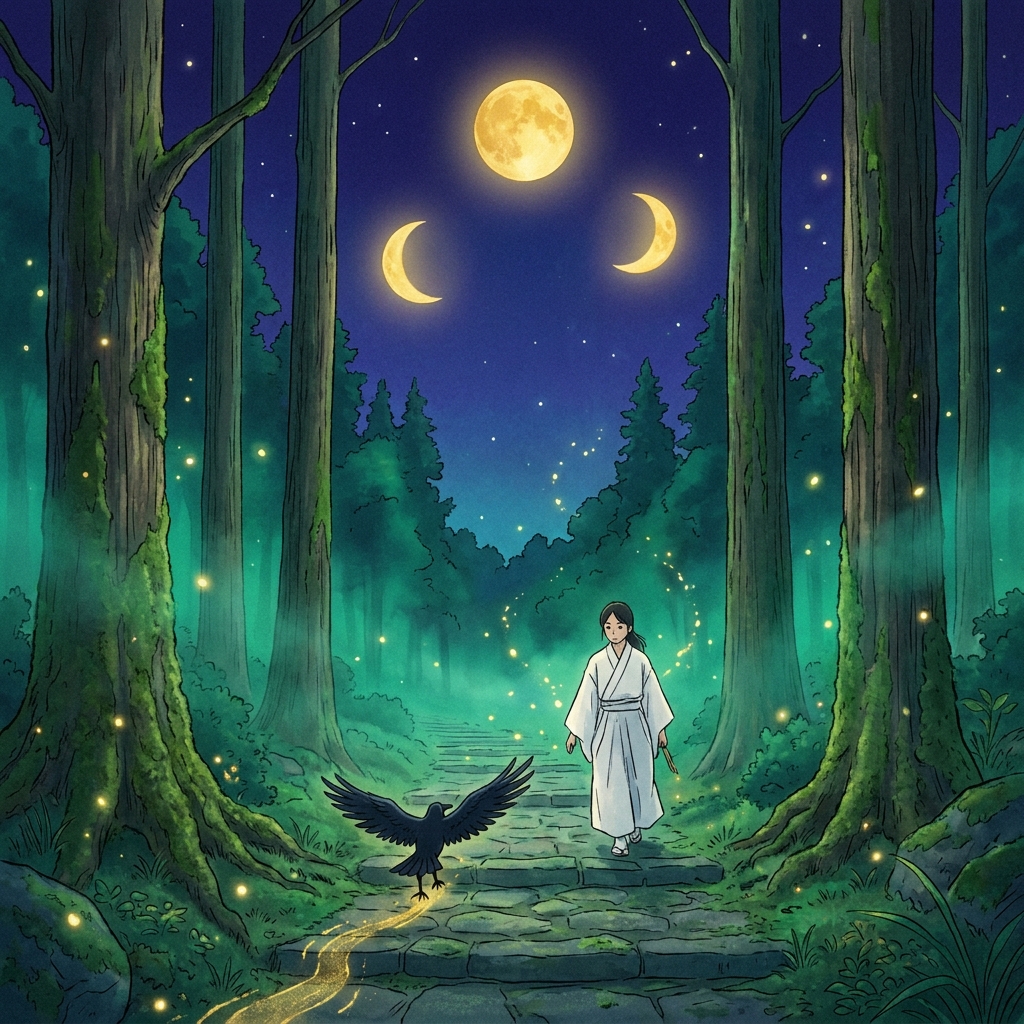
The Kumano Sanzan (Three Grand Shrines of Kumano) are situated in the southern part of Wakayama Prefecture. The three jinja – Kumano Hongu Taisha, Kumano Hayatama Taisha, and Kumano Nachi Taisha – along with the pilgrimage routes connecting them, known as the Kumano Kodo, were registered as a UNESCO World Cultural Heritage site in 2004. Since ancient times, this region, to which countless people journeyed, exemplified by the saying ‘Kumano pilgrimage like ants,’ is not merely a tourist destination. It is passed down through generations as a sacred place of rebirth (yomigaeri) that governs death and regeneration.
This time, we will delve into and introduce the mysteries and legends hidden behind history, which are the true pleasure of visiting jinja and Buddhist temples.
1. Kumano Hongu Taisha: Was it once on a river delta? The mystery of Oyu-no-hara
Kumano Hongu Taisha can be called the center of the Kumano Sanzan. Currently, its shrine buildings stand on a hillside, but until the great flood of Meiji 22 (1889), it was enshrined on a delta island called Oyu-no-hara, where the Kumano River, Otonashi River, and Iwata River converge.
In fact, this very location was believed to be close to the entrance of the land of the dead (Yomi-no-kuni). Pilgrims of old would walk across the cold river, purify themselves, and then step into the sacred area. Today, a grand torii gate, one of the largest in Japan, soars over Oyu-no-hara, and it is still known as a powerful energy spot where intense energy swirls.
2. Kumano Hayatama Taisha: The ‘original shrine’ on a cliff and the legend of a giant rock
If you visit Kumano Hayatama Taisha in Shingu City, you absolutely cannot miss its original shrine, Kamikura Jinja.
Here, the giant Gotobiki-iwa Rock, believed to be the spot where the kami of Kumano first descended, is enshrined as the goshintai (sacred body of worship). This colossal rock, reached after climbing 538 steep stone steps, rests precariously on the edge of a cliff, harboring the mystery of ‘why doesn’t it fall?’
Furthermore, the ancient Nagi tree within the grounds of Hayatama Taisha, estimated to be 1,000 years old, is said to have been planted by Taira no Shigemori. Its leaves have long been treasured as charms for matchmaking and safe travels.
3. Kumano Nachi Taisha: Is the waterfall itself a kami? The overwhelming spiritual energy of Hiro Jinja
The origin of Kumano Nachi Taisha lies in the ancient nature worship of Nachi Falls, which boasts Japan’s greatest drop (133m).
What is remarkable is that Hiro Jinja, located right next to the waterfall, has no main hall (honden). This is because the waterfall itself is the goshintai, so there was no need to construct a building.
Here, there are countless mysterious episodes related to Shugendo, such as the legend of Emperor Kazan performing 1,000 days of waterfall asceticism, and rumors of secret treasures said to be submerged in the waterfall basin.
4. Yatagarasu, the legendary messenger, and its untold stories
The three-legged crow seen everywhere throughout the Kumano Sanzan is Yatagarasu, who, according to Japanese mythology, guided Emperor Jinmu to Yamato.
It is also famous as the symbol of the Japan Football Association, but why does it have three legs? One theory suggests it represents ‘heaven, earth, and humanity,’ while another says it symbolizes the three powerful clans of Kumano.
Moreover, on the Kumano Go-o Shinpu, a protective talisman from Kumano, the characters for ‘Kumano San Ho-in’ (Kumano Mountain Seal) are written using the shape of crows. In the past, it was customary to write an oath on the back of this talisman, and it was feared that ‘if one tells a lie, three Kumano crows will die, and the person themselves will vomit blood and fall into hell.’ It was truly a life-or-death vow.
5. Sacred Pilgrimage: Kumano’s landscapes depicted in anime
Kumano’s mystical atmosphere has inspired many anime works.
– Harukanaru Toki no Naka de 3
In this work, set during the Genpei War, the Kumano Sanzan appear as important strategic points. Specifically, one of the characters, Hinoe, is the leader of the Kumano naval forces, and the landscapes of Hongu and Nachi color the story. Among fans, a ‘real Kumano pilgrimage’ following the characters’ footsteps remains popular even today.
– Nagi-no Asukara (A Lull in the Sea)
While Kumano City in Mie Prefecture is the main model location, the Kumano area on the Wakayama side is also depicted as a continuous cultural zone. The fantastical world view at the boundary between sea and land is precisely Kumano itself, ‘a boundary land where kami reside.’
– RDG: Red Data Girl
Set amidst the deep mountains of Kumano and the nearby Tamaki Jinja (though in Nara Prefecture, it is deeply connected to Kumano faith), this work strongly evokes the presence of Shugendo and spiritual energy in modern times.
6. Mystery: The ‘Santai-getsu’ (Three-Bodied Moon) appearing on the 23rd day of the 11th lunar month
There is a mysterious legend called Santai-getsu on the Nakahechi route of the Kumano Kodo.
It is said that on the night of the 23rd day of the 11th lunar month, if you look at the moon from a specific spot, it appears split into three. Those who witnessed this were believed to have worshipped an incarnation of Kumano Gongen and would receive special divine favor. It is still recounted as a supernatural phenomenon unique to this sacred site, defying scientific explanation.
The Kumano Sanzan is a tolerant sacred site that has accepted everyone, regardless of age, gender, social status, or even ‘purity or impurity.’ The legend of Heian-era poetess Izumi Shikibu, who hesitated to visit due to her menstrual period, and how the kami of Kumano appeared in her dream to say, ‘I am a kami who walks with you, stained with dust, so do not worry about such things,’ symbolizes the profound depth of its embrace.
When you are weary from daily life and feel like you are losing yourself,
By all means, visit this ‘land of rebirth.’ Yatagarasu might just guide you to a new tomorrow.
Related Links and References
[1] https://ja.wikipedia.org/wiki/%E7%86%8A%E9%87%8E%E4%B8%89%E5%B1%B1
[2] https://www.kumano-sanzan.jp/sanzan/rekishi.html
[3] https://www.kumano-sanzan.jp/nachi/yuisyo.html
[4] http://www.hongutaisha.jp/2015/04/22/%E8%81%96%E5%9C%B0%E7%86%8A%E9%87%8E/
[5] https://www.tb-kumano.jp/kumano-kodo/sanzan/
[6] https://www.pref.wakayama.lg.jp/bcms/prefg/000200/nagomi/p27/p04_05.pdf
[7] https://www.pref.wakayama.lg.jp/bcms/prefg/000200/nagomi/pdf/nagomi03/pdf/07.pdf
[8] https://art.juqcho.jp/2017/20171123.html
[9] https://ameblo.jp/smalllestbar/entry-12857742474.html