 By ando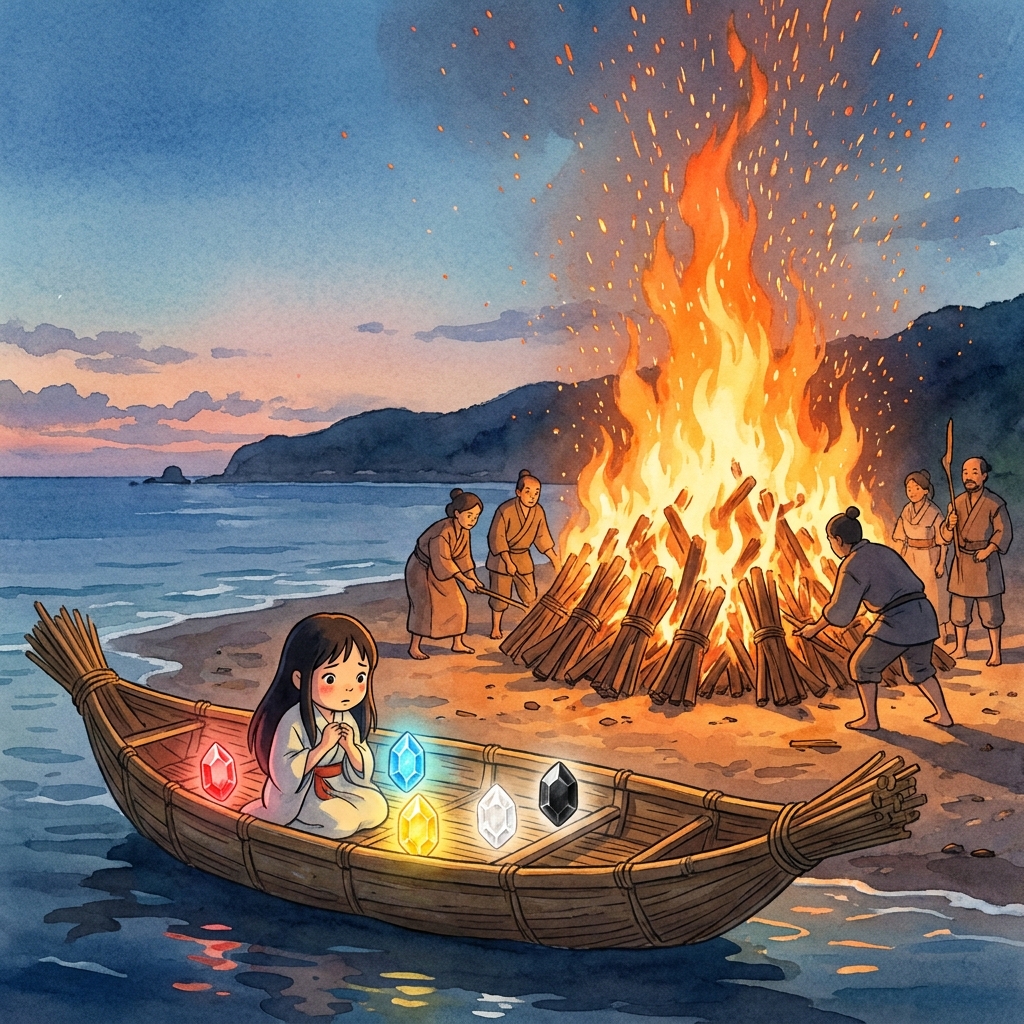
Basic Information
Name: Iwatsuta jinja (Ishitsuta Shrine)
Location: 4-12-7 Hamaderaishizucho Naka, Nishi-ku, Sakai City, Osaka Prefecture
Enshrined Kami: Hiruko no Mikoto, Yaekotoshiro-nushi no Mikoto, Ame no Hohi no Mikoto
Access: Approximately 5 minutes walk from Ishizugawa Station on the Nankai Main Line, or approximately 5 minutes walk from Ishizu Tram Stop on the Hankai Line
Legend of the Arrival of Japan’s Oldest “Ebessan”
According to shrine legends, Iwatsuta jinja boasts an astonishing history, said to have been founded in 469 BC (the 7th year of Emperor Koshō’s reign), and proclaims itself “Japan’s oldest Ebisu jinja.”
Its origins begin with a poignant episode from Japanese mythology. Hiruko no Mikoto, the first kami born to Izanagi no Mikoto and Izanami no Mikoto, was unfortunately born malformed. He was placed in a reed boat and set adrift at sea. It is said that the place where his boat eventually washed ashore was this very land of Ishizu, which was once a coastline.
The Mystery of the “Five-Colored Divine Stones” from which the Place Name Originated
There is a legend that when Hiruko no Mikoto drifted ashore here, his boat carried “five-colored divine stones (jewels).” The place name “Ishizu” is said to have originated from these stones being left here.
In fact, it is said that these five-colored stones are still buried beneath the Kishu Kaido road, which passes in front of the jinja’s torii gate. There’s a frightening anecdote that once, a village official tried to dig up the stones, considering them an obstruction, but the blinding light emitted from them caused everyone involved in the excavation to lose their eyesight. Since then, no one has dared to touch these stones.
A Rivalry of “Upper” and “Lower”? The Two Ishizu Shrines
In Sakai City, there are two shrines: Iwatsuta jinja in Nishi-ku, which we are introducing, and Ishizu jinja in Sakai-ku, located several hundred meters to the north.
Both jinja claim to be Shikinaisha (shrines listed in the Engishiki, an ancient book of laws and rituals from the Heian period), and there has long been a debate over “which is the main branch.” Iwatsuta jinja in Nishi-ku is also known as “Shimo-Ishizu-sha” (Lower Ishizu Shrine), and Ishizu jinja in Sakai-ku as “Kami-Ishizu-sha” (Upper Ishizu Shrine). This dispute over legitimacy intensified during the Meiji period, reaching an unusual resolution where the government of the time (Sakai Prefecture) could not decide and acknowledged “both are Shikinaisha.” This remains an irresistible mystery for history enthusiasts.
The Curious Festival of Senshu, “Yassai Hossai”
The “Yassai Hossai” festival, held annually on December 14th, is a spirited fire festival designated as a Sakai City Intangible Folk Cultural Property.
This festival originates from an old tale where, after Hiruko no Mikoto drifted ashore, he shivered from the cold, and villagers burned 108 bundles of firewood to warm him. The sight of men in white robes, carrying a designated “Toshio” (man of the year) portraying Ebisu-sama, running through raging fires with their unique chant of “Yassai Hossai” is truly spectacular.
Incidentally, there are various theories about the origin of this mysterious chant; some say it’s a corrupted form of “yaosoku” (eight hundred bundles) or “hassoku” (eight bundles), referring to the number of firewood bundles.
The Hidden Power Spot: “Go-koshikake-ishi”
Within the shrine grounds is the “Ibigami no Go-koshikake-ishi” (Ebisu’s Sitting Stone), believed to be where Hiruko no Mikoto rested after drifting ashore. This stone, said to have been directly touched by the kami of fortune who arrived from the sea, is a hidden power spot for visitors seeking prosperity in business and good luck.
Rather than a flashy tourist destination, Iwatsuta jinja is a place imbued with a mysterious atmosphere, where ancient myths still breathe within the urban landscape. We highly recommend a visit to this “oldest Ebessan,” quietly yet powerfully enshrined along the Kishu Kaido.
Related Links and References