 By ando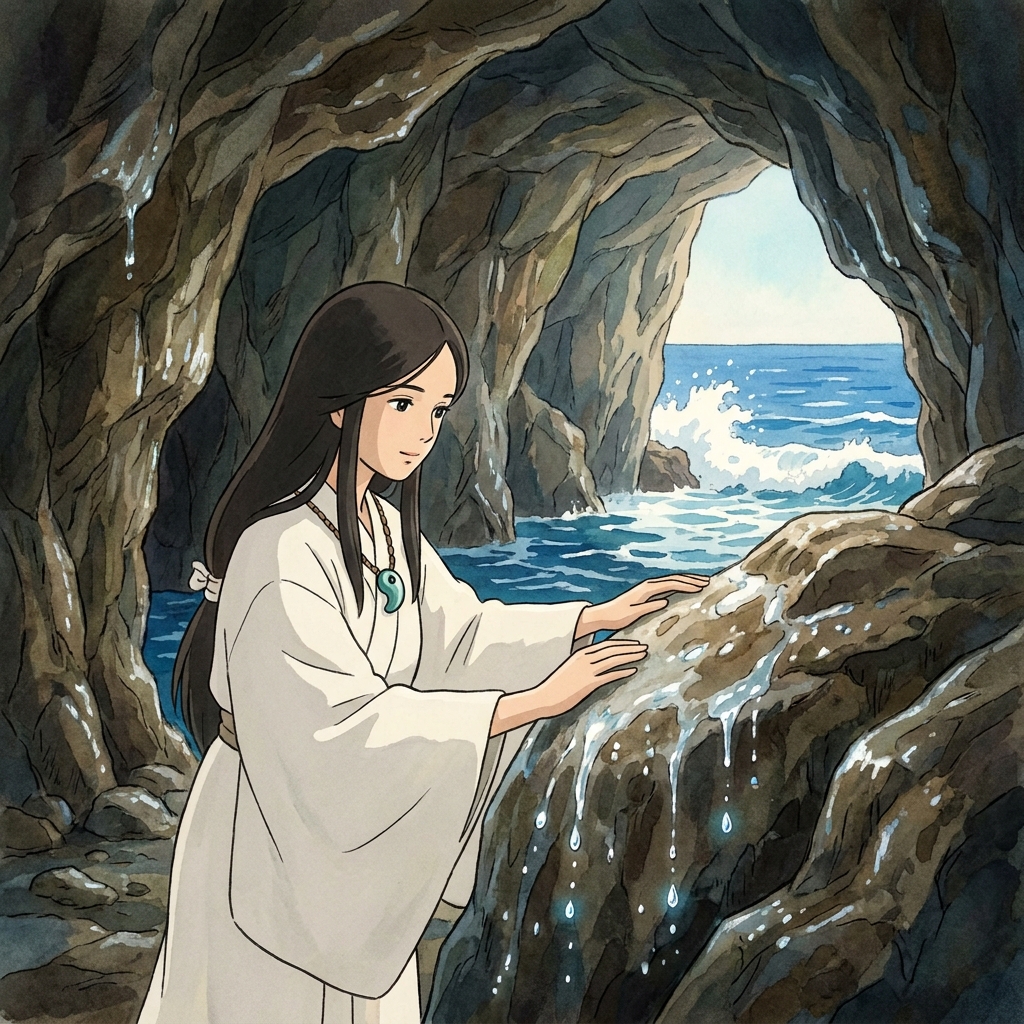
On the coastline of Nichinan City, Miyazaki Prefecture, nestled on a rugged cliff face battered by the rough waves of the Pacific Ocean, lies a truly rare jinja. This is Udo Jingu. Its appearance, with the vividly vermilion-lacquered main hall perfectly nestled inside a massive natural cave (sea cave), can only be described as mystical.
This time, we will thoroughly introduce legends you absolutely must know if you visit this place, fascinating behind-the-scenes stories you will want to share, and even essential pilgrimage site information for anime fans.
The Mystery of Japan’s Three Great Kudari-miya Shrines
Typically, the main hall of Japanese jinja is located atop a mountain or at the top of a flight of stairs. However, Udo Jingu is the opposite. It has a very rare structure where visitors descend the approach path to worship, and it is counted as one of Japan’s Three Great Kudari-miya (downward path shrines), alongside Ichinomiya Nukisaki Jinja in Gunma and Kusakabe Yoshimi Jinja in Kumamoto.
Why the descent? It is said that this very cave is the site of the birthing hut where the enshrined kami, Hikonagisatake Ugayafukiaezu-no-Mikoto, was born. Since the sacred place where the kami was born was a cave beneath the cliff, we descend the stairs towards it.
The Legend of Toyotama-hime and the Love of “Ochichiiwa”
At Udo Jingu, a poignant yet warm legend of a mother’s love remains.
Toyotama-hime, daughter of the kami of the sea, visited this place to give birth to a child with Yamasachihiko. However, she went into labor before the roof of the birthing hut could be fully thatched with cormorant feathers (this is the origin of the enshrined kami’s name).
Toyotama-hime asked her husband not to look at her during childbirth under any circumstances, but Yamasachihiko succumbed to temptation and peeked. What he saw was the princess, suffering in her true form as a large shark (or crocodile).
Ashamed that her true form had been seen, the princess left her newborn child and returned to the sea. However, worried about the child she left behind, the princess attached her breasts to the cave wall. These are now the “Ochichiiwa” (Breast Rocks) still found deep within the cave.
Even today, water constantly drips from these rocks, and there is a continuing belief that licking the “Ochichiami” (Breast Candy) made with this water will grant blessings for safe childbirth and child-rearing.
A Heartwarming Behind-the-Scenes Story of “Undama-nage” and Local Children
A specialty of Udo Jingu is the “undama-nage” (lucky ball throw), a test of luck where visitors throw “undama” into a depression on the back of a turtle-shaped rock (Kameishi). Men throw with their left hand and women with their right, and it is said that if the ball lands perfectly in the depression, their wish will come true.
Actually, these undama used to be osaisen (coins) thrown as offerings. However, in the Showa 20s (mid-20th century), many local elementary school children would descend onto the dangerous rocks below the cliff to pick up fallen coins, leading to constant tardiness for school.
Seeing this situation, the chief priest at the time devised the “undama,” made from baked clay, for the safety and healthy development of the children. Even today, these undama are handcrafted with care by local elementary and junior high school students and their parents, and the proceeds are used to support the children’s school fees and school trips.
Anime Pilgrimage: Traces of “Suzume no Tojimari”
Miyazaki Prefecture, where Udo Jingu is located, has garnered attention as the setting where the story of Makoto Shinkai’s film “Suzume no Tojimari” begins.
The “door in the ruins” that appears in the film, and Aburatsu Port, said to be the model for the port from which the protagonist Suzume embarks on her journey, are both located in the Nichinan area, close to Udo Jingu. In particular, Udo Jingu’s unique scenery with its shrine building inside a cave, and the coastline lined with strange rock formations, became a topic of discussion among fans for evoking the film’s fantastical world.
Additionally, at the nearby Michi-no-Eki Nangou (Roadside Station Nangou), objects of the “yellow chair” and “pink door” from the film have been installed, making it a popular pilgrimage route to visit alongside Udo Jingu.
Advice for Visiting
Inside the cave, the sounds of the waves echo, enveloping visitors in a silence and solemnity that makes one forget the hustle and bustle of the outside world. When you visit, be sure to walk to the back of the main hall. There, not only the “Ochichiiwa,” but also the “Nade-usagi” (Petting Rabbit), said to grant wishes when stroked, await you.
Udo Jingu, where the magnificent scenery of Hyuganada Sea and ancient myths still breathe. A single visit is sure to cleanse your soul with its overwhelming energy.
Related Links and References