 By ando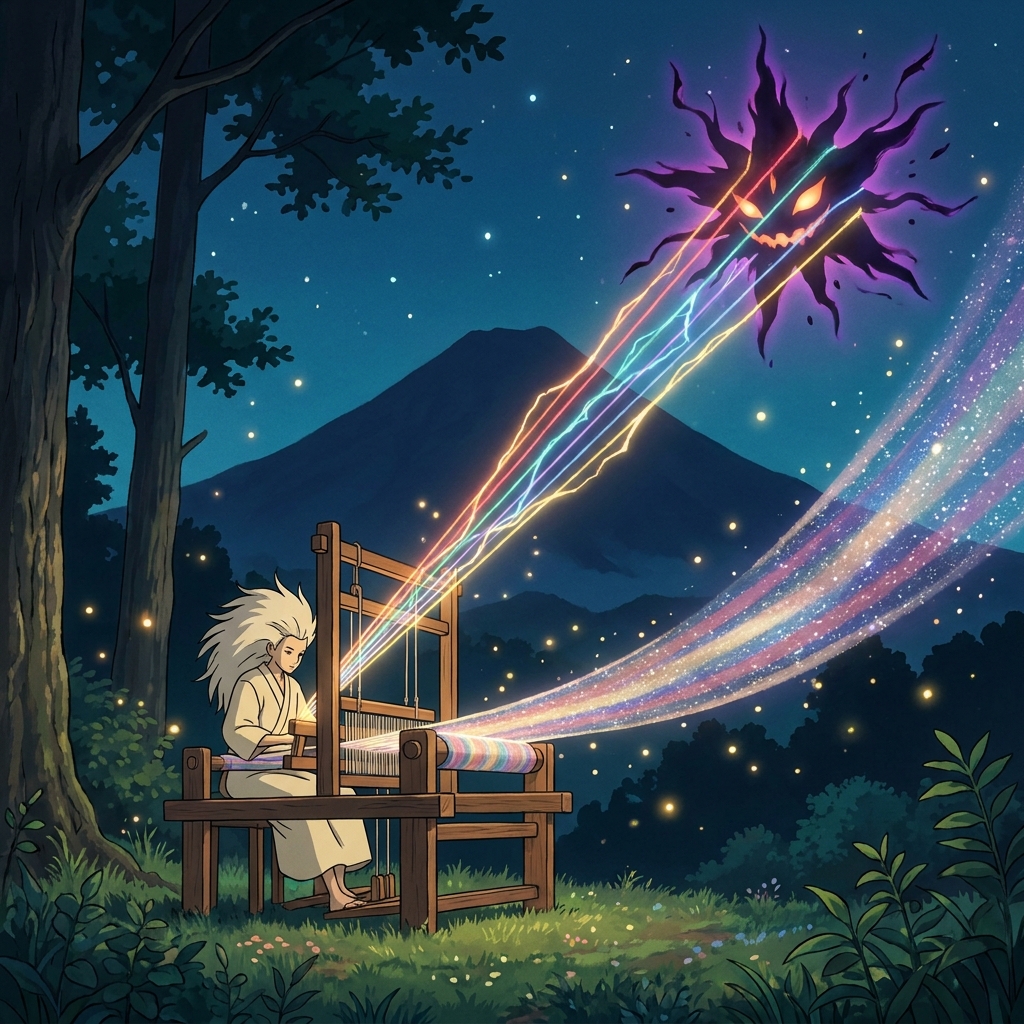
Katsuragishizurizate no Habarai no Mikoto Jinja, quietly nestled at the foot of Mt. Futakami in Katsuragi City, Nara Prefecture. This jinja, whose name is difficult to even pronounce at first glance, holds surprising legends related to ancient Japanese technology and a “Star God” who even repelled the strongest war kami.
Basic Information
Location: 1576 Kume, Katsuragi City, Nara Prefecture
Main Enshrined Kami (Go-saijin): Ame no Habarai no Mikoto
Additional Enshrined Kami (Hai-shishin): Ancestral kami of Kamon no Muraji, etc.
Jinja Status: Shikinaisha (Grand Shrine), Former Gosha
Textiles and Thunder: The Mystery of Contradictory Names
The “Shizuri” in the jinja’s name refers to a type of striped cloth woven in ancient Japan. This jinja is where the Shizuribe clan, who presided over such textiles, enshrined their ancestral kami.
However, what is puzzling is the name of the main enshrined kami: Ame no Habarai no Mikoto. Despite being a kami of textiles, the character for “rai” (thunder) is inscribed in its name. Why would a kami who quietly weaves cloth bear the name of violent “thunder”?
One theory suggests that the “gachan, batan” sounds made during weaving were likened to thunderclaps. Another theory posits that textiles possessed “magical power” (juryoku) believed to hold mighty energy similar to thunder.
Legend: The Power That Subdued the Star God Whom Even the Strongest War Kami Could Not Defeat
The main enshrined kami of this jinja, Ame no Habarai no Mikoto, has another name: Takehazuchi no Mikoto.
In Japanese mythology, there was one singular evil kami whom even Takemikazuchi (the kami of Kashima Jingu), considered the strongest war kami, could not subjugate. This was Amatsu Mikaboshi, the Star God.
It is said that Ame no Habarai no Mikoto (Takehazuchi no Mikoto), enshrined at this jinja, was the one who finally sealed this Star God—whom no one could defeat with brute force or military might—using wisdom and textile techniques (or magic employing textiles). This kami truly embodies a profound mystery in Japanese mythology, having conquered “strength” with “gentleness.”
Pilgrimage: Connections to Kantai Collection and Evangelion
This jinja is also known as a very important “sacred site” (seichi) for some fans.
1. Kantai Collection (Kancolle)
The on-board shrine of the Imperial Japanese Navy’s Unryu-class aircraft carrier “Katsuragi” was consecrated by a bunshi (division of a kami’s spirit) from Katsuragishizurizate no Habarai no Mikoto Jinja. For this reason, fans of “Katsuragi” and “admirals” still visit to pray for the ship’s safety or to contemplate history.
2. Neon Genesis Evangelion
While not a direct setting for the series, the surname of the main character, Misato Katsuragi, originates from the aforementioned aircraft carrier “Katsuragi.” It is not uncommon for fans tracing these roots to visit this place.
Highlights and Backstories of the Jinja Grounds
The jinja grounds are exceptionally tranquil, enveloped by the rich nature of Mt. Futakami. While there are no elaborate decorations, a profound atmosphere characteristic of an ancient jinja pervades the air.
The Saragi Legend: Nearby, there is a place name “Saragi” (Snake Hole), where beliefs related to ancient local clans and water kami (snakes) are deeply rooted.
A Little-Known Power Spot: From the legend of “subduing the stars,” this spot is now secretly visited by businesspeople and students seeking benefits such as “resolving matters smoothly” and “successfully concluding difficult negotiations.”
The pride of the Shizuribe clan, an ancient high-tech group, and the mystical legend of sealing the Star God. Katsuragishizurizate no Habarai no Mikoto Jinja is a unique space where Nara’s deep history and subculture intersect. Alongside hiking Mt. Futakami, we highly recommend experiencing its quiet power.
Related Links and References
No sources available.