 By ando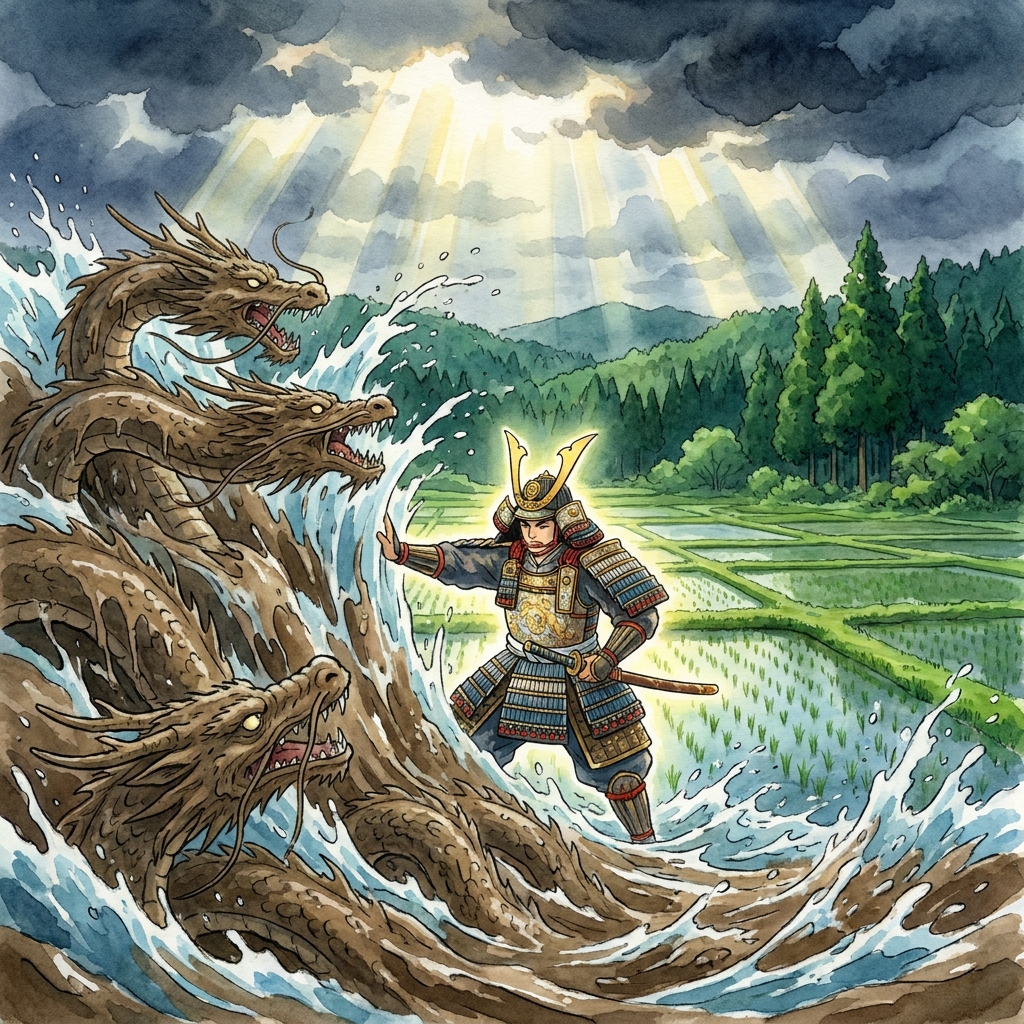
Basic Information
Name: Ehata Jinja (えはたじんじゃ)
Location: 555 Oaza Ehata, Joetsu City, Niigata Prefecture
Enshrined Kami: Homutawake no Mikoto (also known as Emperor Ojin)
Annual Festival: September 15
Ehata Jinja is quietly enshrined in a peaceful rural area of Joetsu City, Niigata Prefecture, near where the Hokuriku Shinkansen viaduct passes. Setting it apart from famous, heavily touristed jinja, it emanates a unique tranquility characteristic of a sonsha (village shrine) that has been carefully preserved by the local community.
The History of Battle with a Raging River, Hidden in the Name ‘Ehata’
A key characteristic of this jinja lies in its name and location. The name ‘Ehata’ literally means ‘edge of the ‘e’ (river)’. Historically, this area was frequently plagued by floods from the Sekikawa River, a tributary of the Shinano River.
According to ancient legends, Ehata Jinja was established as a vital stronghold to ‘halt the force of water’. While the enshrined kami, Homutawake no Mikoto (also known as Hachiman-sama), is generally known as a deity of martial fortune, here, his character as a ‘guardian kami confronting rampaging nature (floods)’ is strongly emphasized, serving as a spiritual bulwark to protect the village from water damage.
The Mystery: Why is Hachiman-sama Enshrined at the Edge of the Water?
Normally, water kami (such as Mizuhanome no Kami) are enshrined to prevent floods, but at Ehata Jinja, Hachiman-sama, a kami of war, is intentionally enshrined. One theory suggests this is related to the unique history of the Joetsu region.
During the Sengoku period (Warring States period), Uesugi Kenshin, who governed this land, placed great importance on Hachiman worship. According to a local anecdote, it is believed to be a remnant of Kenshin’s strategy to liken river floods to ‘enemy invasions’ and suppress their power with the might of the war kami. When you stand on the shrine grounds, you might feel a certain dignified, battlefield-like tension coexisting with a refreshing clarity, perhaps due to the presence of this ‘kami of battle’.
Highlights of the Shrine Grounds and a ‘Hidden Power Spot’
While the grounds of Ehata Jinja are not vast, the space surrounded by ancient trees is truly a Chinjusha no Mori (guardian forest).
Sculptures on the Haiden (Worship Hall): Despite being a small jinja, the carvings on the kohai (front portico) of the haiden are remarkably elaborate. Dragon and wave motifs are often seen, strongly emphasizing its connection to ‘water’.
The Power of Silence: While the roar of the Shinkansen passing nearby can be heard, the overwhelming ‘silence’ that descends the moment it stops is the greatest charm of this jinja. It is truly an ideal place to forget the hustle and bustle of daily life and to reflect on oneself.
Behind the Scenes of Your Visit: Goshuin and the Secret of ‘Kenmusha’
Ehata Jinja is currently a ‘mujinsha’, meaning it does not have a resident priest. Therefore, if you wish to receive a goshuin, it is customary to inquire about and visit the honmussha (the larger jinja that manages it) beforehand. When visiting jinja in Joetsu City, a thoughtful visit to such smaller shrines allows you to connect with the deep historical layers of the region.
While it lacks flashy decorations or a grand torii gate, Ehata Jinja carries the undeniable weight of having ‘protected this land through the ages’. When exploring the history of Joetsu, please consider visiting this ‘guardian kami at the water’s edge’.
Related Links / References
No sources available.