 By ando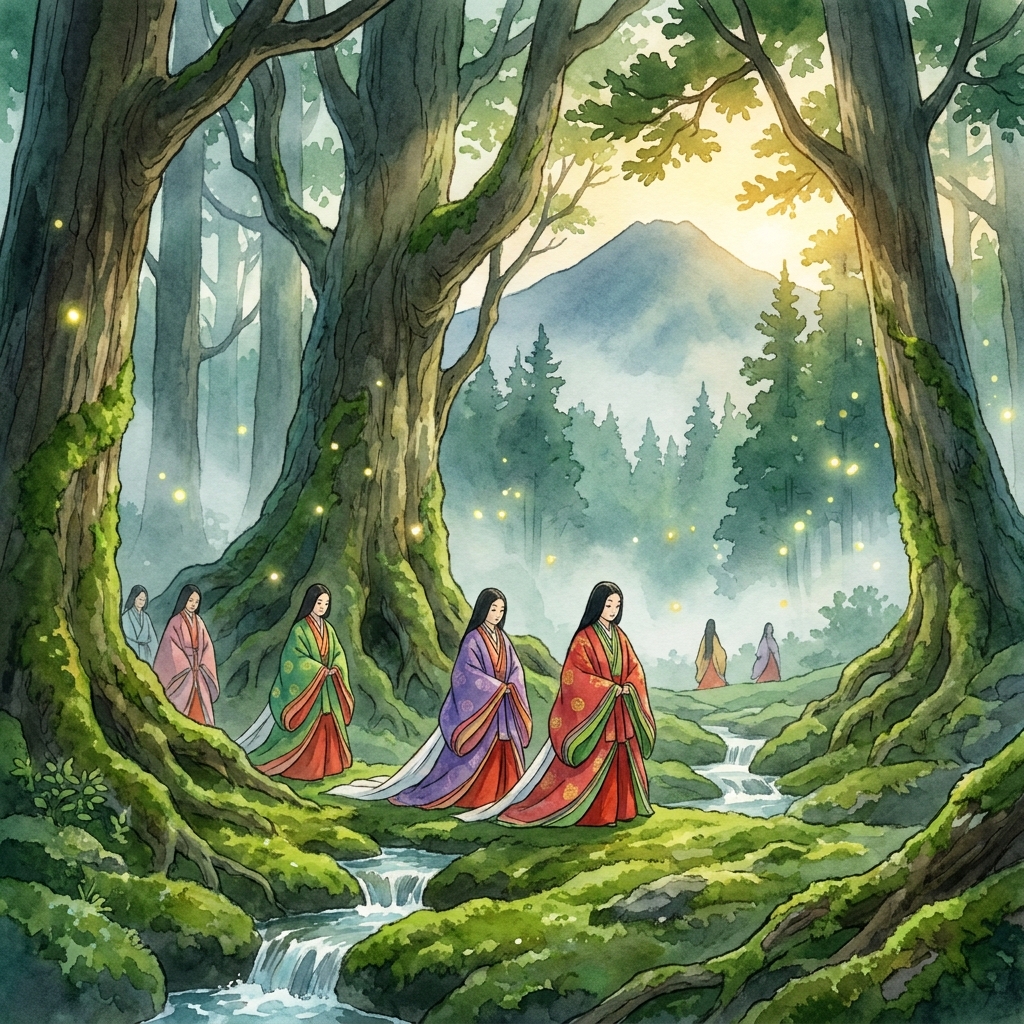
In Takayama City, Gifu Prefecture, nestled amidst the mountains of the Northern Alps in the Hida region, stands Mizunashi Jinja. This shrine has long been revered as “Hida Ichinomiya,” the highest-ranked shrine in the province. Step inside, and you will discover a serene yet powerful atmosphere, completely distinct from the hustle and bustle of city life. This time, we will uncover the many mysteries and legends hidden within this ancient shrine, as well as its deep connection to popular anime.
Basic Information: Ichinomiya, Guardian Deity of Hida
Mizunashi Jinja holds the highest rank, known as Ichinomiya, in what was once Hida Province (present-day northern Gifu Prefecture). Its main kami, the Mizunashi Okami, include Mitoshi no Kami. From ancient times, the shrine has been worshipped as a kami of agriculture and as a kami of water, the source of life.
Location: 5323 Ichinomiyamachi, Takayama City, Gifu Prefecture
Goshintai (Sacred Object): Mount Kurai, rising 1,529 meters high behind the shrine.
Mystery: Why is it called “Mizunashi” (No Water) Shrine?
There are several theories behind the mysterious name “Mizunashi,” which literally means “no water.”
One theory suggests it comes from the “mizunashi-gawa” phenomenon, where the riverbed of the Miyagawa River drops low in this area, causing the water to flow underground and disappear from the surface.
Another theory proposes that “Mizunashi” originally meant “Mizunasu,” or “the place where water is born.”
In fact, Mount Kurai, the shrine’s goshintai, is a watershed. Water flowing from this mountain eventually separates, with one stream heading towards the Sea of Japan and the other towards the Pacific Ocean. It truly is a jinja that presides over the headwaters of water.
Legends and Hidden Stories: The Emperor’s Scepter and the Mystique of Mount Kurai
Mount Kurai, the sacred object (goshintai) of Mizunashi Jinja, has a profound connection to the Imperial Family.
Since ancient times, it has been customary to present the Ichii (yew) trees that grow naturally on Mount Kurai as material for the shaku, the ceremonial scepter held by emperors during their enthronement. Because of this tradition, the mountain itself came to be revered as “the mountain that bestows rank” (Kurai-yama).
Furthermore, Mount Kurai features numerous megalithic rock formations (iwakura), believed to have been ancient ritual sites. Its magnetic field is said to be so powerful and mystical that some enthusiasts even speak of urban legends, such as the “pyramid theory” or that it is a “site for communication with the cosmos.”
Hidden History: The Model for Shimazaki Toson’s “Before the Dawn”
For literature enthusiasts, the shrine’s connection to literary giant Shimazaki Toson is not to be missed. The protagonist of Toson’s masterpiece “Before the Dawn,” Hanzo Aoyama, was modeled after Toson’s own father, Masaki Shimazaki. He served as the chief priest (guji) of Mizunashi Jinja during the turbulent Bakumatsu and Meiji periods.
Reflecting that the footsteps of a chief priest who struggled between ideals and reality during such a tumultuous era are etched somewhere within these grounds deepens the emotion of a visit.
Anime Pilgrimage: Walking Through the Climax of “Hyouka”
Mizunashi Jinja is also very famous as a sacred site for the popular anime “Hyouka” (based on Honobu Yonezawa’s original work).
Specifically, the “Ikibina Matsuri” (Living Hina Doll Festival), which was the setting for the final episode “Though I May Be Late for Tomorrow,” is modeled after a real ritual held every year on April 3.
Ikibina Matsuri: This beautiful festival, reminiscent of a Heian-era picture scroll, features unmarried women selected from across the Hida region dressing up as Imperial Court dolls (O-Dairi-sama and O-Hina-sama) and parading through the shrine grounds.
Highlights: The shrine buildings depicted in the anime and the scenery of the sando (approach) walked by Houtarou Oreki and Eru Chitanda remain exactly as they were, allowing fans to re-experience those moving scenes.
Additionally, in the Hida region, which is rumored to be one of the settings for the blockbuster movie “Your Name.,” Mizunashi Jinja’s solemn atmosphere makes it a notable spot that evokes the world of the film.
Points for Visiting
Within the shrine grounds, a massive cedar tree, said to be over 800 years old, towers majestically, its vitality truly awe-inspiring. There is also a statue of a sacred horse (shinme), said to have been dedicated by the Sengoku period warrior Shima Sakon, adding to the weight of history felt here.
Mizunashi Jinja is a place where Hida’s rich nature, ancient faith, and modern anime culture converge. When sightseeing in Takayama, why not extend your journey a little and visit this mysterious Ichinomiya?
Related Links and References
No sources available.