 By ando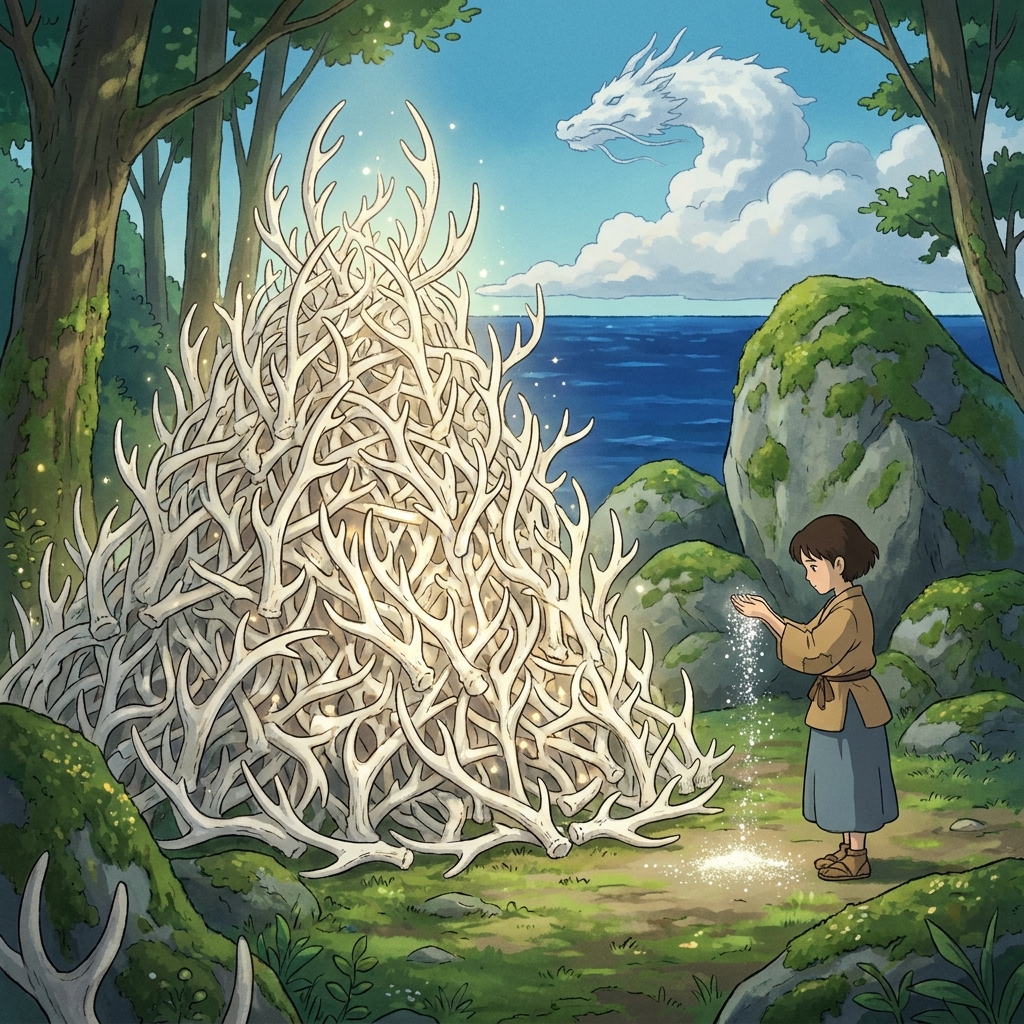
Basic Information
Shikanoshima island, floating at the entrance of Hakata Bay in Higashi Ward, Fukuoka City, is home to Shikaumi Jinja. This jinja, located at the island’s entrance, is the head shrine for all Watatsumi Jinja nationwide and is celebrated as the “Capital of the Dragon.”
Location: 877 Shikanoshima, Higashi Ward, Fukuoka City, Fukuoka Prefecture
Enshrined kami: Watatsumi Sanjin (Omotezu Watatsumi no Kami, Nakatsu Watatsumi no Kami, Sokotsu Watatsumi no Kami)
Blessings: Maritime safety, traffic safety, warding off evil, renewal and rebirth
Since ancient times, Shikaumi Jinja has attracted deep reverence from the Imperial family to common people as the “guardian deity of the sea” and the “kami of purification and exorcism (misogi-harae).”
Legend and Mystery: A Hall Where 10,000 Deer Antlers Rest
The most distinctive feature within the grounds of Shikaumi Jinja is the Rokkaku-ko (Deer Antler Repository), located next to the main worship hall. Peering through its lattice, you’ll see an incredible number of deer antlers piled high – more than 10,000 of them.
Why would a jinja dedicated to a sea kami possess deer antlers?
According to legend, when Empress Jingu embarked on her expedition to the Three Kingdoms of Korea, she hunted deer on Tsushima island and offered their antlers, praying for victory. Another theory suggests that Shikanoshima was once known as “Deer Island,” and deer have long been cherished as messengers of the kami. This sight of such a massive quantity of dedicated antlers is rare nationwide, creating a mysterious space that overwhelms visitors.
Behind the Story: Is the Japanese National Anthem “Kimigayo” Rooted Here?
What is surprisingly little known is Shikaumi Jinja’s deep connection to Japan’s national anthem, “Kimigayo.”
Shikaumi Jinja hosts a special Shinto ritual called the Yamahome-sai (Mountain Praise Festival) in April and November. Within the kagura-uta (sacred song) chanted during this ritual, there is a verse that goes:
“Kimigayo wa Chiyo ni Yachiyo ni Sazareishi no Iwao to narite Koke no musu made”
While this lyric also appears in the Kokin Wakashu anthology, there is a theory that the kagura-uta of Shikaumi Jinja retains an older form. This suggests it might be one of the origins of “Kimigayo.” The Azumi clan, who were seafarers, passed down this song through generations, praising the mountains and wishing for eternal prosperity.
Mystery of Misogi: Purifying with Sand Instead of Water
At most jinja, worshippers purify themselves with water at the chozuya (hand-washing basin). However, Shikaumi Jinja has a unique practice. Before passing through the torii gate, you will find purifying sand called Oshioi.
Worshippers take a pinch of this sand with their fingertips and sprinkle it on their body – left, right, left – before entering the shrine grounds. This custom originates from the enshrined kami being the “kami of purification and exorcism.” The sand, which contains salt (crystallized seawater), is believed to powerfully ward off evil. This special sand is so potent that it is even used by participants of Fukuoka’s Hakata Gion Yamakasa festival for their purification.
Pilgrimage Information: Setting for “Ghost in the Shell: SAC_2045”
Shikanoshima is featured as an important setting in the popular anime series “Ghost in the Shell: SAC_2045” (Season 2).
In the series, the protagonist Motoko Kusanagi visits Shikanoshima, and the island’s unique scenery and atmosphere are depicted. While Shikaumi Jinja itself isn’t the main setting, the entire island plays a key role in the story, making it a must-visit pilgrimage site for fans.
Furthermore, Kin-in Park, where the “Gold Seal” of “King of Na, State of Wa,” familiar to history enthusiasts, was discovered, is also located very close to this jinja. This area is often discussed in the context of works featuring historical artifacts, such as the anime “Dr. STONE.”
Key Points for Visiting
The entire island of Shikanoshima feels like a sacred area, filled with refreshing purity. From the approach to the jinja, you can enjoy a beautiful panoramic view of Hakata Bay, and on clear days, you can even see Fukuoka Tower and PayPay Dome on the opposite shore.
Befitting its name “Capital of the Dragon,” Shikaumi Jinja is a power spot where you can feel the energy of the dragon kami. When visiting Fukuoka, why not extend your journey to Shikanoshima, an island connected to the mainland, purify yourself with sand, and contemplate its ancient history?