 By ando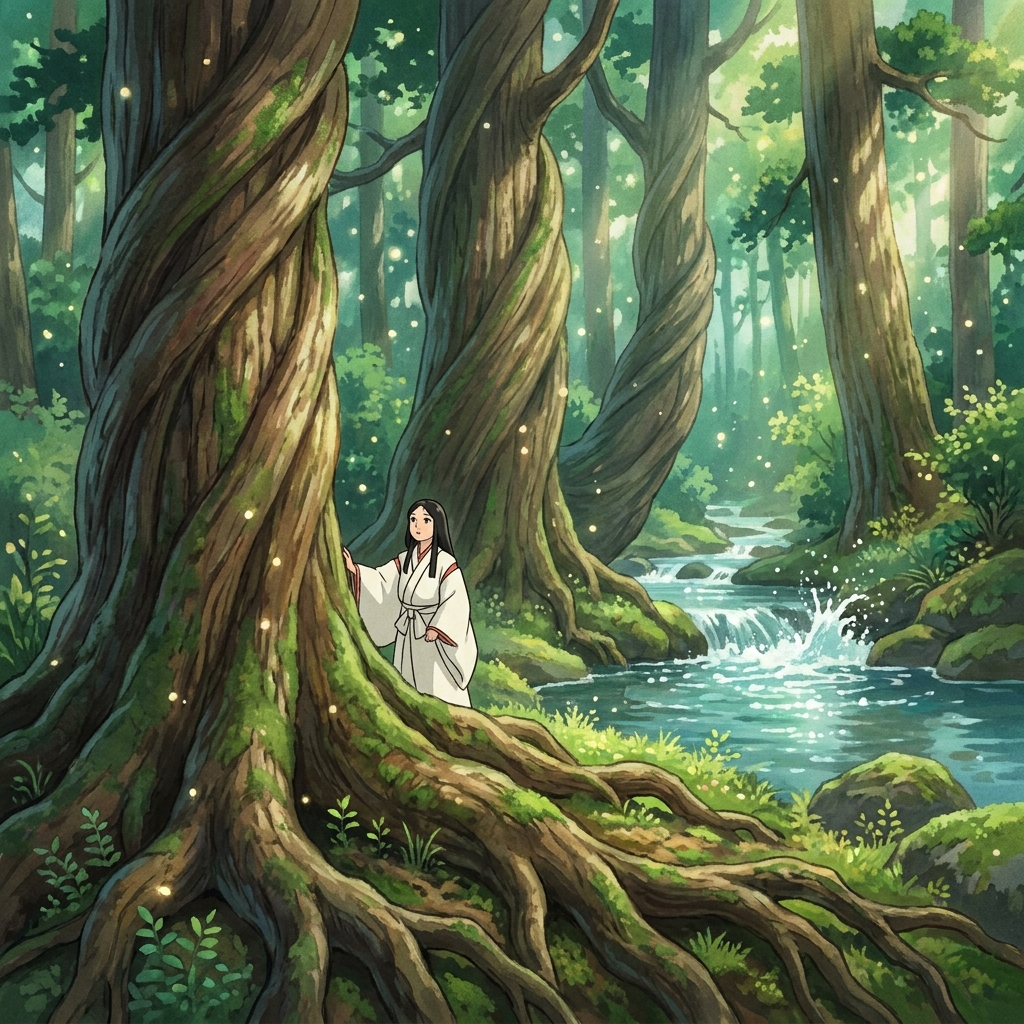
Basic Information
Takihara-no-miya and Takihara-no-narabi-no-miya, located in Taiki Town, Watarai District, Mie Prefecture, are known as particularly prestigious “distant shrines (too-no-miya)” among the 14 bekku (subsidiary shrines) of Ise Jingu’s Kotaikingu (Inner Shrine).
Although situated in the mountains about 40 kilometers from the main Ise Jingu complex in Ise City, the layout of their shrine buildings and the atmosphere of their approach path closely resemble those of the Inner Shrine. For this reason, they are sometimes called a “model of the Inner Shrine” or one of the “original Ise Jingu” sites (Moto-Ise).
* Enshrined Deity: The spirit (mitama) of Amaterasu Suma Omi Kami.
* Features: Within the same precinct, two shrine buildings of nearly identical size stand side-by-side. Takihara-no-miya is on the right, and Takihara-no-narabi-no-miya is on the left (when facing them). It is generally believed that Takihara-no-miya enshrines the nigimitama (gentle spirit) of Amaterasu Omikami, while Takihara-no-narabi-no-miya enshrines her aramitama (fierce spirit).
The Legend of Princess Yamato-hime and Manago-no-kami
The origins of Takihara-no-miya date back approximately 2,000 years, to a time when Princess Yamato-hime-no-mikoto, daughter of the 11th Emperor Suinin, was journeying to find a suitable place to enshrine Amaterasu Omikami.
According to legend, while Princess Yamato-hime was ascending the Miya River, she became stranded, obstructed by rapids. It was then that a local kami, Manago-no-kami, appeared and safely guided her party. The place they arrived at, guided by this kami, was this “Land of Takihara of the Great River” (Oka no Takihara no Kuni). Princess Yamato-hime was deeply moved by its beauty and is said to have built a temporary palace here.
Although Amaterasu Omikami was later moved to the current Isuzu River (the site of the Inner Shrine), this site continued to be carefully protected as a bekku (subsidiary shrine).
The Mystery of the Zero Magnetic Field and the “Twisted Cedars”
Takihara-no-miya is located on Japan’s largest fault line, the Median Tectonic Line. It is said that where these faults overlap, “zero magnetic fields” tend to occur, where magnetic forces cancel each other out. This makes it a powerful “power spot” comparable to Mt. Bungui Pass in Nagano Prefecture.
Symbolizing this influence are the “twisted cedars” scattered along the approach path. While the surrounding trees grow straight, certain cedars grow in a spiral, twisted manner, harboring a mystery that suggests distortions in the magnetic field might be affecting plant growth.
The Unique Mifunagura
Within the precincts of Takihara-no-miya, there is a small building called Mifunagura, which is not seen at other bekku. This is a storehouse for the Mifunashiro, a sacred boat that represents the kami’s vessel.
This is a very rare historical remnant, lending credence to the tradition that Princess Yamato-hime visited this place by boat, and it tells a story of Takihara-no-miya once being a sacred site deeply connected to “water” and “rivers.”
Hidden Popular Spots: “Heart Stone” and “Kami’s Hand”
A quiet buzz among worshippers is the “heart-shaped stone” found on the steps leading to the mitarai-ba (purification fountain). There is a rumor that finding it brings good fortune in relationships, making it popular with younger visitors.
Also, along the approach path, there are cedar roots resembling a giant hand grasping the ground, known as “Kami’s Hand.” This evokes a sense of divinity beyond natural artistic beauty.
Pilgrimage Information: Anime ‘Zatsu Tabi – That’s Journey -‘
In episode 7 (Mie Prefecture Arc) of the travel-themed anime and manga series ‘Zatsu Tabi – That’s Journey -‘, scenes depicting the protagonist visiting Ise are featured. The pilgrimage to Ise Jingu’s 125 shrines and the tranquil atmosphere of the surrounding area are familiar to fans of the series. Visiting a “hidden bekku” like Takihara-no-miya is popular among enthusiasts as a pilgrimage route to deeply experience the world of the series.
Behind the Worship: The Correct Order
There are four shrine buildings within the Takihara-no-miya precinct, and there is a prescribed order for worship:
1. Takihara-no-miya (right side)
2. Takihara-no-narabi-no-miya (left side)
3. Wakamiya Jinja
4. Nagayuke Jinja and Kawashima Jinja
Following this order is the ancient custom. Just like at the Inner Shrine’s Isuzu River, purifying one’s hands in the clear stream of the Tondo River before proceeding deeper into the forest will surely provide a feeling of purification for both mind and body.
Related Links and References