
 By ando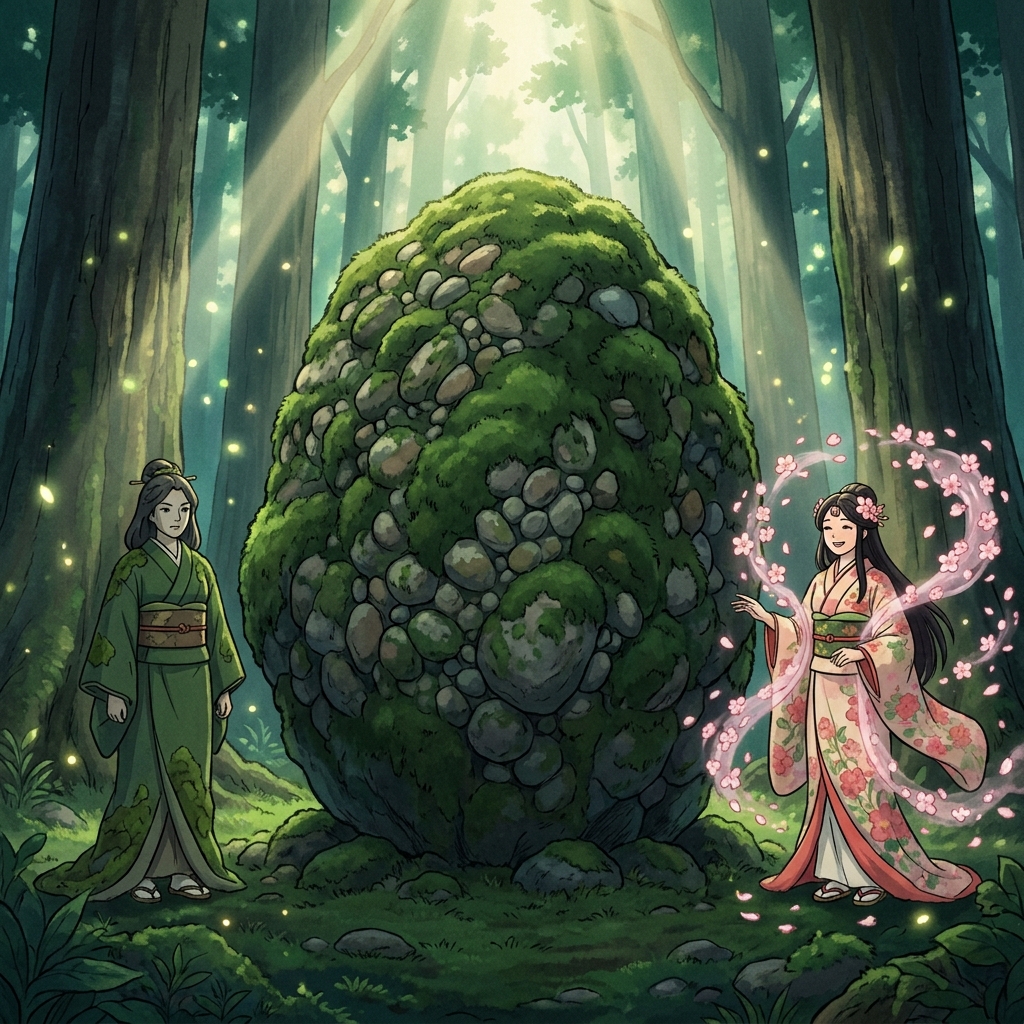
Basic Information
Name: Sazareishi Jinja (Sazareishi Shrine)
Location: 432 Mikumo, Itoshima City, Fukuoka Prefecture
Enshrined Kami: Iwanagahime-no-Mikoto, Konohanasakuyahime-no-Mikoto
Access: From Hatae Station on the JR Chikuhi Line, take the Community Bus (Ibarayama Line) for approximately 10 minutes and get off at “Mikumo-no-miya (Sazareishi Jinja-mae)” stop. The jinja is right there.
Birthplace of Japan’s National Anthem, Kimigayo?! The Grand Mystery Hidden in the Name
The biggest highlight of this jinja, a story passed down among history enthusiasts, is its deep connection to Japan’s national anthem, Kimigayo.
The word “sazareishi” appears in the lyrics. A strong theory suggests that this very jinja is its root. Ancient history researchers believe that keywords in the lyrics—”Chiyo” (a place name in Fukuoka City), “sazareishi” (Sazareishi Jinja), and “until pebbles grow into moss-covered boulders” (a common interpretation of “Koke no musu made,” referencing Iwanagahime’s alternative name, Kotamumusume-no-Kami)—all converge in the Fukuoka and Itoshima area. For this reason, it is thought that this region is the stage where “Kimigayo” originated. Standing before the “sazareishi” stone enshrined within the jinja grounds, one can almost feel the weight of words sung for over a thousand years.
Beauty or Eternity? The Legend of Contrasting Sister Kami Enshrined Here
Enshrined at Sazareishi Jinja are the famous sister kami from Japanese mythology: Konohanasakuyahime and Iwanagahime.
When Tenson Ninigi-no-Mikoto fell in love at first sight with the beautiful younger sister, Konohanasakuyahime, and proposed marriage, their father, Oyamatsumi-no-Kami, offered both sisters for marriage. However, Ninigi sent back only the elder sister, Iwanagahime, due to her unattractive appearance.
Enraged by this, their father declared, “If you had married Konohanasakuyahime, you would have prospered like a flower, but if you had married Iwanagahime, you would have gained eternal life like a rock. By returning the elder sister, the heavenly grandchild’s lifespan will be shortened.” This is considered the reason why humans have a limited lifespan (the origin of mortality).
While many jinja typically enshrine only the beautiful younger sister, it is extremely rare and mysterious that both sisters are enshrined together here at Sazareishi Jinja.
The Backstory: A Center of the Ancient State of Ito-koku
The Mikumo district, where this jinja is located, is presumed to have been the center of “Ito-koku,” an ancient state mentioned in the Chinese historical text “Wei Zhi Wajinden” (Records of Wei: Account of the Wa people). Directly behind the jinja is the Mikumo-Nanbaaru Ruins, believed to be a royal tomb from the 1st century BCE, suggesting it was once a grand jinja with extensive sacred lands.
However, a sad backstory remains: in 1587, during Toyotomi Hideyoshi’s Taiko land survey, its sacred rice paddies were confiscated, leading to a rapid decline. It is hard to imagine from its current quiet appearance that it was once a place of such immense power.
Pilgrimage Spot Information: A Must-Visit Area for Demon Slayer Fans
While Sazareishi Jinja itself is not directly depicted as a setting, Itoshima City, as a treasure trove of “giant stones and unusual rocks,” is often incorporated into pilgrimage routes for fans of the anime “Demon Slayer: Kimetsu no Yaiba.”
In particular, the “Kamishiro-ishi” (Sacred Stone) at Kamiari Jinja, located about a 10-minute drive away, became a popular topic for its striking resemblance to the rock that protagonist Tanjiro cut during his training. Sazareishi Jinja’s “sazareishi” also attracts many anime fans and cosplayers as a hidden gem for “rock-themed” power spot tours, thanks to its mystical presence.
The breath of ancient kings, the roots of the national anthem, and the tale of mythological sisters. Sazareishi Jinja, quietly nestled in Itoshima’s rural landscape, is truly a place where the romance of history is condensed.
Related Links and References
Sazareishi Jinja (Sazareishi) – Each Person Raises Their Voice to Create Peace Email Magazine “Alter Hiroba”
History of Itoshima – Sazareishi Jinja | Seiken House, a Construction Company in Fukuoka
Model for the “One-Strike Stone” from Demon Slayer: Kimetsu no Yaiba!? The Sacred Stone of Kamiari Jinja is a Hot Topic! | Nippon Tabi Magazine
Fukuoka Jinja Sanpaicho (Fukuoka Shrine Pilgrimage Records)
501 Not Implemented
Itoshima’s Power Spot! Sazareishi Jinja Wrapped in History and Mystery –
Sazareishi Jinja KYAAAAA!!! It’s a power spot (゚Д゚;)! | Sunny, Cloudy, Rainy, Stormy…
Sazareishi Jinja
Iwanagahime | StudyShinto
From the Lyrics of “Kimigayo,” Reflecting on Ancient Times… Shikano-umi Jinja and “Kimigayo” – Good Days, Bad Days, All Are Good Days
Iwanagahime – Wikipedia
Days of Wine and Roses: The Central Jinja of Ito-koku, Sazareishi Jinja (Itoshima)
The Story of Konohanasakuyahime and Iwanagahime ~Like a Beautiful Flower~ | Travel Feature | Miyazaki Prefecture Official Tourism Site “Miyazaki Kanko Navi”
Who Exactly is the “Kimi” in “Kimigayo”? (2) A Journey of Kimigayo from Itoshima to Hakata Bay – SOMoSOMo
Solving the Mysteries of Northern Kyushu’s Ancient History Part 14 – Seeking the Beauty of Suiseki