 By ando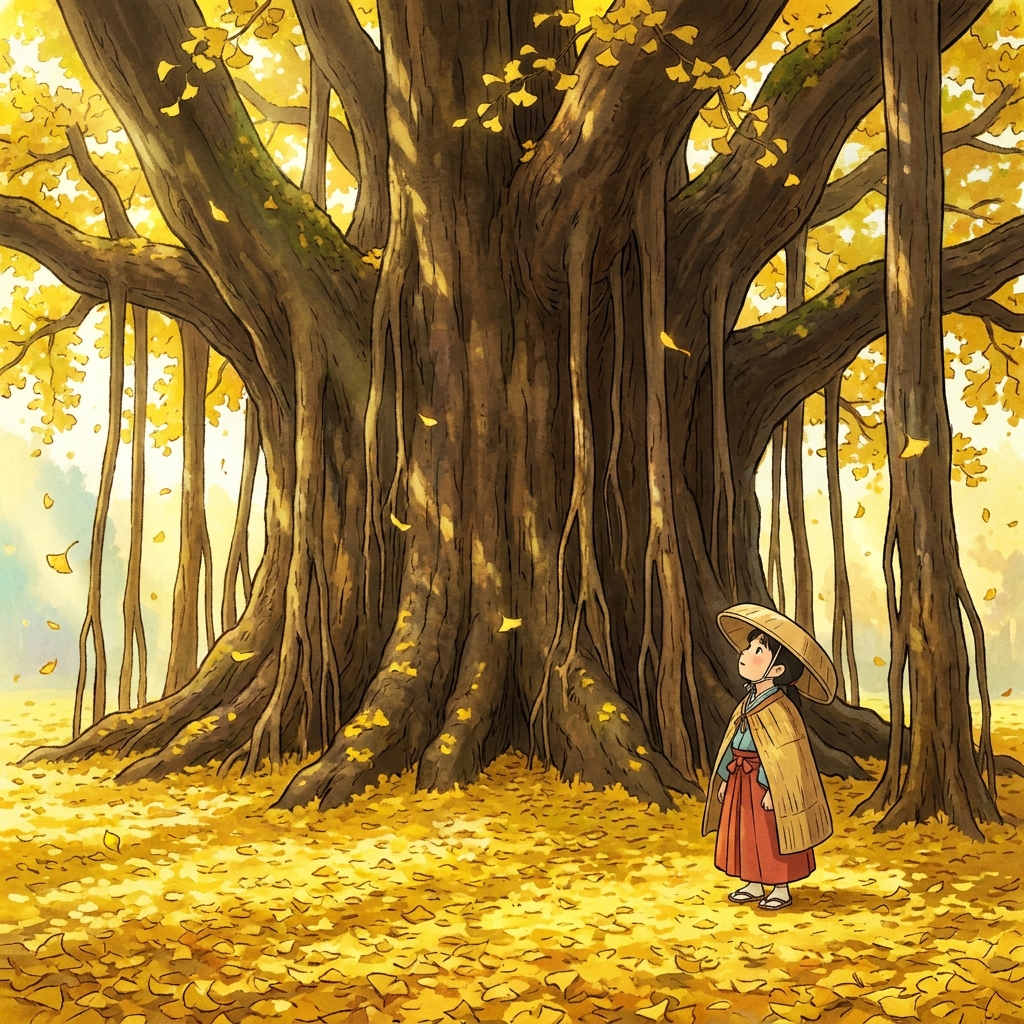
In Kitakata City, Fukushima Prefecture, a place known for its traditional storehouses (kura), stands a site often hailed as a “miracle” in the history of Japanese architecture: Shingu Kumano jinja. Step inside, and you’ll find an overwhelming sense of tranquility and beauty, as if the air of the Heian period has been perfectly preserved in time.
Basic Information
Location: 2258 Kumano, Shingu, Keitokumachi, Kitakata City, Fukushima Prefecture
Main Attractions:
Nagatoko: A Nationally Designated Important Cultural Property. This prayer hall (haiden) conveys the architectural style of a Heian period shinden-zukuri mansion from the late Heian period.
Great Ginkgo Tree: A Kitakata City Designated Natural Monument. An ancient tree approximately 800 years old and 30 meters tall.
Treasure Hall: Houses the “Bronze Basin,” a Nationally Designated Important Cultural Property, and the “Wooden Manjushri Bodhisattva Riding a Lion Statue,” a Prefecturally Designated Cultural Property, among others.
Access: Approximately 10 minutes by car from JR Ban’etsu West Line Kitakata Station, or alight at ‘Shingu (Nagatoko)’ bus stop.
—
Stories, Legends, and Mysteries
1. The Mystery of Nagatoko, with No Walls or Doors
Nagatoko, the iconic structure of Shingu Kumano jinja, boasts a truly unique design: 44 thick circular pillars standing at equal intervals, supporting a vast thatched roof. With no walls or doors whatsoever, and open on all four sides, what exactly was this building created for?
One theory suggests that this area was once a training ground (dojo) for yamabushi, practitioners of Shugendo mountain asceticism, where many would gather to dedicate themselves to spiritual practices. Another theory posits it as an open space where people of all social standings could assemble for banquets and rituals, reflecting a form of faith where “kami (deities) and people could enjoy together” in that era.
2. The Minamoto Clan’s Ambition and the ‘Kumano of the North’
This jinja was founded in 1055 (Tenki 3) during the mid-Heian period. It originated when Minamoto no Yoriyoshi and his son Yoshiie, on their way to quell Oshu during the Earlier Nine Years’ War, prayed for victory at the Kumano Sanzan in Kishu (present-day Wakayama Prefecture). Following their triumph, they enshrined the kami here in gratitude.
In fact, just like the original Kumano Sanzan in Wakayama, the three shrines of Hongu, Shingu, and Nachi were enshrined in Aizu. A grand historical background is hidden here: Yoshiie envisioned the Aizu Basin as a “Second Kumano,” aiming to govern Tohoku not only through physical control but also through spiritual power.
3. The ‘Golden Carpet’ and ‘Milk Ginkgo’ Marking 800 Years of Time
The magnificent great ginkgo tree that towers over the shrine grounds is said to have been planted by Kamakura Gongoro Kagemasa, a retainer of Minamoto no Yoshiie.
This ancient tree possesses a mysterious characteristic: numerous club-shaped aerial roots, known as “chichi” (literally meaning ‘breasts’ or ‘milk’), hang down from its trunk. For centuries, it has been revered as an object of faith for its power to “promote the flow of breast milk.”
Every year from mid to late November, when this great ginkgo sheds its leaves, the entire floor of Nagatoko is blanketed in yellow leaves, creating a fantastical scene akin to a “golden carpet.” The illuminations during this period are of an otherworldly beauty.
4. Miraculous Revival from the Keicho Great Earthquake
In 1611 (Keicho 16), a devastating earthquake struck the Aizu region, causing many of Shingu Kumano jinja’s shrine buildings to collapse. However, only Nagatoko was rebuilt in 1614, ingeniously reusing old materials, thereby preserving the essence of the Heian period for future generations.
Its current form was faithfully restored to its original construction through a comprehensive dismantling and repair project in 1974. The sight of its 44 pillars standing in neat alignment symbolizes the resilience that has overcome countless disasters and the enduring beauty cherished across centuries.
5. The Ancient Mystery Hidden in Komabashi Bridge
The bridge spanning the river in front of the jinja’s torii gate was once known as “Komabashi Bridge.” Why would a bridge deep in the mountains of Aizu bear the name “Koma,” which refers to an ancient Korean kingdom?
Sueki pottery has been unearthed in the vicinity, leading to a fascinating theory that immigrants from the continent or peninsula settled here in ancient times, bringing advanced technologies and culture. This suggests that the area may have been a special crossroads of different cultures even before the spread of Kumano faith.
—
Shingu Kumano jinja is far more than just a historical structure. As you feel the wind sweep through the wall-less Nagatoko and stand beneath the glowing golden ginkgo, you will surely sense, deep within, the prayers and reverence that people held a millennium ago, still very much alive in this sacred place.
Related Links and References
[1] https://www.kutsurogijuku.jp/blog/2024/11/02/nagatoko/
[2] https://curasitasu.co.jp/tohoku_column/4857/
[3] http://show-en-kei.com/kyoboku/kbtohoku/kbfukushima/kbfukushimakitakata_01.html
[4] https://tabi.jtb.or.jp/res/070047-
[5] https://www.syakunage.com/%E6%96%B0%E5%AE%AE%E7%86%8A%E9%87%8E%E7%A5%9E%E7%A4%BE%E3%81%A8%E9%95%B7%E5%BA%8A/
[6] https://note.com/mochan888/n/n024fbad8a666
[7] https://rekisitabi.blog/singukumanoshrine/
[8] https://www.pref.fukushima.lg.jp/download/1/41350rekisi02-2.pdf
[9] http://www.shintaki.kutsurogijuku.jp/news/200816
[10] http://www.city.nanyo.yamagata.jp/up/files/rekibunsupo/rekisitanbo/rekisibunka/bunkasiseki/015%20ooityou.pdf
[11] https://www.gimu.fks.ed.jp/plugin/databases/detail/4/28/576
[12] https://aizumonogatari.com/tour/6618.html
[13] https://plaza.rakuten.co.jp/onkamui/diary/202509060000/