
 By ando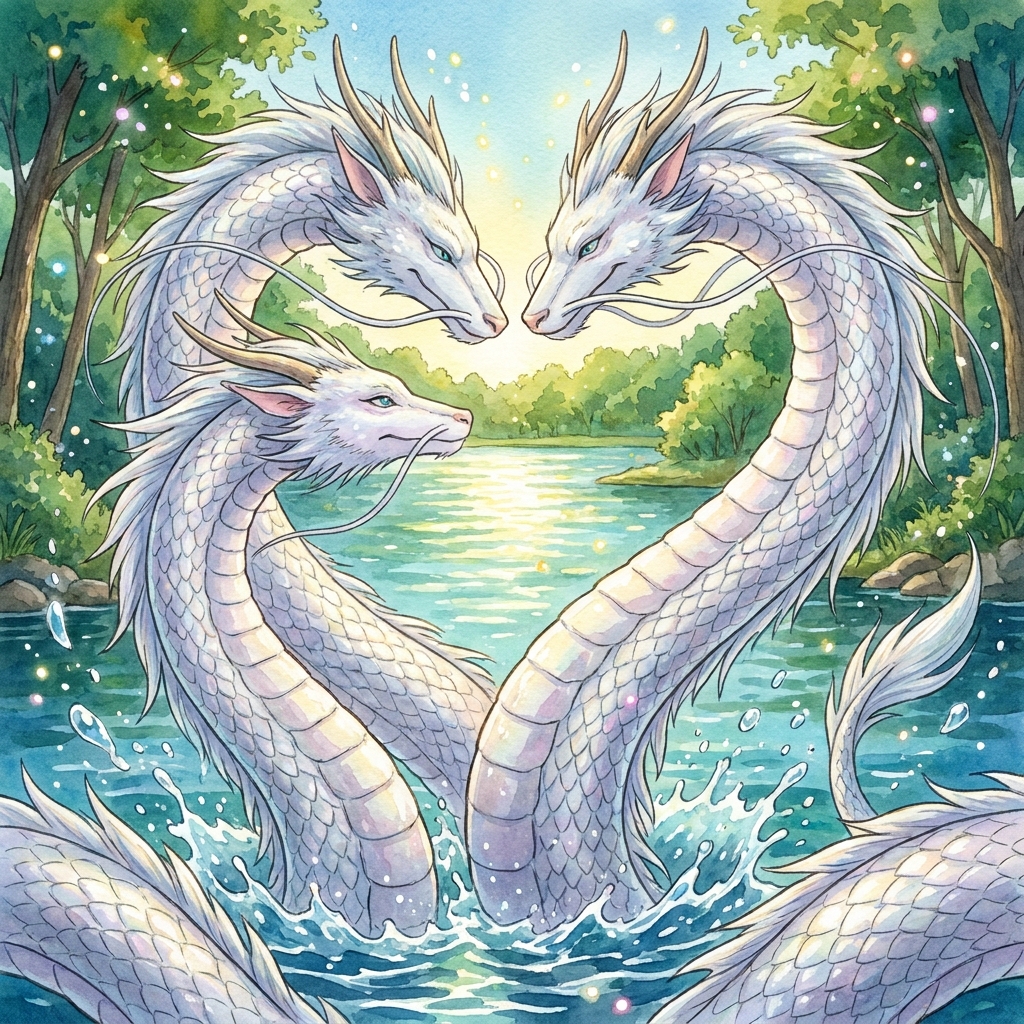
Basic Information
Location: 1-223 Handa, Osakasayama City, Osaka Prefecture
Enshrined Kami: Amaterasu-Omikami, Susanoo-no-Mikoto
Auxiliary Enshrined Kami: Omisayama-no-Mikoto, Ameno-Koyane-no-Mikoto
History: This is an ancient jinja said to have been founded before the construction of Sayama Pond, considered Japan’s oldest dam-type reservoir, by imperial command of Emperor Sujin, the 10th emperor. It is a highly prestigious jinja, listed as a “Taisha” (major shrine) in the Engishiki Jinmyocho (Register of Shrines in the Engi Era) from the Heian period.
“Dragon God’s Love” and the Wisdom of Villagers Slumbering in Sayama Pond
Ryujin-jinja, managed by Sayama jinja, is enshrined within Sayama Pond. Here, a legend remains that is a little bittersweet yet heartwarming.
Once, a female great serpent (Ryujin, or Dragon God) lived in Sayama Pond and fell in love with a male great serpent living in Awaga Pond in neighboring Tondabayashi City. Every night, the female great serpent would travel to Awaga Pond to meet her beloved, but each time her huge body passed through, the surrounding fields and farms were devastated, leaving the villagers in great distress.
So, the villagers devised a plan. They thought, “Instead of defeating the Ryujin, why not let them marry and live together?” The villagers welcomed the male great serpent into Sayama Pond, built a small shrine (hokora) for him within the pond, and enshrined him with great care. It is said that after this, the devastation of the fields ceased, and the two Ryujin lived happily ever after.
The Mystery of Ryujinbuchi, Appearing Only When the Water is Drained
In Sayama Pond, a process called “ikeboshi” (pond draining) is carried out in winter to remove the water. At this time, a giant, mortar-shaped hole, approximately 27 meters in diameter and 5 meters deep, appears in front of Ryujin-jinja’s hokora. This is Ryujinbuchi.
This abyss, discovered during renovation work in 1996, is designed to always retain water so that the Ryujin will not be without a place to live, even when the pond is drained. What’s even more surprising is that a ceramic jar is buried in its center, said to enshrine the “male Ryujin” – making it a living mystery spot that endures to this day.
The “Phantom Shrine” Once Located Within an Amusement Park
Within the precincts of Sayama jinja, Sayama-Tsutsumi-jinja is enshrined as a sessha (auxiliary shrine). This jinja was actually once located inside Sayama Yuen amusement park (closed in 2000), which was situated on the east side of Sayama Pond.
It was a very unusual sight to see a Shikinaisha Taisha (a major shrine listed in the Engishiki) within an amusement park. However, after the Meiji era’s policy of shrine consolidation and the development of the amusement park, it is now peacefully situated within the Sayama jinja precincts. This is a fascinating backstory that highlights the layers of history, with an ancient guardian kami of the embankment quietly standing within what was once a leisure facility.
The Era Called “Gozu Tenno” and the Wars of the Nanboku-cho Period
Until the Meiji era, the jinja was known as Gozu Tenno-sha and garnered deep faith from the local people. However, this area was also a fierce battleground during the Nanboku-cho (Northern and Southern Courts) period. The shrine buildings were repeatedly destroyed by warfires, caught in the conflict between the Southern Court forces, led by Kusunoki Masashige, and the Northern Court forces. The current shrine building is believed to have been rebuilt in 1493 (Meiō 2) during the Muromachi period, conveying a powerful energy that has overcome countless hardships.
Related Links / References