 By ando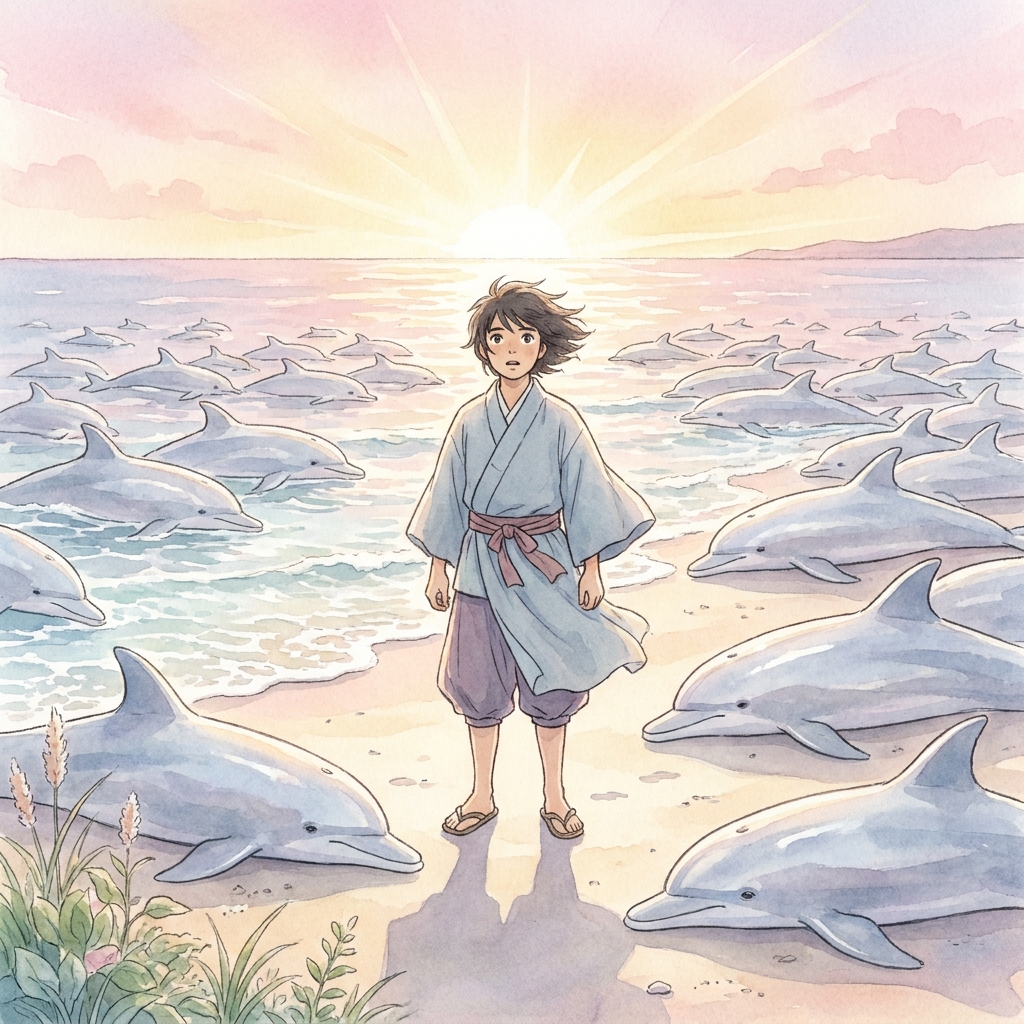
Kehi Jingu (pronounced Kehi Jingu), located in Tsuruga City, Fukui Prefecture, has long been revered as a prestigious jinja (Shinto shrine), known as the “Sōchinju (protector) of Hokurikudo” and the “Ichinomiya (first shrine) of Echizen Province.” Its main kami (deity) enshrined is Izasa-wake-no-mikoto (pronounced Izasa-wake-no-mikoto). This kami is also referred to as “Kehi-no-Okami” and “Miketsu-Okami (pronounced Miketsu-Okami),” and is worshipped as a guardian kami of clothing, food, shelter, maritime safety, and agriculture and fishing.
Founded in the second year of Taiho (702 CE), the jinja boasts a history of over 2,000 years. Within its grounds stands a grand torii gate, one of Japan’s Three Great Wooden Torii, alongside those of Kasuga Taisha in Nara and Itsukushima Jinja in Hiroshima. It is designated as a National Important Cultural Property.
The approximately 11-meter-tall grand torii, a symbol of Kehi Jingu, has an astonishing story behind it. During the Tsuruga Air Raid in 1945 (Showa 20), most of the shrine buildings, including the honden (main hall) which was then a National Treasure, were destroyed by fire. However, this wooden grand torii miraculously escaped the flames and retains its original form to this day. It is said that its steadfast presence amidst the scorched earth served as a spiritual support for people striving for reconstruction.
Kehi Jingu preserves a very rare mystery in Japanese mythology: the “exchange of names.” When the Imperial Prince of the 14th Emperor Chuai (later Emperor Ojin) visited this land with Takenouchi-no-Sukune (pronounced Takenouchi-no-Sukune), Kehi-no-Okami appeared in a dream and offered, “I wish to exchange my name with that of the Imperial Prince.” When the Prince readily agreed, the next morning, as a sign of the name exchange, dolphins, considered “mike (food)” from the kami, were offered all over the beach.
According to this legend, the kami came to be called “Miketsu-Okami,” and the Prince is said to have received the name “Izasa-wake-no-mikoto.” This episode of a kami and a human exchanging names illustrates how highly this land was regarded by the Imperial Court.
Within the jinja grounds, the subsidiary shrine Tsunuga Jinja (pronounced Tsunuga Jinja) holds a legend related to the roots of the place name Tsuruga. In the era of Emperor Sujin, a prince named Tsunugaarashito (pronounced Tsunugaarashito), who had horns on his forehead, landed here from the Ofukara (pronounced Ofukara) country on the Korean Peninsula. It is said that because he governed this land, the place name “Tsunuga” was born, which then evolved into the present-day “Tsuruga.” The fact that a foreign prince became the origin of a place name and is still enshrined as a kami today evokes a sense of romance about ancient international exchange.
Matsuo Basho, the great haiku poet, also visited Kehi Jingu in the latter part of his journey documented in “Oku no Hosomichi” (The Narrow Road to the Deep North). At that time, the jinja’s approach path was muddy, causing difficulty for worshippers. Upon hearing the story of “Osuna-mochi” (carrying sand), where a Yugyo-shonin (wandering priest) during the Kamakura period personally carried earth and sand to maintain the path, Basho was moved by the pure scene and composed the haiku: “Moon clear, / on the sand / carried by the Yugyo.” Today, a statue of Basho and a haiku monument stand within the grounds, conveying the beauty of the moonlit night.
Kehi Jingu is also known as a pilgrimage site for the popular mahjong anime “Saki – The Nationals.” The model for “Tsuruga Gakuen” (Tsuruga Academy) featured in the anime is the area around Tsuruga City, and Kehi Jingu’s grand torii and grounds are depicted as backgrounds. For anime fans, it has become a popular pilgrimage spot where many visit to experience the setting of the story firsthand. Additionally, the Symbol Road from Tsuruga Station features bronze statues from “Galaxy Express 999” and “Space Battleship Yamato,” allowing visitors to enjoy the worlds of anime and manga along with their shrine visit.