 By ando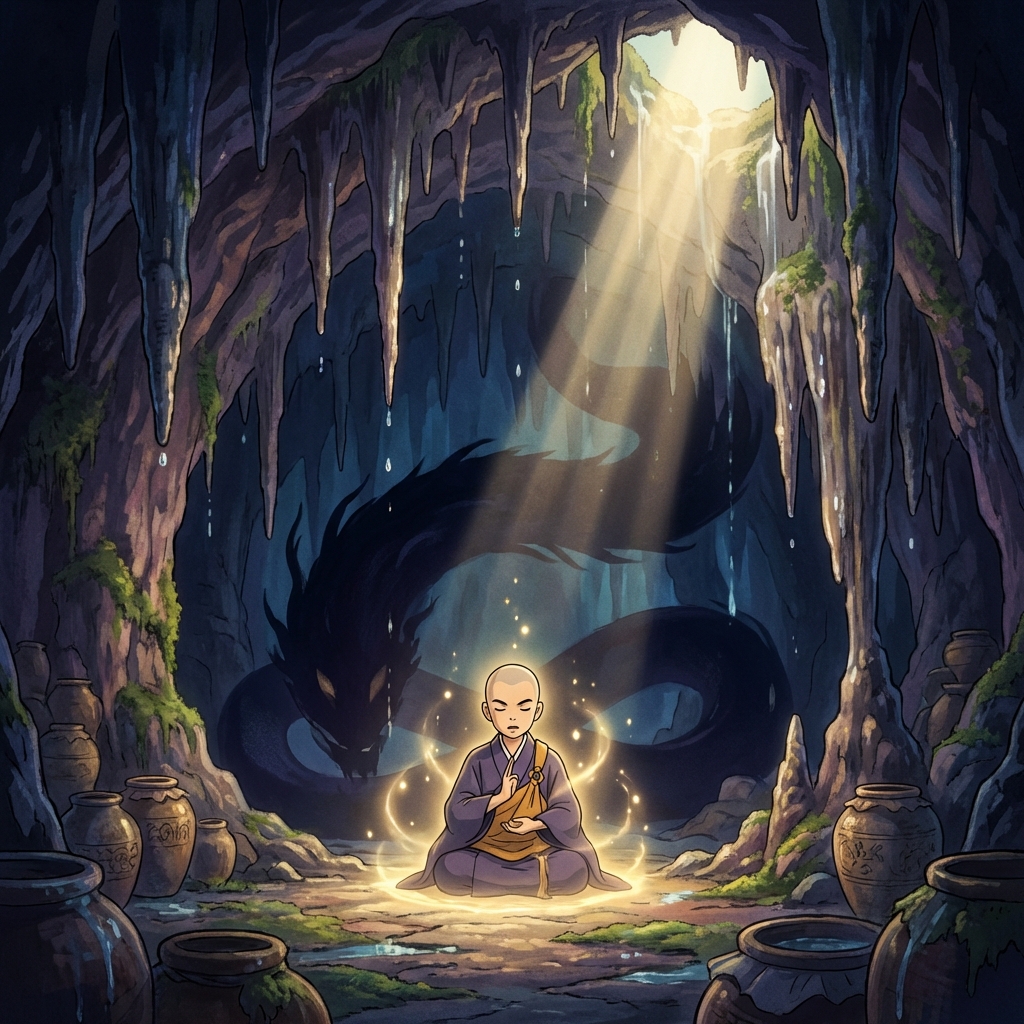
Basic Information
Name: Kingu (Kinguu)
Location: 222 Kin, Kin-cho, Kunigami-gun, Okinawa Prefecture (within Kin Kannon-ji Temple grounds)
Enshrined Kami: Kumano Gongen (Izanami-no-Mikoto, Hayatamao-no-Mikoto, Kotosaio-no-Mikoto)
Status: One of the Ryukyu Hachi-sha (Eight Shrines of Ryukyu)
Kingu jinja, located in Kin-cho in northern Okinawa Island, is the northernmost jinja among the Ryukyu Hachi-sha, which received special protection from the royal government during the Ryukyu Kingdom era. Its most striking feature is that its main hall (shaden) is enshrined within a limestone cave called Nisshu-do. It continues to represent a form of Shinbutsu-shugo (syncretism of Shinto and Buddhism), integrated with the adjacent Kin Kannon-ji Temple. The cave itself, imbued with a primal and mysterious atmosphere, feels like a sacred body (goshintai) of its own.
The Legend of Nisshu Shonin and the ‘Great Serpent Extermination’
The founding of Kingu jinja is deeply intertwined with the legend of the monk Nisshu Shonin, who in the 16th century drifted ashore in Kin after undertaking the ascetic practice of Fudaraku Tokai (a sea voyage to Mount Potalaka) from Kishu (present-day Wakayama Prefecture).
According to legend, a terrifying great serpent once dwelled in the limestone cave, preying on young village maidens, devouring their livers, and terrorizing the people. Aware of this, Nisshu Shonin earnestly chanted sutras in front of the cave and, with his spiritual power, is said to have sealed the great serpent deep within the cave.
Due to this legend, Kingu jinja became known as a powerful spiritual spot (power spot) with strong abilities to ‘seal away calamities’ and ‘purify.’
The Lesser-Known Story: An Awamori Kusu (Aged Sake) Cellar Sleeping in the Limestone Cave
Nisshu-do, the limestone cave where Kingu jinja is enshrined, has another unique aspect besides its role as a jinja. That is, the interior of the cave is used as an awamori kusu cellar.
The cave maintains a consistent temperature of about 18 degrees Celsius throughout the year, creating an ideal environment for aging awamori. In 1988, it was established as Japan’s first ‘limestone cave kusu cellar,’ and to this day, many bottles of awamori and local specialty tofu-yo (fermented tofu) quietly await their time to mature.
As you descend the steps for worship, you can witness the sight of awamori bottles neatly arranged right next to the sacred shrine (hokora), experiencing a mysterious space unique to Okinawa, where faith and daily culture intermingle.
The ‘Miraculous Wooden Architecture’ That Escaped War
The main hall of Kin Kannon-ji Temple, where Kingu jinja is located, is a valuable building that miraculously escaped destruction during the Battle of Okinawa. While many old wooden buildings on Okinawa Island were lost, this one retains its original appearance from when it was rebuilt in 1942.
An anecdote tells that an American military officer stationed there at the time recognized its value as a cultural property and prohibited its destruction. The powerful energy that endured the ravages of war, along with the ancient giant fukugi trees on the temple grounds, continues to quietly watch over visitors.
Mystery: A Purification Spot for ‘Womb Regression’
From a spiritual perspective, the limestone cave of Kingu jinja is likened to a ‘mother’s womb,’ and entering the cave to worship and then emerging back into the light outside is said to symbolize ‘rebirth’ or ‘womb regression’ (botaikaiki).
When looking up at the exit from the back of the cave, the single ray of light piercing through the darkness is profoundly divine, and many worshipers speak of feeling ‘purified in spirit’ and having their ‘doubts disappear,’ attesting to its mysterious charm.