
 By ando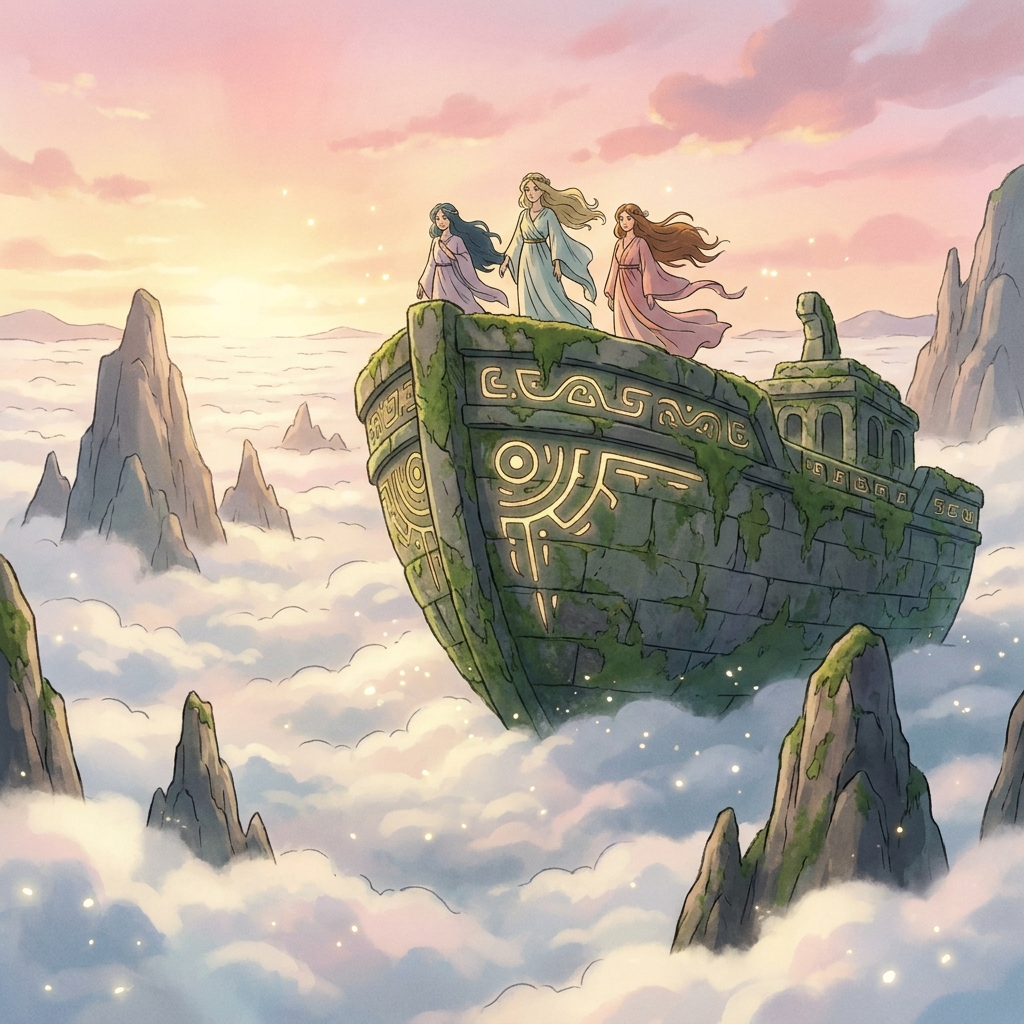
In Nihonmatsu City, Fukushima Prefecture, nestled deep within Mount Hayama (elevation 819 meters), there is a place that has long been cherished and revered as “Obenten-sama.” This is Ozushima Jinja.
Despite its remote, mountainous location, why does the name include the character for “island” (shima)? Here, numerous mysteries and legends, passed down through over 1,200 years of history, are hidden.
Ozushima Jinja Basic Information
Its location is 403 Jike, Kohata, Nihonmatsu City, Fukushima Prefecture (near the summit of Mount Hayama). The enshrined kami are Ichikishima-hime no Mikoto, Tagori-hime no Mikoto, and Tagitsu-hime no Mikoto. The jinja was founded in 789 AD (Enryaku 8th year).
An “Island” in the Mountains? The Mystery Hidden in the Name
Ozushima Jinja’s greatest enigma is that it enshrines the Munakata Sanjojin, three “kami of the sea,” and bears the name “island” (shima), despite being located deep in the Abukuma mountain range, far from the sea.
One theory suggests that this area once appeared like an “island floating in a sea of clouds.” A romantic legend tells that on early mornings, when deep fog enveloped the mountains, only the summit of Mount Hayama protruded above the mist, resembling an isolated island floating in a vast ocean. From this sight, it was named Ozushima, meaning “hidden island.”
Another tradition recounts that the goddesses flew to this land from Munakata in Kyushu aboard a “stone boat.” Indeed, the jinja grounds are dotted with massive rocks and strange formations that seem to corroborate this legend.
The Legendary Wind Festival and the Kami’s Wrath
Ozushima Jinja has also been deeply revered as a “kami of wind” since ancient times. The annual Wind Festival has a compelling backstory.
In the past, this region suffered devastating crop damage from repeated violent storms. When the distressed villagers prayed at Ozushima Jinja, the wind is said to have stopped instantly. However, records show that if the festival was ever neglected, a ferocious wind would immediately rage, powerful enough to threaten to blow away the very shrine buildings.
Even today, the amulets (fujoke no gofu) offered during the Wind Festival are indispensable protective items for local farmers.
The Trial of Tainai Kuguri: Climbing by Chain
The path leading from the main hall further up to the mountain summit retains a rugged aspect, serving as a place for ascetic training. Particularly famous is the “Tainai Kuguri” (womb passage), where visitors pass through a gap between giant rocks.
There is a section where one must climb a sheer rock face, relying only on fixed iron chains. This is truly a life-risking pilgrimage. It is believed that by passing through this rock crevice, one can cleanse defilements and be reborn anew. A solemn atmosphere, characteristic of a sacred site that cannot be reached with a mere tourist mindset, pervades this area.
Modern Appeal: Beautiful Goshuin and the Presence of the Dragon Kami
In recent years, Ozushima Jinja has attracted not only history buffs and mystery lovers but also many other visitors with its artistic goshuin (red ink stamps and calligraphy).
Ozushima Jinja offers various goshuin, including double-page designs that change seasonally and delicate cut-paper designs. Particularly popular are the designs featuring the Ryujin, a dragon kami said to dwell in the sacred pond (Kamihike) within the jinja grounds. Visitors report feeling a mysterious energy the moment they hold these powerful and beautiful designs in their hands.
Advice for Visiting
The journey to Ozushima Jinja is by no means easy. You will drive up a narrow mountain road, and from there, proceed on foot to reach the jinja grounds. However, once you set foot inside, you will find a clear “kami no ki,” a sacred atmosphere distinctly different from the world below.
Did the view from the summit show an “island” to ancient travelers? Or was this place truly once part of the sea? Reflecting on such ancient memories, we invite you to visit this “hidden sanctuary.”
Related Links and References
No sources available.