
 By ando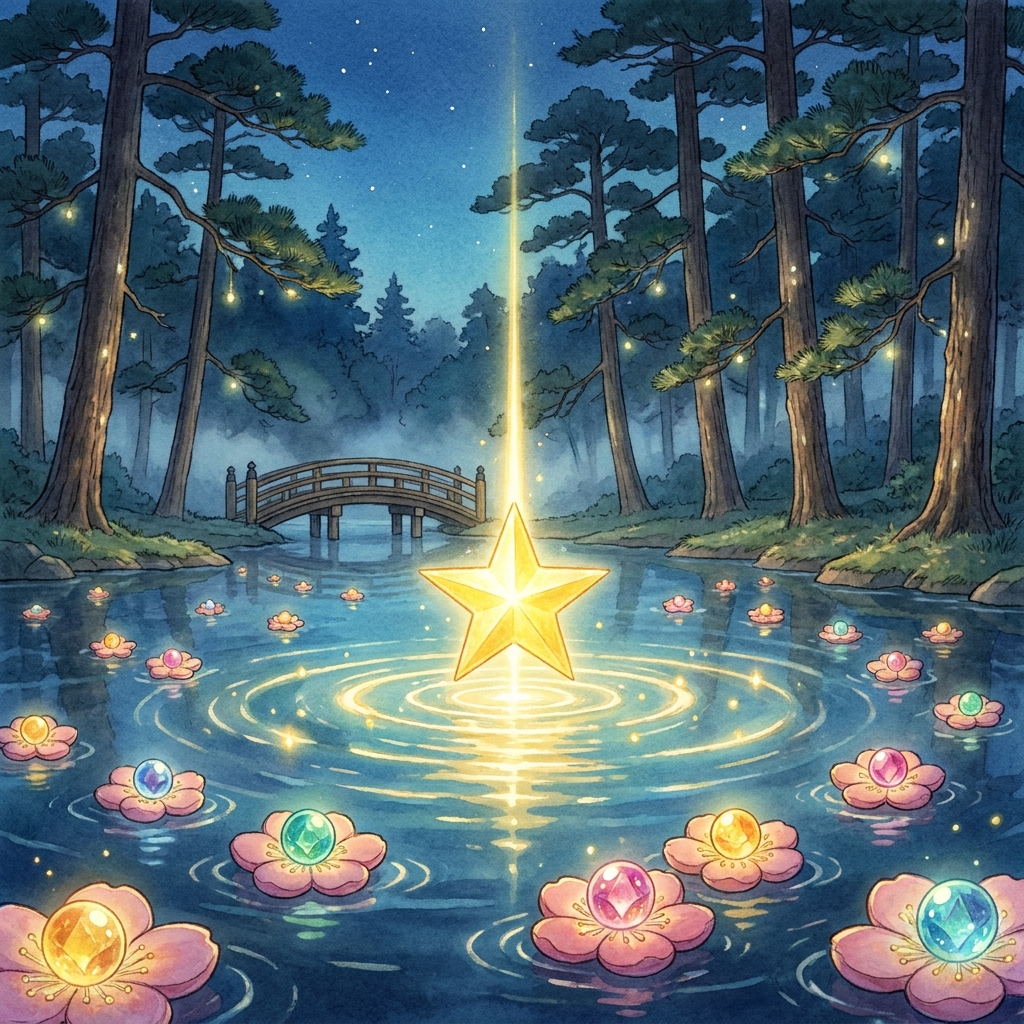
Osaka Tenmangu jinja, affectionately known by Osaka citizens as “Tenma no Tenjin-san,” is a place that enshrines Sugawara no Michizane, the kami of scholarship. It bustles with many worshippers during exam season, but did you know that mysterious legends and enigmas are actually hidden throughout its founding and within its grounds?
Basic Information
Location: 2-1-8 Tenjinbashi, Kita-ku, Osaka City, Osaka Prefecture
Enshrined Kami: Sugawara no Michizane (Tenjin-sama)
Founded: Tenryaku 3 (949 CE)
Access: Approximately a 5-minute walk from Osaka Tenmangu Station on the JR Tozai Line, or Minamimorimachi Station on the Osaka Metro Tanimachi Line or Sakaisuji Line.
Legend of the Seven Glowing Pine Trees that Appeared Overnight
A very fantastical episode remains regarding the founding of Osaka Tenmangu jinja. In 949 CE, about 50 years after the death of Michizane-ko, it is said that seven pine trees suddenly grew overnight in front of the Daishogun-sha jinja that stood on this land, and their branches radiated a sacred light every night. Hearing of this, Emperor Murakami declared it “a miracle connected to Michizane-ko” and, by imperial command, ordered the construction of a shrine hall, which is said to be the beginning of the jinja.
To this day, the Daishogun-sha jinja, which has a history older than Tenmangu itself, is enshrined in the northwest part of the grounds. In fact, Osaka Tenmangu jinja effectively leases the land from Daishogun-sha, and even now, a rare Shinto ritual takes place every New Year’s Day where Tenmangu jinja pays a “land rent” (so) to Daishogun-sha.
Hoshiai no Ike (Star-Meeting Pond) and the Mystery of Matchmaking
To the north of the jinja grounds is Hoshiai no Ike (Star-Meeting Pond), which holds a romantic legend. Its name comes from the folklore that a bright star (Venus) once descended into this pond, making its surface shine brightly.
During the Edo period, matchmaking meetings for young men and women were held on Hoshiaibashi Bridge, which spans this pond, earning it the nickname “Aikyo-bashi” (Charm Bridge). Today, it is known as a powerful spot for matchmaking. A popular test of luck involves throwing a “wish ball” at a plum blossom-shaped target floating on the pond; if it lands successfully on the target, your wish is said to come true.
A ‘Pass-Through’ Available? A Secret Tip for Exam Success
Famous among students preparing for exams are the “Toryumon” (Dragon Gate) on either side of the main hall (honden). Normally closed, they are opened only during the “Tori-nuke Sanpai” (Pass-Through Worship) period in January. Passing through these gates is believed to bring good fortune in “breaking through difficult barriers,” leading to long queues of people hoping to receive the blessings truly implied by the term “Toryumon.”
Anime Pilgrimage: ‘Detective Conan’ and the Naniwa Incident
Osaka Tenmangu jinja is also known as a pilgrimage site for the popular anime “Detective Conan.” In episodes set in Osaka, Osaka Tenmangu jinja and the surrounding Tenjinbashi-suji Shopping Street appear in scenes where the high school detective from the west, Heiji Hattori, guides Conan and his friends.
In particular, Tenjin Matsuri, one of Japan’s three great festivals, is depicted as a symbolic scene of Osaka in the anime and theatrical films (such as “The Last Wizard of the Century”), and many fans visit to experience the festival’s excitement. Additionally, in “The Ryuo’s Work is Never Done!”, an anime centered on shogi (Japanese chess), the realistic streetscapes around Tenma are depicted, making it a popular pilgrimage site for fans of Tenjin-san, who also has an aspect as the kami of shogi.
Behind the Scenes of Tenjin Matsuri, Attracting a Million People
During the Funatogyo (Boat Procession), the climax of the Tenjin Matsuri held every July, over 100 boats traverse the Okawa River. The festival’s origin dates back to 951 CE during the Heian period, stemming from the Hokonagashi Shinji (Halberd Floating Ritual), where a sacred halberd (kamihoko) was floated down the river, and a purification site (saijo) was established where it drifted ashore.
Even today, the ritual of floating the halberd to pray for the festival’s safety for the year continues, and this tradition, spanning over a millennium, still supports the city of Osaka.
Osaka Tenmangu jinja offers enjoyment not only for academic success but also for matchmaking, historical mysteries, and even the world of anime. Why not take a trip to experience its deep historical essence, alongside the vibrancy of the shopping street?
Related Links and References
[1] Osaka Tenmangu: Not just for academics! The true greatness of Tenjin-sama who developed Japanese culture. | Jinja specialty media Okumiya-OKUMIYA-
URL: https://okumiya-jinja.com/interview/interview036/
[2] Osaka Tenmangu – Wikipedia
URL: https://ja.wikipedia.org/wiki/%E5%A4%A7%E9%98%AA%E5%A4%A9%E6%BA%80%E5%AE%AE
[3] Osaka Tenmangu
URL: https://goshuin.ko-kon.net/shokokujinja/27oosaka_temman-gu.html
[4] 501 Not Implemented
URL: https://osakatemmangu.or.jp/about
[5] Osaka Tenmangu | Nippon Tabi Magazine
URL: https://tabi-mag.jp/os0075/
[6] The spirit of Osaka people who rebuilt Osaka Tenmangu many times / Culture Vol.12 | Eeyan! Osaka Shopping Street Special Site | Osaka Prefecture Shopping Street Charm Discovery Site
URL: https://osaka-shotengai-info.com/spot/tenjinbashi1choume_culture/
[7] Osaka Tenmangu (Osaka City, Kita Ward) Osaka Stroll, Part 3 | Kuwagwa-ki
URL: https://asamoyosi.wordpress.com/2013/10/28/%E5%A4%A7%E9%98%AA%E5%A4%A9%E6%BA%80%E5%AE%AE%EF%BC%88%E5%A4%A7%E9%98%AA%E5%B8%82%E3%83%BB%E5%8C%97%E5%8C%BA%EF%BC%89%E5%A4%A7%E9%98%AA%E6%95%A3%E7%AD%96%E3%83%BB%E3%81%9D%E3%81%AE%EF%BC%93/
[8] Osaka Tenmangu | Kimamana Tabibito
URL: https://blog.eotona.com/osaka-tenmangu-shrine/
[9] URL: http://inakade-ho.pya.jp/kisetu/tabi_kan/100327/000.html
[10] Hoshiai Pond, Soreisha, Hoshiai Chaya | Osaka Tenmangu – Jinja Fan
URL: https://jinjafan.jp/2700307/spots/2580/
[11] URL: http://www.sci-museum.kita.osaka.jp/~kazu/shiseki/meisho8.html