 By ando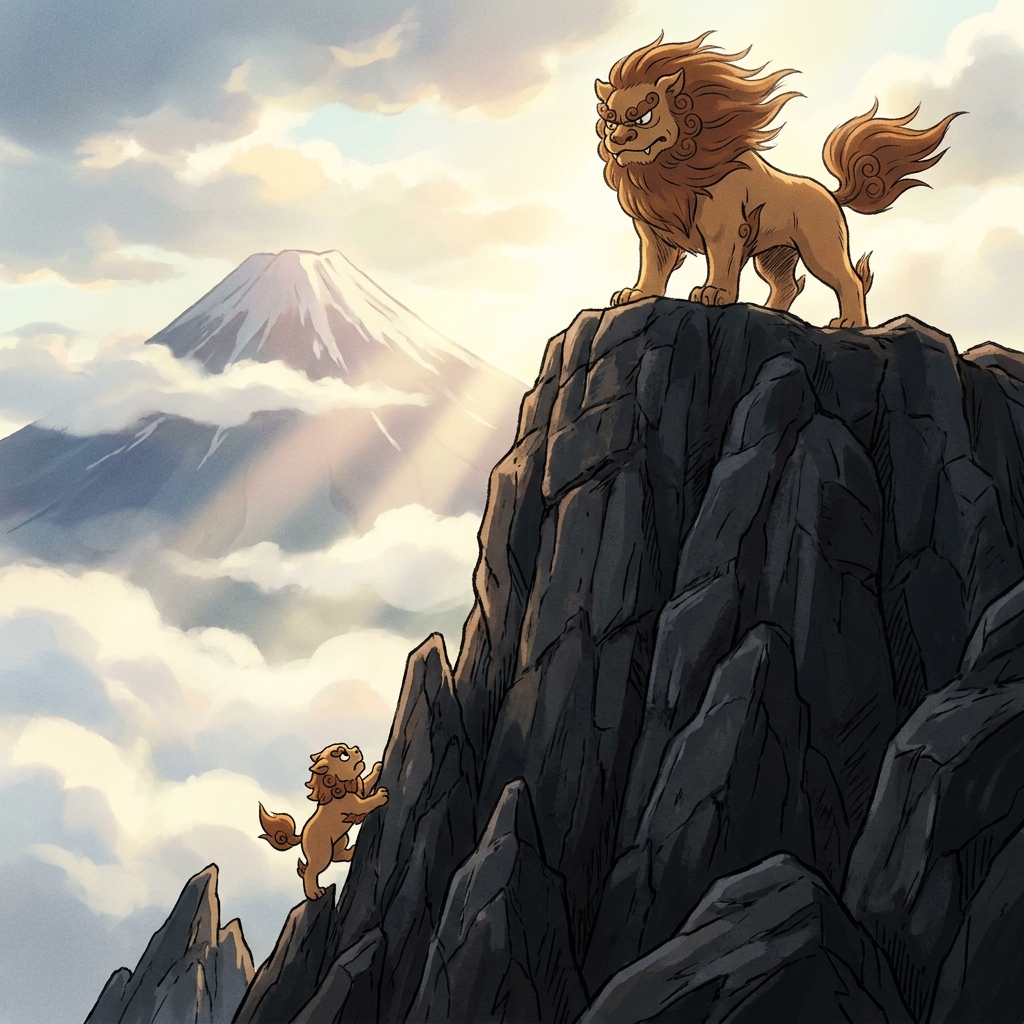
Higashiguchi Hongu Fuji Sengen jinja (Higashiguchi Hongu Fuji Sengen jinja), located on the eastern side of Mount Fuji in Oyama Town, Shizuoka Prefecture, is one of the constituent assets of the Mount Fuji World Cultural Heritage site. It is an ancient jinja with a long history, historically serving as the starting point of the Subashiriguchi mountain trail and watching over countless climbers and pilgrims.
This time, we will introduce the many legends and mysteries hidden within this jinja, along with essential pilgrimage information for fans.
Basic Information
Location: Shizuoka Prefecture, Sunto District, Oyama Town, Subashiri 126
Enshrined kami: Konohanasakuyahime no Mikoto, Oonamuchi no Mikoto, Hikohobodemino Mikoto
Founded: Daido 2 (807 CE)
—
1. The Legend of the Chinka-sai Festival, Which Quieted the Eruption
The jinja’s history dates back to Enryaku 21 (802 CE), the early Heian period. At that time, a massive eruption occurred on the eastern side of Mount Fuji, striking terror into the hearts of the people. It is said that kokushi (provincial governors) and gunji (district administrators) established a sacred precinct in the present-day Subashiri area and prayed for the quelling of the eruption, which remarkably subsided in April of the same year. As an expression of gratitude (hosai), the jinja buildings were constructed in Daido 2 (807 CE), marking its beginning.
During the Great Hoei Eruption of the Edo period (1707 CE), the village of Subashiri suffered devastating damage, buried under several meters of ash. However, the jinja was subsequently splendidly rebuilt with support from the Odawara Domain and others.
2. Lion Dropping Its Cub!? The Komainu of “Shishi no Ko Otoshi”
The most eye-catching feature within the jinja grounds is a very rare pair of komainu (guardian lion-dogs) located in front of the Zuishinmon gate.
Three komainu are arranged on a rocky outcrop resembling a Fuji-zuka (a miniature Mount Fuji built from lava). This arrangement recreates the proverb “Shishi no Ko Otoshi” (Lion Dropping Its Cub), which states that “a lion pushes its cub into a deep ravine and only raises the strong ones that climb back up.”
The sight of the parent lion looking sternly down from the rock and the cub desperately trying to climb up is a dynamic and unique sculpture, unparalleled nationwide. It seems to symbolize the harshness of mountain climbing and the spirit to overcome it.
3. The Sacred Tree That “Enshrined” Lightning: Horai no Sugi
Within the jinja grounds stands a goshinboku (sacred tree) to which a new legend has been added in recent years: the Horai no Sugi (Cedar of Enshrined Lightning).
In the summer of Heisei 30 (2018 CE), this cedar tree was struck by a severe lightning bolt. However, it is said that, miraculously, the cedar tree itself barely withered. By taking the full force of the lightning, it protected the surrounding jinja buildings and local area from any damage.
People believed that the tree did not resist the lightning but rather “enshrined and obeyed” it, naming it “Horai no Sugi.” Many worshippers visit it as a power spot symbolizing indomitable spirit.
4. The Mysterious Shinshige Falls and Giant Volcanic Bombs
At the entrance to the sando (approach path) lies a beautiful waterfall called Shinshige Falls. The origin of the name “Shinshige” is not entirely clear. It was named after a stone engraved with “Shinshige” was discovered during the waterfall’s maintenance, but one theory suggests it might be the name of an influential member of a Fuji-ko (Mount Fuji worship group).
Additionally, giant volcanic bombs, said to have flown from Mount Fuji’s eruptions, are enshrined within the jinja grounds. Some weigh over a ton, allowing visitors to feel the overwhelming energy of Mount Fuji up close.
5. Sacred Site Pilgrimage for the Anime “Yama no Susume”
For fans of the popular mountaineering-themed anime “Yama no Susume Next Summit,” this is an unmissable sacred site.
In episodes 10 and 11, the protagonists, Aoi and her friends, choose the “Subashiri Route” when re-attempting their ascent of Mount Fuji. This jinja served as the setting for scenes where they prayed for safety during their climb before setting off.
Very close to the jinja is “Kikuya,” a mountain hut and shop that appears in the series, where you can actually taste the “Kinoko Udon” (mushroom udon) that Kokona-chan ate. Why not visit the jinja with the same determination as Aoi and her friends, tracing their footsteps from the anime?
—
Higashiguchi Hongu Fuji Sengen jinja is not just a waypoint but a special place where you can feel both the “anger” and “benevolence” of Mount Fuji. As you gaze up at the characters “Fujisan” (meaning “a magnificent, peerless mountain”) inscribed on its torii gate, immerse yourself in its mystical atmosphere.